 2 months ago
71
2 months ago
71
There were few countries James Luckey didn’t see during three years backpacking across the Americas, from Haiti and Honduras to Bolivia and Uruguay. Early last December, he set off from a budget hotel in the Brazilian Amazon hoping to fill in one of the final gaps.
Luckey’s intended destination was the two-billion-year-old tabletop mountain Mount Roraima, one of the most spectacular corners of South America’s most troubled nation, Venezuela. But within hours of crossing into the border town of Santa Elena de Uairén, that plan went up in smoke.
The 28-year-old New Yorker was stopped at a military checkpoint and collared by counter-intelligence agents in ski masks who seemed to suspect he was a spy. Rather than starting the breathtaking multi-day trek up the 2,810-metre tepui, Luckey was detained and put on the first of a series of flights that would eventually land him in the headquarters of Venezuela’s feared General Directorate of Military Counterintelligence (DGCIM), more than 1,000km away in Caracas.
There, Luckey says he was placed in solitary confinement, forced to sleep on a concrete slab, deprived of food and repeatedly beaten before being moved to another notorious postcode, an overcrowded jail near the capital called El Rodeo.
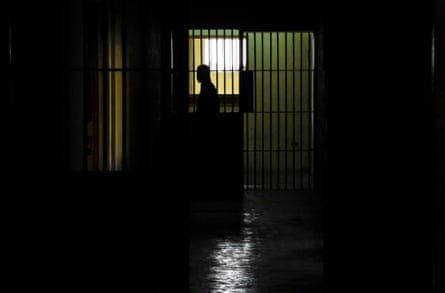
Luckey recalled fearing for his life as he was led into the penitentiary in chains and forced to his knees. “Oh yeah, they’re gonna execute me here,” he remembers thinking before having his head forcibly shaved.
After a month sleeping on a flea-infested mattress in El Rodeo, Luckey was released and flown out of Venezuela on 13 January, 10 days after the US scrambled Venezuela’s political landscape by abducting its president, Nicolás Maduro, during a night-time raid.
The US traveller is one of about 700 political prisoners human rights groups say have emerged from Venezuelan prisons since the US attack, among them citizens of Argentina, France, Israel, Italy and Spain.
Many of those former inmates are still too afraid of reprisals to publicly discuss their ordeals or are barred from doing so by conditional release rules. But others, including Luckey, have started speaking out, throwing a spotlight on the brutal treatment meted out to dissidents or perceived enemies of Maduro’s authoritarian regime.
Some former prisoners have described being beaten with baseball bats or suffocated with plastic bags in an attempt to extract information from them.
“It was hell,” said Yerwin Torrealba, a youth leader from the mid-western state of Yaracuy who was released on 12 January after over a year behind bars in the city of San Felipe.
Torrealba was captured by heavily armed masked men in December 2024 as Maduro’s security forces hunted down those who dared question his spurious claim to have won that year’s presidential election. The 26-year-old, an activist for Edmundo González, the candidate widely believed to have beaten Maduro, was accused of offences including terrorism, treason and organized delinquency.
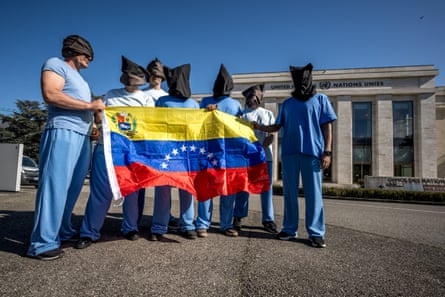
For those alleged crimes, Torrealba said he was held in a filthy cell with about 60 common prisoners. “The conditions were the worst imaginable … There wasn’t even space to walk around,” said the activist, who is a member of Vente Venezuela, the movement led by María Corina Machado, a Nobel laureate.
In April 2025, Torrealba said he nearly died after guards repeatedly denied him treatment for agonizing abdominal pain. When the prisoner was eventually rushed to a hospital, he had to undergo emergency surgery for acute appendicitis. Less than 12 hours after the operation, a police commander ordered the patient be returned to jail. “This is what the regime does: anyone they see as a threat … they try to silence in this way,” Torrealba said.
Many of those imprisoned under Maduro have emerged with physical and psychological scars. Torrealba said that whenever he heard a loud noise in the morning, he was transported back to the early morning stand-up counts conducted by prison officers.
Viral footage of another released prisoner, Óscar Castañeda, showed him struggling to walk and unable to recognize his family after emerging from 17 months inside Venezuela’s most infamous political prison, El Helicoide.
Jesús Armas, a prominent opposition politician who was also held there, said he had not been physically abused in El Helicoide but that the psychological mistreatment had been extreme. He claimed one fellow prisoner, Alfredo Díaz, died after suffering a heart attack and being denied medical care. Hoping to “break” Armas, guards would take him for questioning at 2pm and then again at 2am or 3am. “There were weeks and weeks of these interrogations,” he said.
But Armas’s worst days came after he was captured by unidentified men at a Caracas cafe in December 2024. He recalled spending five days handcuffed and blindfolded in a chair, being repeatedly suffocated as his captors tried to extract information about the activities of Machado and her ally, Juan Pablo Guanipa.
“They tortured me, they … put [a] plastic bag [over] my face to stop me breathing,” recalled Armas who said he found the strength to endure by reminding himself his struggle was more important than his life.
Luckey’s ordeal was mercifully short compared with many of his Venezuelan counterparts. He said rock bottom was spending four days at the DGCIM headquarters, a former textile factory activists say contains a torture centre nicknamed The House of Dreams.
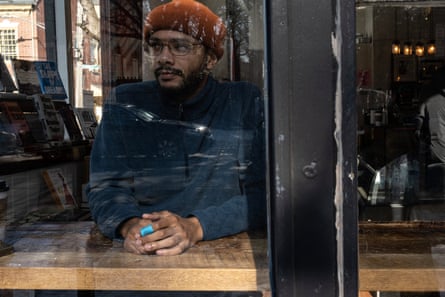
Luckey was not held in that underground dungeon but claimed he was repeatedly beaten after physically confronting his captors. “I had gotten rowdy because I wanted some answers – and they beat me, chained me up, threw me back in the cell,” he said. “We would repeat this process over and over again throughout my entire time there … knees in the neck, slamming you down the ground … hitting me in the back of the head … Tackling me down … kicking me while I’m down, throwing me back in the cell,” he said.
In a written account of his captivity, Luckey added: “I was never fed, I was never given water … My kidneys felt like someone had stuck pins and needles in them, my eyes, like they had sand behind them and my lips like sun dried fish scales.”
In El Rodeo, Luckey said he was subjected to lie detector tests and interrogations lasting up to 16 hours. “It was spy stuff … ‘Am I in cooperation with any sort of foreign intelligence agency? Am I in Venezuela to disrupt their economy, to disrupt their political system? … All these different types of things … over and over and over again.”
After returning to the US, the American traveller discovered a series of maps had been drawn into his journal, which he suspects were planted there to frame him for gathering intelligence on sensitive locations.
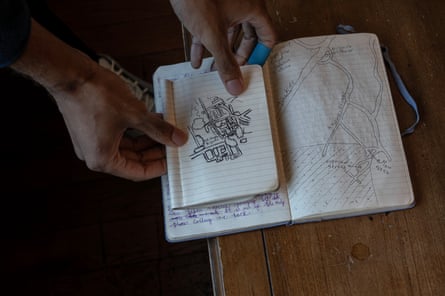
Luckey said he only found out for sure what had happened to Maduro as he flew to safety in Curaçao with a group of US officials, 10 days after Venezuela’s president was deposed.
Speaking from New Jersey, Luckey said he hoped to get “as many eyes and ears” as possible on the plight of those still trapped in Venezuela’s prisons.
“It’s a little bittersweet,” he said of how Maduro had wound up incarcerated in New York having been responsible for so many unjust imprisonments. “I know he’s not in there because of all the wrongs he’s done. He’s in there because bigger bully [Trump] attacked smaller bully [Maduro].
“You know, that’s what he deserves,” Luckey added of Maduro, who is due to appear in court on Thursday on drug trafficking charges he disputes. “But at the same time, nothing’s really changed for the guys that are still in prison.”