 2 months ago
70
2 months ago
70
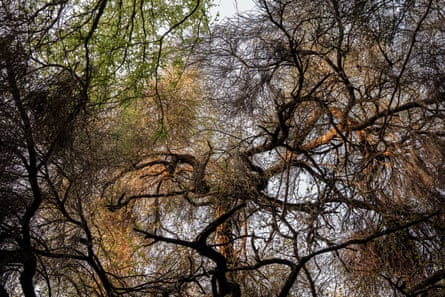
Jorge Luna stands in a piece of Argentina’s Gran Chaco forest that he calls his own. Birds sing as he surveys skyscraping molle trees, known as pepper trees, palo santo and algarrobo, or carob trees. “It’s good wood,” says Luna, 55. “I was about to cut them down.”
Selling timber promises quick and easy money in the sprawling ecosystem that covers parts of Argentina, Bolivia, Paraguay and Brazil. But it comes at a steep price, contributing to rampant deforestation and irreversible damage to the forest.
It is a dilemma faced by many small farmers such as Luna, who was eking out a living raising cows, goats, pigs and horses on his 40 hectares (100 acres) in Chaco province. Financial hardship, lack of information, or shaky land tenure are causing many to sell or lease their plots, often still covered with native forest.
With deforestation in the region becoming an increasingly urgent issue, conservationists, NGOs and international organisations are working to help small-scale landowners and Indigenous communities establish alternative incomes to enable them to push back against agribusiness and the voracious timber market.
Luna rejected an offer to cut down the trees, choosing instead to embark on a second career as a forest tourist guide as part of a programme sponsored by Fundación Rewilding Argentina, a non-profit working to restore parts of the Gran Chaco forest. He rents out a small campsite to visitors and takes tourists on kayak tours along the Bermejito River, which runs next to his land.
“At first, you didn’t give the plants value. It was a lack of knowledge of what they meant. Now, every leaf that sprouts has an added value,” he says.
Created in 2010 by Tompkins Conservation, Rewilding aims to protect vast tracts of territory and create economic opportunities for local communities to prosper, while preserving the biosphere in which they live. It worked alongside 15 other organisations to convince the government of Chaco province to turn 128,000 hectares into El Impenetrable national park, officially designated in 2014.
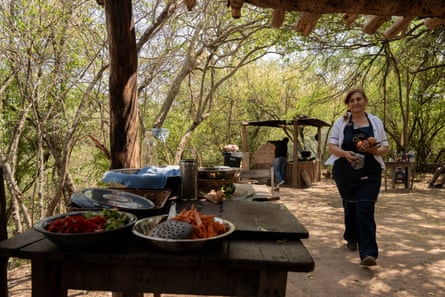
Since then, Rewilding has established a network to support a budding tourism industry. It offers riverside glamping stays, while promoting local and ancestral knowledge as possible sources of income. Women have returned to weaving and artisanal production, as well as providing home cooked meals for visitors.
“It’s a very large territory, and to preserve it we need to have residents onboard. So we promote eco-tourism among the local communities,” says Marian Labourt, a spokesperson with Rewilding.
According to Greenpeace, Argentina lost nearly 7m hectares of native forest between 1998 and 2024 – most of it in the Gran Chaco. Based on satellite imagery analysis, an estimated almost 120,000 hectares of forest were lost in northern Argentina in 2024, 10% more than the previous year.
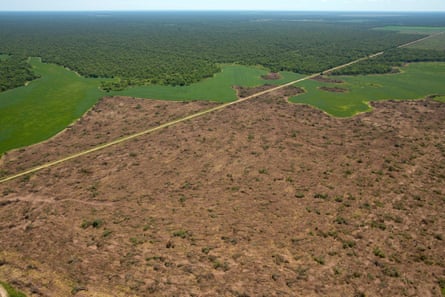
The primary causes of forest loss are the expansion of agriculture – mainly for intensive cattle ranching and genetically modified soya, much of which is exported to Asia and Europe – and forest fires, which are also affecting Patagonia in Argentina and Chile.
The Gran Chaco forest also feeds the timber industry, in particular with the quebracho tree, which produces a tannin used in leather products, and carob trees, says Matías Almeida, a park ranger in El Impenetrable.
“We’re talking about one of the biggest semi-arid forests in the world, and it is being lost at an alarming rate,” says Almeida.
Although Argentina passed a forest protection law in 2007 that set limits on logging and called for funds for conservation, deforestation continues. “We call it the logging mafia,” says Enrique Viale, an Argentine environmental lawyer and activist. “A connection between politicians and the business community that destroys native forests.”
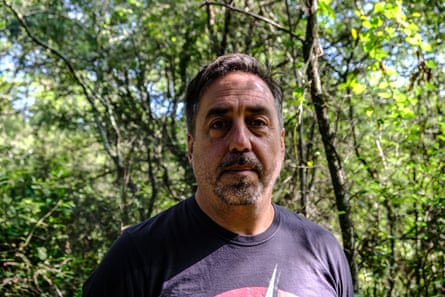
In 2024, Viale and a group of environmental lawyers filed a criminal complaint against politicians, public officials and business owners in Chaco province. The filing detailed how a legal amendment stripped thousands of hectares of forest of their protected status, opening them up to logging.
As a result of the complaint, the courts ordered a three-month suspension of deforestation. But that protection has since lifted.
Viale and fellow environmental lawyers warn that the Gran Chaco could disappear within two decades if deforestation continues at its current pace. “The Chaco does not receive the same attention as the Amazon – few people even know it exists,” Viale says.
But the success of any project that seeks to protect the environment and provide local communities with economic alternatives hinges on several factors, says Sandra Myrna Diaz, an Argentine ecologist who played a leading role in the Intergovernmental Platform on Biodiversity and Ecosystem Services (Ipbes), the UN-backed body for assessing the state of nature.
The projects must be co-designed with the community so that their long-term objectives are taken into consideration, she says. Community empowerment, an equal distribution of benefits among inhabitants, and capacity building that ensures the initiative can continue even if funding dries up are among the crucial factors, she adds.
“They can be a tool, as long as these conditions are met,” Myrna Diaz says. “If the idea is to do something like parachute conservation, it’s obviously not going to solve anything and could be a step backwards.”
Mabel Figueroa, who lives in Pozo La Gringa, a small rural community near El Impenetrable, is one of those who has resumed weaving since the national park opened, selling scarves, blankets and ponchos to tourists.
She raises sheep and dyes their wool with tree bark and forest plants, reviving an ancestral tradition passed down to her from her mother, who taught her which plants produce which colours.
“Quebracho colorado dyes the wool in reddish-brown tones, palo coca in yellow, and yerba mate in green,” Figueroa says.
Her son, Alberto Domínguez, tends to their animals and grows maize and pumpkins for their own use. “Big landowners buy up land, burn it, run bulldozers over thousands and thousands of hectares and destroy everything,” he says, adding that, each year, the heat has become more intense. “What protects us is nature.”