 2 hours ago
1
2 hours ago
1
The Ukrainian skeleton racer Vladyslav Heraskevych has been warned that he faces disqualification from the Winter Olympics if he wears a “helmet of memory” for his country’s war dead when the men’s competition starts on Thursday.
Heraskevych has continued to practise in the helmet, which shows 20 images of athletes and children killed since Russia’s invasion, despite the IOC banning it on Monday. In a post on X, published on Wednesday, Heraskevych indicated that he has no intention of backing down and called on the IOC to approve his helmet for the competition.
“The IOC has turned the situation with the ‘Memory Helmet’ into a theater of the absurd,” he wrote. “Earlier we asked, and now we demand the lifting of the ban on using the ‘Memory Helmet’ during competitions at the Olympic Games. It is obvious that it does not violate any IOC rules.”
But at Wednesday’s Milan Cortina press conference, the IOC spokesperson Mark Adams urged him to reconsider – before warning him of the consequences. “He can, and we would encourage him, to express his grief but in the end let me be clear,” said Adams. “It’s not the message, it’s the place that counts. There are 130 conflicts going on in the world. We cannot have 130 different conflicts featured, however terrible they are, during the field of play, during the actual competition.
“This is what the athletes want. They want that specific moment on the field of play to be free from any distraction.”
The IOC maintains that under Article 50 of the Olympic Charter, political statements are forbidden while in competition. However, the Ukrainian delegation insists the helmet does not violate any laws because the helmet is about remembrance. Asked what would happen if Heraskevych tried to wear his helmet in competition, Adams said: “I don’t think it is helpful to speculate. But obviously there are rules and regulations that the athletes themselves want us to enforce, and they will ultimately be enforced.”
However, Adams insisted the IOC didn’t want it to come to that. “We will contact the athlete today, we will reiterate the many, many opportunities that he has to express his grief,” he said. “He can do so on social media, in the press conferences, in the mixed zone. We will try to talk to him about that, and try to convince him. We would beg him, we want you to compete.”
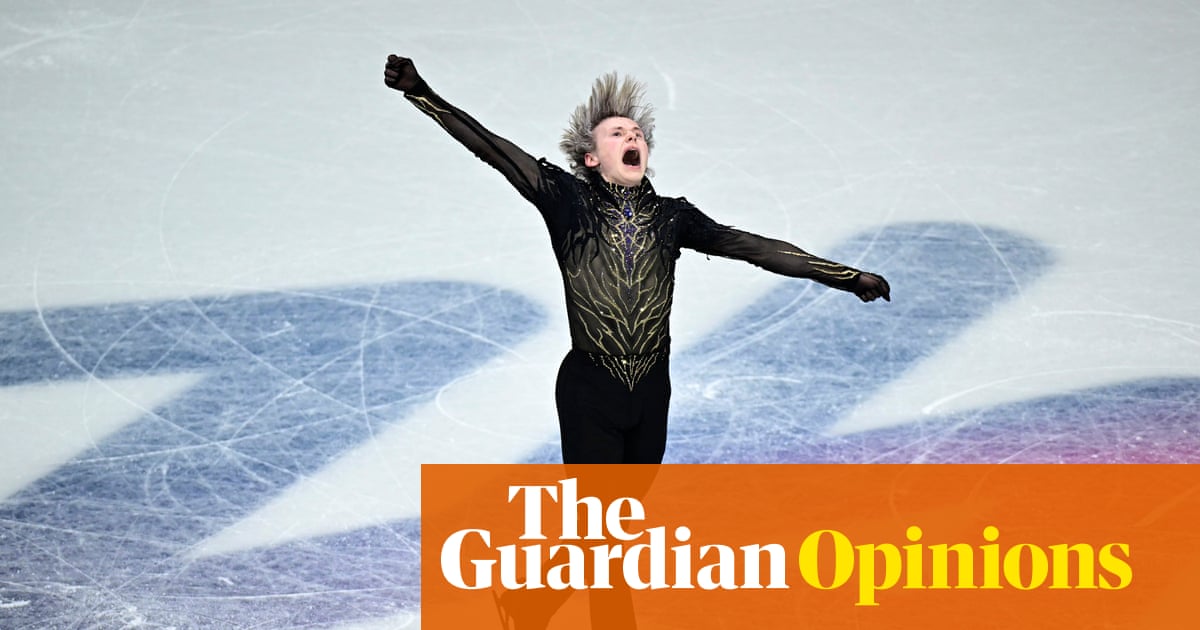
Adams also pointed to how the USA skater Maxim Naumov, who lost his parents in the Potomac air collision last year, had honoured them by showing a photograph after he competed on Tuesday.
“It’s a very emotional, very human, spontaneous human gesture,” he said. “In a sense it highlights what we are saying, this Ukrainian athlete, he can do the same. And we have loosened the rules – we are offering him to wear a black armband to commemorate his friends and colleagues who’ve lost their lives.
“But for us, and for the athletes more importantly, the field of play is sacrosanct. These people have dedicated their whole life to getting to where they’ve got to, and they want to have a moment to perform. So they all agreed that they would, if you like, give up their rights and have a field of play that was even for everybody and free from interference. And that is fundamental.”