 2 hours ago
1
2 hours ago
1
Something weird struck me early on while watching the movie Iron Lung, which has so far taken $32m at the box office, despite being a grungy low-budget sci-fi thriller adapted from an independent video game few people outside of the horror gaming community have even heard of. Set after a galactic apocalypse, it follows a convict who must buy his freedom by piloting a rusty submarine through an ocean of human blood on a distant planet. Ostensibly, he’s looking for relics that may prove vital for scientific research, but what he finds is much more ghastly. So far, so strange.
The film was also written, directed and financed by one person – the YouTube gaming superstar Mark “Markiplier” Fischbach – who also stars. But that’s not the weird part, either. The weird part is that watching the film Iron Lung feels like watching Fischbach play Iron Lung the game. Maybe it’s the fact that he spends most of the movie sitting at the sub’s controls, trying to figure out how to use them correctly – like a gamer would. Maybe it’s that, as the film progresses, he has to solve a series of environmental puzzles linked by various codes, computer read-outs and little injections of narrative – just like in a video game. Long periods of the movie involve Fischbach trying to decide what to do next, the camera close up on his confused face. This is incredibly similar to watching his YouTube videos about playing Iron Lung, an experience he often found bewildering. It was the most metatextual experience I’ve had in the cinema since The Truman Show – but I’m not sure this is what Fischbach intended.
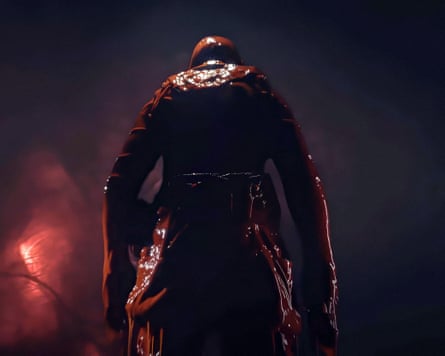
Of course, there have been plenty of movies in which a character must escape an enclosed environment by solving a series of puzzles. It’s a whole subgenre of fun thrillers, from the Saw franchise to Buried to Fall. But the highly procedural nature of Iron Lung, the long sequences of pondering, the tools the character uses and the way that puzzles dovetail into each other to open new possibilities? That’s video gameplay. Even the way the backstory is revealed, via short, oblique flashbacks, is exactly how a game would use cinematic cutscenes to flesh out the universe. This is not a film of a game, it is a film of the experience of a game – a sort of narrativised YouTube playthrough. I almost expected a comments section to appear instead of the closing credits.
Iron Lung isn’t the only YouTube video sensation to be converted into linear media. The hugely successful Dungeons and Dragons YouTube channel, Critical Role, is now an animated TV series. Elsewhere, Adventure Time and Rick and Morty started on the web before they were transferred to TV (and then became games), and theatre has been experimenting with interactive immersive productions for a decade or two. There’s now a growing range of TV shows morphing into video podcasts (the new Harry Hill series, for example), and video podcasts morphing into TV. We now live in an age of hybridised entertainment experiences and as viewers we’re going to have to renegotiate our relationships with traditional media as a result.
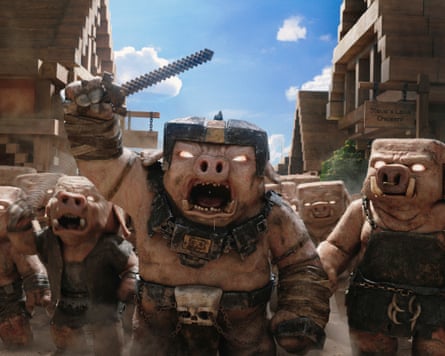
Remember the controversy over how audiences were shouting out catchphrases and throwing popcorn during A Minecraft Movie? What they were doing was re-enacting the para-social experience of playing and/or watching Minecraft on a computer screen – but in a cinema. The auditorium became a physical equivalent of the Twitch/YouTube chat window, with the spectators participating in meme-like jokes. While watching Iron Lung, the teenagers behind me were pointing out tropes and Easter eggs that referenced Fischbach’s YouTube videos as well as the original game, like a sort of ontological hall of mirrors.
Iron Lung can be enjoyed as an oblique and claustrophobic B-movie. Comparisons have been made with John Carpenter’s anarchic Dark Star, although I see a closer analogue in the cult sci-fi thriller Hardware, in which a self-assembling killer robot terrorises a woman in her apartment. But beneath the familiar trappings of the contained thriller, Iron Lung’s origins as a game are also written into the experience, there for those in the know who are prepared to unpick the self-reflexive strands.
Whatever you make of Iron Lung, I’m sure we’ll see more YouTubers migrating into film. I just hope it in no way leads to a Jake Paul-directed Rocky movie.
What to play

Here is a game for those who want a role-playing adventure that won’t take 120 hours to complete or bombard you with dark, Tolkienesque lore. I’ve only just started playing Hermit and Pig, but I’m already charmed by it – an unlikely yet cosy cross between Thank Goodness You’re Here! and the Nicolas Cage movie Pig, set in a beautifully drawn, hyper-colourful world.
Hermit is a lonely guy wandering the forest with his truffle-sniffing pet, until the two are drawn into a drama involving an evil corporation. There are puzzles to solve and sub-quests to tackle, all of it lovingly critiquing RPG conventions, such as turn-based combat and a levelling up system. The narrative centres Hermit’s social awkwardness in a gentle and respectful way, and the visual style will remind you of your favourite offbeat cartoons and webcomics.
Available on: PC, Mac
Estimated playtime: eight hours
What to read
-
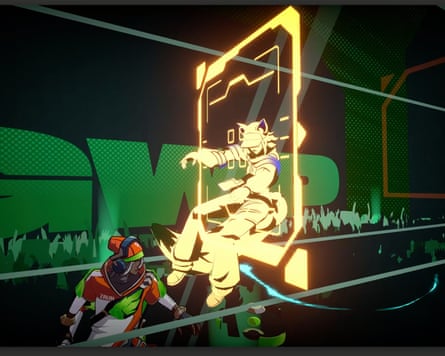
Barely a month after launch, Riot Games is laying off as many as 80 staff from 2XKO, a fighting game based in the League of Legends universe. “Overall momentum hasn’t reached the level needed to support a team of this size long term,” said executive producer Tom Cannon. The game secured positive reviews for its pacy combat and exuberant visual style, but the fighting game scene is crowded, and even a potential user base of 100 million League of Legends fans wasn’t enough to secure large-scale curiosity.
-
In December, Fifa announced that its major new football sim would be coming in 2026, via a publishing deal with Netflix. The developer was named as the relatively unknown Delphi Interactive, and GamesIndustry.Biz has an interesting interview with its founders about how new models are needed to succeed in an ever-evolving market. Personally, I think the important part is making a footie game as good as EA Sports FC, but I’m no CEO.
-
On the subject of Electronic Arts, the company has kept its Sims brand going for more 20 years, and the latest add-on, Royalty & Legacy, shows why. It allows you to rule your own regal dynasty over multiple generations, bringing a note of epic grandeur to the usual gameplay recipe of building a nice house and then trying to stop the inhabitants accidentally burning it down. Writing for Eurogamer, Matt Wales explains why Sims fans just can’t wait to be king. Or queen.
-
And Pushing Buttons regulars, do listen to our games editor, Keza, speaking about her new book, Super Nintendo, which explores the game-changing company, on the New York Times’s Book Review podcast.
What to click
-
How a decades-old video game has helped me defeat the doomscroll
-
Romeo Is a Dead Man – a misfire from a storied gaming provocateur | ★★☆☆☆
Question Block

This week’s question, from reader James R, seeks to get a hoary old video game debate going again:
“A few years ago everyone was asking, ‘What is the Citizen Kane of video games’?, but it seems no one is talking about that any more. Have we already had the Citizen Kane of video games? Did I miss it? If so, what was it?”
This long-running debate seemed to reach peak interest in the late-2000s and early 2010s, when innovative, highly cinematic titles such as Bioshock, Red Dead Redemption and Deus Ex were expanding the narrative and emotional scope of games with dazzling new techniques. At that time every games site on the internet had its own “What is the Citizen Kane of video games?” article. IGN, for example, declared that Nintendo’s sci-fi adventure Metroid Prime fit the bill, because, like the Orson Welles film, it used a huge variety of genre tropes and technical tricks to achieve its ambitious aims. Even at the time, most people disagreed, but well done IGN for having a go.
I think the debate died out because it sunk into self-parody – it represented the reflexive anxiety of a growing medium still living under cinema’s cultural shadow. Ten years later, we’re more comfortable with the understanding that not everything that happens in video games has to be analogous to the history of film. There are games as formally daring as Citizen Kane (The Stanley Project, Disco Elysium, Shadow of the Colossus) and there are games that tell stories with myriad narrative strands (The Last of Us, Life Is Strange, Mass Effect). But the whole package? Possibly not. Ultimately, I think the answer to your question is that it doesn’t matter. Games do different things from films and comparing them in this way doesn’t actually achieve anything. Having said that, the real answer is Shenmue.
If you’ve got a question for Question Block – or anything else to say about the newsletter – email us on [email protected].