 3 hours ago
2
3 hours ago
2
My kids don’t like sport. Either playing or watching. This isn’t an affectation – my daughter once turned down a ticket to the Women’s World Cup final. We get along fine. But, given my job, it can limit the teatime conversation at home.
On Sunday night, however, for a few moments, they accidentally watched the TV as Ilia Malinin of the USA went head-to-head with Shun Sato of Japan to determine who would lead their country to gold in the team figure skating at the Winter Olympics. They were transfixed. Although they know nothing about ice skating – correction, we know nothing about ice skating – it was obvious that Malinin’s flawed, riskier routine would ace the more fluent, more conservative Sato. It did.
The tears flowed in Milan. The drama felt as authentic and unvarnished as it could possibly be. “In the end, the competition came down to a familiar Olympic equation: technical risk versus execution, depth versus star power, and the ability to deliver in the final moment,” wrote the Guardian’s correspondent Bryan Armen Graham from the arena in Milan.
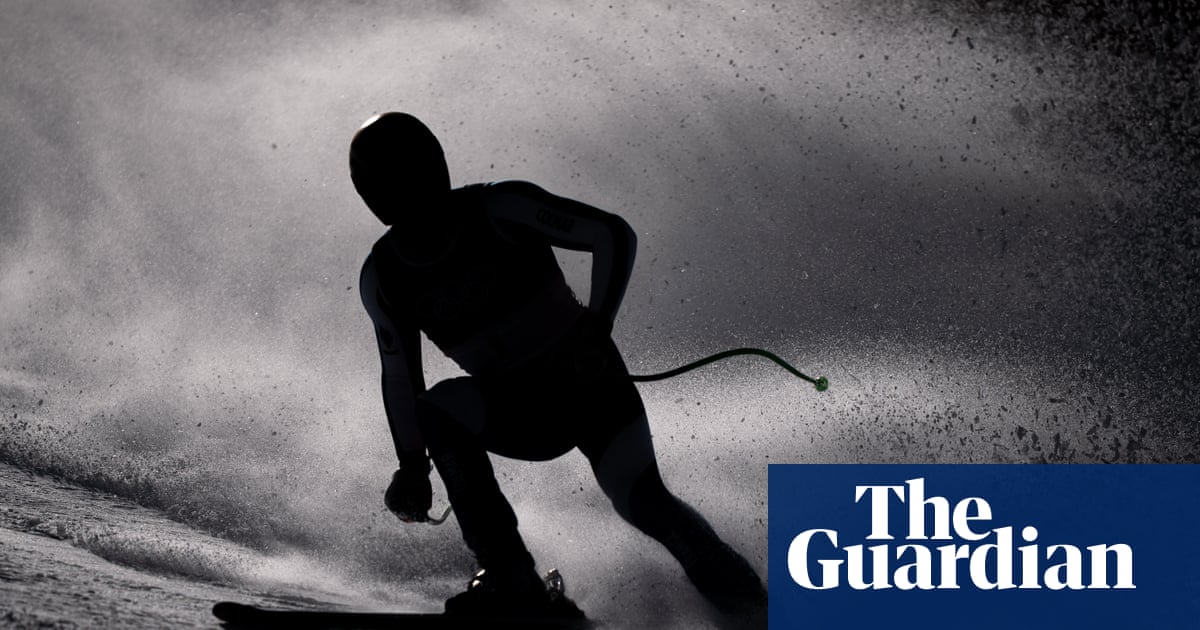
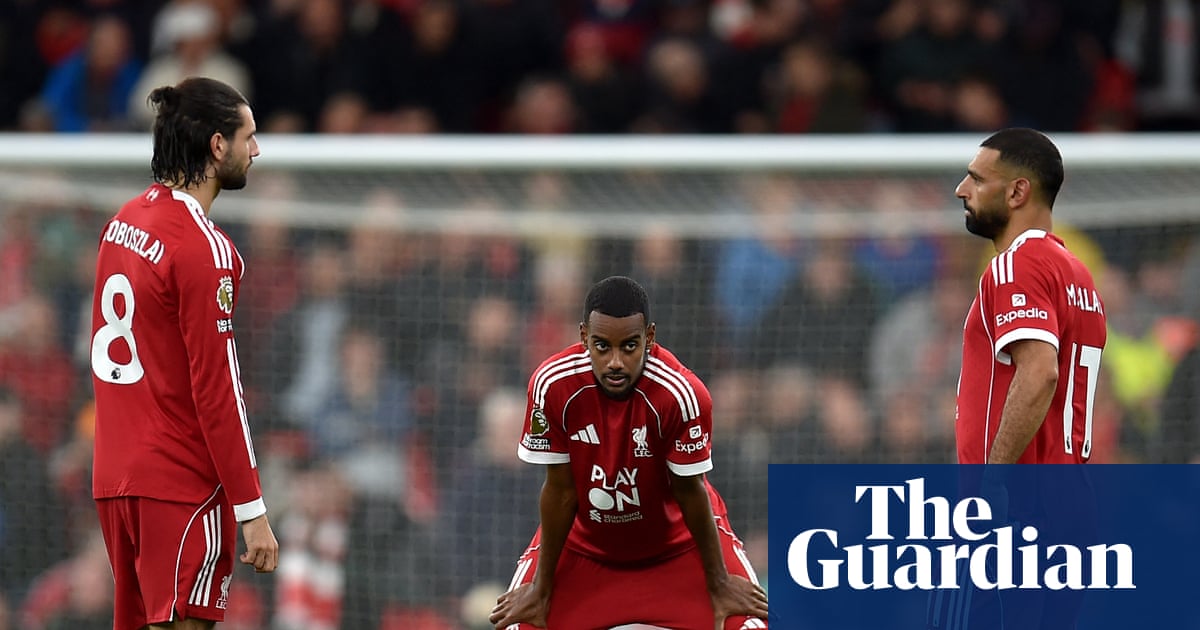
The ice skating found airtime between a heavily covered Super Bowl in Santa Clara and a Premier League thriller at Anfield. Back in Italy, Lindsey Vonn, competing with an anterior cruciate ligament injury, was airlifted from the slopes in Cortina d’Ampezzo after crashing out in the women’s downhill skiing, covered by Andy Bull for the Guardian.
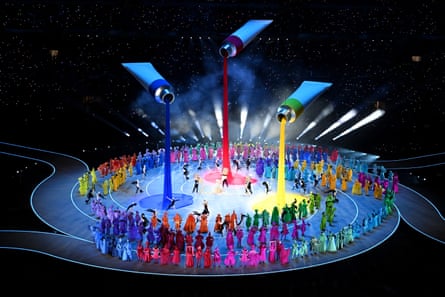
These very human sporting dramas played out alongside other big pieces from the Winter Olympics, including Bryan’s commentary about NBC muting the boos for JD Vance at the opening ceremony, Sean Ingle on Mariah Carey possibly lip-syncing at the same event, and Sean again on Gus Kenworthy, the British freestyle skier, writing (sorry about this) “Fuck ICE” in the snow with (apparently) his own urine. Those stories cut through. Many of them weren’t exactly about the sport; but the sport was there.
I’ve been thinking a lot about this duality lately. The Washington Post has axed its sports department, after generations of superb writing, including at least one great reporter on assignment at this year’s Winter Olympics. Some writers will be retained to cover sport as a “cultural and societal phenomenon”, as if the sport of it wasn’t enough. The New York Times closed its own sports department in 2023 to rely on coverage from the expanding Athletic. In the UK, many sport operations are shrinking to cover mostly football with a side-bet on rugby union and cricket. At the same time, club-owned and club-influenced social media is expanding seemingly exponentially. Any football fan seeking confirmation bias has any number of sites or offshoots with which to obsess about their team.
We’re trying to swim against this tide at the Guardian. We’ve expanded our coverage of women’s sport, especially football. We hope and believe we can encourage more people in the US to read our outstanding soccer coverage from Europe, and have expanded our team in the US, with great reporting hires Jeff Rueter and Pablo Iglesias Maurer.
We are reporting heavily on the Trump administration’s participation in the 2026 World Cup in North America and the 2028 Olympics in Los Angeles. We’ve appointed Matt Hughes as our first global sports business correspondent, to follow the money. We’ve sent three reporters and a photographer to cover the Winter Olympics; we’re live-blogging through the day and have a daily newsletter and a complete results and medal service. And we know that nothing stands still. Just as we once broke new ground with the Football Weekly podcast and the invention of live blogs, we’re increasingly searching out new talent and working on new ways to bring our distinctive sports coverage to audiences across all platforms, around the world.
Tumaini Carayol and Jack Snape’s reporting of an extraordinary Australian Open ended a few days ago; Ali Martin and Geoff Lemon anchored our Ashes coverage only a month ago. We have a correspondent in India for the T20 Cricket World Cup and we even travelled to watch Greenland play futsal in Croatia. Whether the Fifa peace prize, sportswashing and Saudi ownership, the Indian Premier League, the Qatar World Cup or Abu Dhabi’s Manchester City, we try to show how power is exercised through sport. We report on the sporting context of #MeToo, immigration and Black Lives Matter. Sport can be damaged by the world; sometimes it can change the world. Our team, including Barney Ronay and Jonathan Liew, and Suzanne Wrack and Emma John, are supreme at analysing and synthesising this.
And yet, as all these writers show, sometimes sport for the sake of sport is important. Amid all the blather and meddling and corruption and powerplays, it’s possible to still see it as noble and valid. On Sunday night, as the US-born son of Uzbek Olympic skaters took on a political science student from Japan, it felt especially, gloriously essential. Even at my house. We hope you agree. And we hope you enjoy the rest of the Winter Olympics and Paralympics with us.
If you don’t already and would like to support all of the Guardian’s journalism financially, you can do so with a one-off payment or a small monthly amount by clicking here.