 2 hours ago
1
2 hours ago
1
Donald Trump may have wanted revenge against Norway for the Nobel peace prize snub, but even he could hardly have imagined the damage contained in the latest US justice department’s release of three million emails from the Jeffrey Epstein files.
A string of what appear to be embarrassing messages between a Norwegian princess and Epstein initially led the global headlines. Mette-Marit, the crown princess, communicated regularly with the financier despite his 2008 conviction for child sexual abuse crimes and even went on holiday to his notorious Palm Beach villa. She has since apologised, expressing her “deep regret” for the friendship.
But the royal story is a mere sideshow to the scandal now engulfing some of the most eminent and powerful members of Norway’s political and diplomatic elite.
While a mention in the Epstein files is not an indication of wrongdoing, the files suggest a mindboggling history of association with the convicted child sex abuser at the most senior levels over decades.
The most shocking fallout involves the prominent Norwegian diplomat Mona Juul and her husband, Terje Rød-Larsen, both lauded as architects of the Oslo peace accords. The pair are now under investigation by Norway’s financial crimes squad, Økokrim, after it was reported that Epstein left the couple’s two children $10m in a will drawn up shortly before his death by suicide in 2019. Juul resigned from her post as ambassador to Jordan and Iraq on Sunday and is being probed on suspicion of gross corruption; her husband on suspicion of complicity in gross corruption.
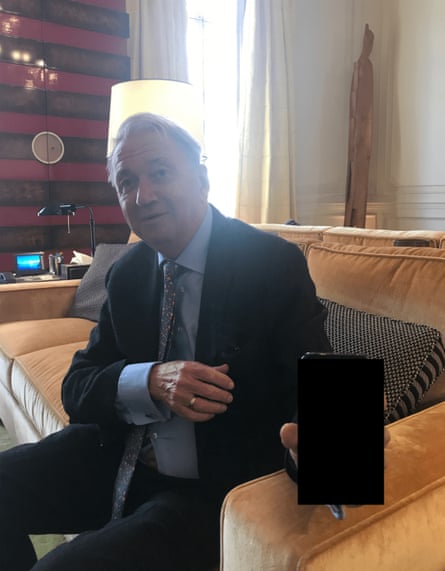
Børge Brende, a former foreign minister and president of the World Economic Forum is also under scrutiny after the documents suggested he had lied about his knowledge of Epstein’s crimes. The files show the two exchanged emails in 2018 and 2019 about dining together at Epstein’s New York home. In 2019 they exchanged friendly messages about a photo of a woman with blonde hair and in another exchange chatted about the WEF replacing the UN.
And a trove of emails spanning years suggests that Thorbjørn Jagland, a former prime minister, foreign minister, Nobel peace prize chair and secretary-general of the Council of Europe may have accepted luxury holidays to Epstein’s Palm Beach resort and his private Caribbean island, sought personal loans and engaged in sexual banter with Epstein. Police at Norway’s economic crimes unit are investigating Jagland on suspicion of aggravated corruption. Jagland has denied wrongdoing and through lawyers says he is “confident of the outcome” of the investigation.
While Juul and Rød-Larsen have said through lawyers that they believe they will be cleared by the investigation, a vignette from 2017 illuminates the spectacular nature of the fall from grace of the pre-eminent power couple in Norwegian diplomatic circles over the past 40 years.
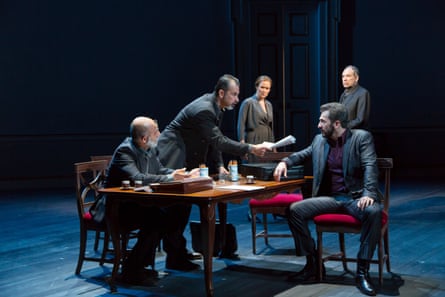
In April of that year, the play Oslo opened on Broadway. It was a smash hit, and won a Tony award before transferring to the National Theatre in London; it was subsequently turned into a feature film. Oslo was a dramatised sequel to the carefully crafted public nimbus surrounding Juul and Rød-Larsen. The husband and wife team made their careers in the 1990s by brokering secret negotiations between Israel and the PLO. The Norwegian commentariat had united in uncritical celebration of the resulting 1993 and 1995 Oslo accords, and of Rød-Larsen and Juul in particular. There were official hagiographies and honorary awards.
Later, there was controversy: in violation of Norwegian archival laws, the couple was accused of placing their Oslo archives at a safe distance from critical Norwegian researchers in closed Israeli archives.
From 2005 to 2020, Rød-Larsen was director of a thinktank in New York called the International Peace Institute (IPI). He secured lavish public funding for the organisation from the Norwegian foreign ministry in Oslo.
But Rød-Larsen and Juul were depicted in the play as the Oslo accords’ chief protagonists, the heroic drivers of an extraordinary diplomatic achievement. The New York Times called the play a “colossus”.
At a special performance in New York in May 2017, Rød-Larsen personally came on stage on behalf of the IPI, which had sponsored the evening. In the audience was a guest of honour. The guest was Epstein, whom Rød-Larsen had brought in as a benefactor without the knowledge of the IPI’s board. Epstein’s money, we now know from the newly released emails, had paid for the event. Rød-Larsen would later describe Epstein in private texts as his “best friend”, “a great guy” and “deserving to be an angel”.
Three years later, Rød-Larsen resigned as the peace organisation’s CEO over revelations of a loan from Epstein.
Rød-Larsen is now suspected of having used his influence to help procure visas for Russian models to serve as “interns” at his publicly funded peace institute. One of them claims she was later among Epstein’s sexual abuse victims.
Bewilderingly for an erstwhile social democrat, Rød-Larsen, the emails suggest, may have made personal introductions to friends in the international power elite for Steve Bannon.
Juul, who previously served as Norway’s ambassador to Israel, the UK and the UN, is also being investigated for allegedly making, at Epstein’s request, business introductions on behalf of a former Israeli prime minister’s private intelligence and cybersurveillance company.
Norway built its brand as a global humanitarian and diplomatic power on the back of vast petroleum wealth. The Oslo peace accords were its crowning achievement. The success provided new career opportunities for a generation of Norwegian diplomats, who fanned out across the world to replicate the lessons.
But Norway has an egalitarian culture, comparatively low levels of inequality and high levels of trust. We are not generally known for “praising famous men” as individuals. As our illusions about Norway’s global reputation are shattered, the fabric of that social contract seems threatened.
Most of the public figures in the Epstein files have a social democrat political pedigree. Yet their own commitment to social equality and the welfare state has been at best tenuous: socioeconomic inequalities have risen under their watch.
The Epstein files will serve to reinforce the suspicions of those who claim that a highly networked Norwegian cosmopolitan elite, living in luxury and harbouring deep contempt for ordinary people’s lives, regard themselves as masters and architects of the world by right. They are any far-right conspiracist’s dream.
The files offer a glimpse into the moral void among people so taken by the allure of power and money that they even seem willing enablers for a far right movement that threatens the very future of liberal democracy in Europe.
Exactly what Epstein hoped to gain from his Norwegian elite friends remains mysterious, but proximity to Vladimir Putin and the Russian power circles may have been one motive.
Either way, it is the populist right and opposition Progress party that have most to gain from this scandal. As the shockwaves reverberate, it will take great resolve for the governing Labour party to restore public trust.
-
Sindre Bangstad is a research professor at the Institute for Church, Religion and Worldview Research in Oslo