 3 hours ago
2
3 hours ago
2
Once the frozen fields outside Bucharest have thawed, workers will assemble the largest solar farm in Europe: one million photovoltaic panels backed by batteries to power homes after sunset. But the 760MW project in southern Romania will not hold the title for long. In the north-west, authorities have approved a bigger plant that will boast a capacity of 1GW.
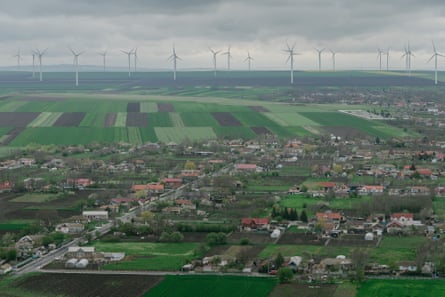
The sun-lit plots of silicone and glass will join a slew of projects that have rendered the Romanian economy unrecognisable from its polluted state when communism ended. They include an onshore windfarm near the Black Sea that for several years was Europe’s biggest, a nuclear power plant by the Danube whose lifetime is being extended by 30 years, and a fast-spreading patchwork of solar panels topping homes and shops across the country.
“The trend is irreversible,” said Liviu Gavrila, vice-president of the Romanian Wind Energy Association and manager at Enery, which is building the solar farm. “But we need to play it smart.”
Few would consider Romania a climate leader but on one metric it has found the holy grail of the energy transition. The country has decoupled economic growth from pollution faster than anywhere else in Europe, and perhaps even the world. Its net greenhouse gas emissions intensity fell by 88% between 1990 and 2023, the latest data shows, meaning each dollar’s worth of economic activity heats the planet almost 10 times less than it did before. Emissions have plunged by 75%.
How did Romania shatter the historical link between the economy and the climate? And can its breakneck transformation keep up the pace?
‘History happening’
Under the oppressive reign of Nicolae Ceaușescu, a dictator obsessed with self-sufficiency, the Romanian economy became industrial and polluted. Energy hungry factories sprang up faster than power plants could handle, and Romania turned to low-grade lignite and heavy oil to keep conveyor belts moving. When Ceaușescu was shot and industry privatised, factories closed, mines shut and power plants slashed their output.
At the same time, world leaders began to accept that carbon dioxide was heating the planet to disastrous levels. Aware that emissions needed to fall but mindful that developing countries deserved to grow richer, the signatories of the 1997 Kyoto Protocol hit only industrialised countries with reduction targets. They picked 1990 – the start of the diplomatic climate fight – as a benchmark for measuring progress.
The first drop in Romania’s emissions was “history happening, not active, policy-led decarbonisation”, said Ioana-Maria Petrescu, a former finance minister of Romania who founded a climate nonprofit after leaving politics. “But it continued, luckily, because Romania joined the EU.”
Romania’s entry into the European Union in 2007 held polluters to higher standards and forced the closure of unprofitable factories propped up by state support. Its emissions trading system put a price on carbon and its modernisation fund brought back cash to clean up the energy system. Meanwhile, workers completed a nuclear power plant in Cernavodă, a town in the south-east of the country, which had been commissioned under Ceaușescu, and the government introduced a green certificate scheme to bankroll renewables.
In the 17 years after the iron curtain fell, the carbon intensity of the power sector – the CO2 spewed per kWh of electricity generated – fell by 9.2%. In the 17 years following that, it plunged by 52%.
The shift to a service-based economy also led to upheavals in agriculture, where livestock numbers fell and farms modernised or closed. Beleaguered forests got a respite from the high levels of logging under communism and expanded on to abandoned plots. The amount of carbon absorbed by nature increased by 77%, official data suggests.
The changes have resulted in Romania decoupling at one of the fastest rates in Europe, even when measured from the turn of the millennium. But the benefits of its economic boom, which has doubled real GDP since 1990, have not been evenly shared. Entire communities withered after workers lost their jobs in factories and mines. Former coal towns depopulated at alarming rates as young people sought better-paid work abroad.
“It’s good that we reduced greenhouse emissions and it’s good that now we’re relying on different types of industries,” said Petrescu, who runs Pur si Simplu Verde, which works to ensure a just transition in fossil fuel-dependent communities. “But the transition was brutal for a lot of people.”
Low-hanging fruit
If industrial countries could decouple as quickly as Romania – and do so without the social fallout it suffered – the fight to stop climate breakdown may not seem so hopeless. Promising signs have emerged. Dozens of countries have completely decoupled their economies from emissions, even accounting for the pollution in imported goods, and many more have managed to grow richer while emissions climb at a slower rate, which scientists call relative decoupling. An analysis from the Energy and Climate Intelligence Unit (ECIU) last month found that countries representing 92% of the world’s economy have achieved one of these milestones.
Yet the pace of change is still slow. In 2023, a study of 36 rich countries found 11 had fully broken the link between GDP and CO2 but none had done so fast enough to comply with their share of the Paris Agreement target of keeping global heating to 1.5C (2.7F). It is also to be seen whether countries have exhausted easy wins from the power sector that may be hard to repeat for sectors such as buildings and transport, said William Lamb, a scientist at the Potsdam Institute for Climate Impact Research.
“We’ve been chucking coal into ovens and producing power with steam turbines for decades, and actually just switching those things off … is really low-hanging fruit,” said Lamb, who is also a lead author of the soon to be published Intergovernmental Panel on Climate Change (IPCC) report. “It’s happening very fast in some countries, and it looks like it will continue happening very fast, but that’s just a chunk of our emissions.”
More recently, the clean energy boom has been marred by the beating that climate policy has taken in much of the rich world. The US has embraced a return to fossil fuels, while the EU has begun to tear up parts of its Green Deal. The ECIU report identified nine countries that had absolutely decoupled in the decade before the Paris climate agreement in 2015 and then reversed progress in the decade after.
Those backtracking include Latvia and Lithuania, two former Soviet republics with economies that – much like Romania – experienced bust in the 90s and boom when they joined the EU in the 2000s. Russia, meanwhile, has steadily increased its emissions since the initial shock after the Soviet Union fell apart.
“Russia doubled down on having a large extractive oil and gas sector, coupled with a highly inefficient use of those resources domestically,” said Lamb. “It’s interesting that Romania – which is on the periphery of Europe and not as wealthy as countries like France, Germany, the UK or Sweden – has still managed to make substantive progress.”
What is unclear is whether Romania can keep up the pace.
The birthplace of big oil
In the mid-19th century, before human activity had heated the planet, Marin Mehedinţeanu turned his attention to the “black gold” beneath a field he leased near Ploiești, roughly 60km north of Bucharest. The pastry shop owner realised he could profit from exploiting oil at a larger scale than the local peasants and, with his brother Teodor, built the world’s first oil refinery in 1857. That year, their supplies made Bucharest the world’s first city lit wholly by distilled crude – a feat that bankrupted the candle industry – while Romania became the first country listed in international oil production statistics. During the second world war, Ploiești oilfields fuelled one-third of the German war machine.
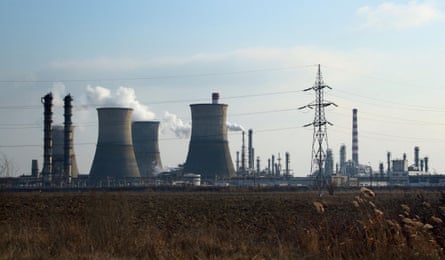
Now, with global temperatures 1.4C higher, the birthplace of big oil has little fear it will share the fate of the candle makers. “We’ll use petroleum for at least 100 years more,” said Iulian Pitoiu, a petroleum engineering student at the Petroleum-Gas University of Ploiești, the only such institution on the continent. Adrian Muşoiu, a fellow student following in the footsteps of his father, who has worked in the surrounding oilfields since he was 16, said he was aware of job losses but did not feel his career was at risk. Their classmates agreed that neither they nor their professors were worried about Romania’s energy transition.
The students may well be correct. In March, drilling began in the Black Sea for Neptun Deep, which is expected to be the largest gas extraction project in Europe. In July, workers finished an EU-subsidised pipeline to funnel the fuel to Podișor – a village over from the solar-and-battery farm Enery is about to build – where it joins a pipeline linking it to the rest of Europe. The Mintia coal plant, which was mothballed in 2021, is being converted into a gas-fired power plant expected to rank among Europe’s biggest.
Romania’s dash for gas has angered campaigners, who fear it will leave the country dirtier and poorer even as carbon prices rise and EU climate law compels faster action. A report by the European Network of Transmission System Operators for Electricity found that a planned 2.15GW expansion of gas-fired power plants in Romania was unlikely to be economically viable, and may need to be decommissioned by 2035 if built in full.
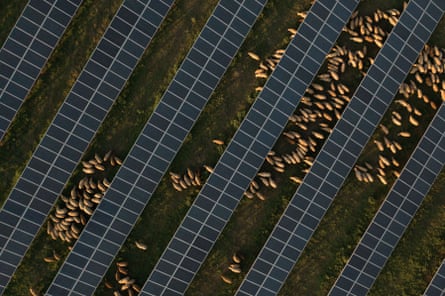
“It’s more expensive to transition twice,” said Raluca Petcu, a campaigner at Bankwatch Romania, an environmental nonprofit. “We’re going to have to build more renewables in 2035 or transform the gas plants we’re building.”
Five coal plants scheduled to close at the start of the year were granted a stay of execution in October, after the government warned of blackouts and job losses. A formal assessment by the European Commission in May found Romania’s National Energy and Climate Plan fell short on ambition for its carbon sink – forests endangered by illegal logging – and renewable energy. Preliminary emissions data suggests pollution increased slightly in 2024, even as the economy stagnated.
Public appetite for transformational change is lacking. The share of Romanians who do not think climate breakdown is a serious problem is double the EU average, a Eurobarometer survey found in June. Only three countries hold lower support for becoming climate neutral by 2050.
In many places there is a fear of being left behind, said Petrescu. “People remember what happened 30 years ago, and they’re afraid to be victims of another transition.”
For all the caveats, Romania has still broken records for protecting the planet. Its net greenhouse gas emissions have fallen to just 3 tonnes per person. The Swedes, who are also blessed with large carbon-sucking forests, are the only Europeans who pollute less.
Romania’s journey could provide a blueprint for other countries in eastern Europe that have decoupled at a slower pace – or not at all – despite also having experienced disruptive restructuring of their economies. It also shows middle-income countries across Asia and South America that a manufacturing powerhouse can cut its emissions quickly while raising living standards.
Still, “what’s happened in Romania should never turn into something preachy”, said Mihnea Catuti, executive director of Energy Policy Group, a climate thinktank. While the clean energy boom is allowing developing countries to take greener growth paths than Europe and North America, there is still a level of development that can only be reached by raising energy consumption, he said.
“Romania used to be an oil and gas country for a century before it managed to decouple its emissions,” he added. “But you get to a point at which growth simply doesn’t come from that any more.”