 3 months ago
65
3 months ago
65
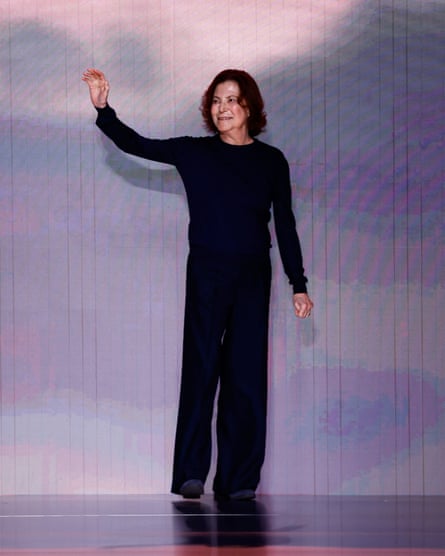
Does it matter who designs women’s clothes? Silvana Armani – niece of the late Giorgio, creative director of womenswear and one of the few women in charge of a fashion house – thinks so.
“The way women and men relate to their bodies is different, which affects the design process. Dressing a woman is more complex than dressing a man,” she said before her first solo show on the last day of Milan fashion week. “Yet, as a woman, you know your body. You try things on and notice if a jacket’s length is off, adjusting it as necessary.”
Chioma Nnadi, the head of editorial content for British Vogue, agreed: “I’ve heard anecdotally from retailers that women designers actually sell more on the shop floor. It makes total sense to me: they’re designing for their own bodies,” she said. “I think sometimes that wearability can get lost in the fitting process with male designers”.
The clothes on the Armani catwalk on Sunday were the sort of thing you’d find in Silvana’s wardrobe, the designer said. “I only wear trousers, soft jackets and shirts. I don’t like frills or excessive jewellery.” Loose blazers came with dropped shoulders, wide-legged trousers and floor-sweeping coats in navy, white, khaki and greige. It wasn’t a world away from what Giorgio started, but there were noticeably more pockets, no hats (Giorgio was a fan) and only a few skirts.
Six months after Giorgio Armani’s death, the world’s biggest private luxury fashion brand is still for sale. It is thought the fashion house will be sold within a year. According to his will, the mega-conglomerates LVMH, Luxottica and L’Oréal are the frontrunners, which could well shake up the infrastructure.
Silvana, who worked for the company every day for 40 years, is unfazed. “He called it the ‘gym’ and it has trained me,” she said. “He knew my point of view. There was no need to talk about what would happen afterwards; it would have happened naturally.”
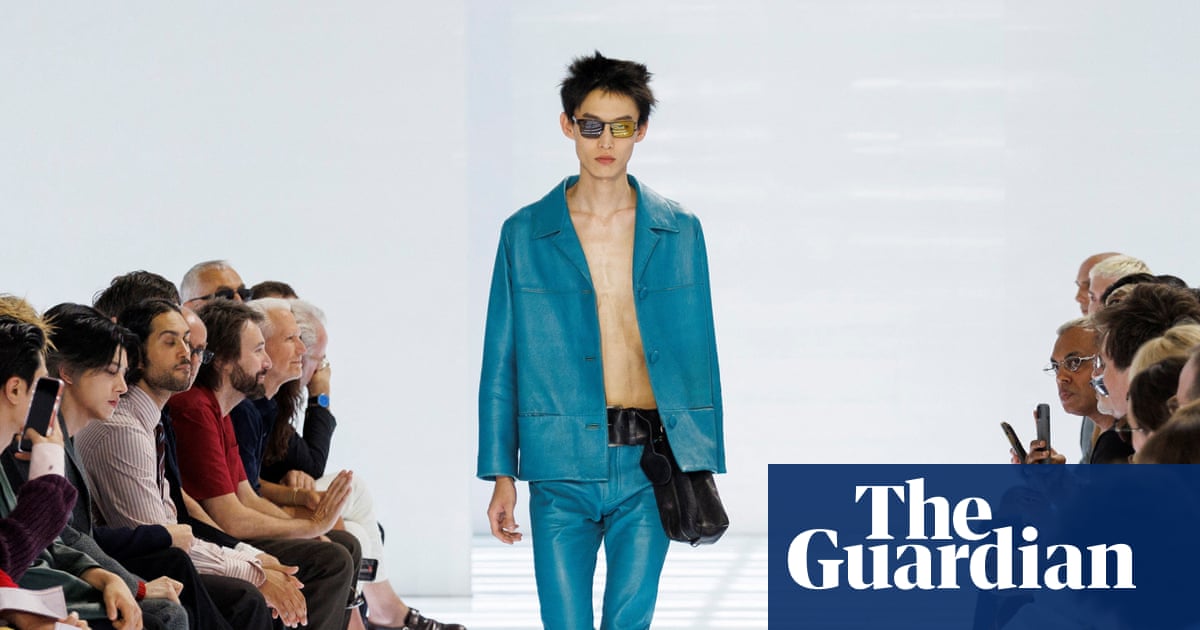
Giorgio Armani was famous for removing the internal structure from tailoring both for men and women, but also for making glamorous clothing that did not require its wearer to flash too much flesh. After a weekend of exposed bottoms at Gucci and Dolce & Gabbana in Milan, it was a welcome sight.
There have been more than 20 top appointments in fashion over the last year, and of those, most have gone to men. The night before, one of the few designers to break this “glass runway”, Sunderland-born Louise Trotter, showed her first autumn collection for Bottega Veneta.
Sat in the audience at the brand’s headquarters was Lauren Hutton, whose character in the film American Gigolo wore Armani but carried one of Bottega’s woven-leather clutches.
Bottega Veneta is now in the press for making the huge pink handbag hauled around by Jacob Elordi on his Wuthering Heights press tour. The intrecciato technique, which involves braiding thin strips of leather into a pliable grid, appeared on this collection’s collars, bags and a trenchcoat.
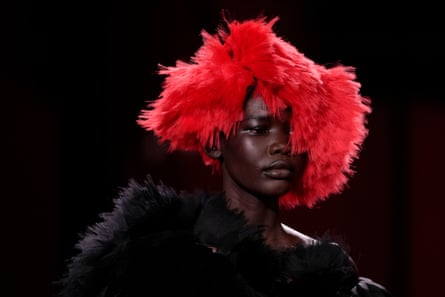
This collection was mainly focused on the size and texture of the clothes. The first half showed giant suits with soft shoulders in greys and navies; according to Vogue, the rounded shoulders were a response to “feedback” from Trotter’s first season. Then came swishy yeti coats in faux fur and recycled fibreglass, inspired by Maria Callas at the opera.
Trotter is the first woman to run Bottega Veneta in more than 20 years – and only the second since it was founded in 1966. Yet, sales have been up 1% since Trotter took over in December 2024. Maybe it does matter if a woman is in charge.