 2 months ago
67
2 months ago
67
Ten metres underwater, surrounded by darkness, all Dan Frolec could hear was the engine noise of the boat above him. It had been well over half an hour since his friend Tom had descended into a mysterious underwater hole to look for their other friend, Michael. Frolec began to fear the worst – maybe it had swallowed both of them up for good.
He had almost given up hope when bubbles of air hit his mask. Somebody was coming out. A dim light shone out of the cave and Tom emerged alone. He shook his head, signalling to Frolec that Michael was still lost and, by now, probably dead. Little did Frolec know that things were about to get a lot worse.
It was 2002 and Frolec, who was then 32 and living in Prague, had been looking forward to this Croatian getaway with his diving buddies. Pressures at work had been mounting and his love life was, to put it plainly, complicated. Before leaving for the trip, he decided to break up with his girlfriend of five years to make things official with his new love, Jarka. A year before, he and Jarka had met in a nightclub and, he says, “fell in love immediately”. Earlier that day, Frolec had sent Jarka a text message while he basked in the afternoon sun: “I love you, fox.”
The group of diving enthusiasts was made up of Tom, the most experienced among them; Ivo, a close friend of Frolec’s whom he invited at the last minute after somebody else dropped out; Marek, the captain of the Domani, the boat taking them on their Croatian voyage; Zack; Roman; and Michael, who was quiet but, Frolec says, had “a dry sense of humour”. The friends had met at a diving club in the late 1990s.
“I always loved the ocean,” says Frolec, now 55 – but, growing up in landlocked Czechoslovakia, he had no access to the open sea. After the Velvet Revolution in 1989, which saw the collapse of the communist regime, the borders opened and, says Frolec: “One of the first things I did was buy a pair of fins and a mask and went to Croatia for some snorkelling.”
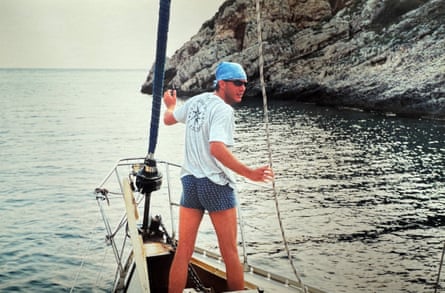
In 2002, a few days into their trip around Croatia, sailing and diving, Marek pulled out a map and Michael pointed at a hand-drawn circle that caught his eye: Poganica Bay. Marek had been there recently and discovered a dark, shallow hole in the seabed, but had not ventured inside. The group’s interest was piqued and they decided to explore it together that evening.
The sun was setting as they arrived and a chill was creeping in. Frolec didn’t fancy getting in the water so stayed on the boat with Marek and Ivo. The others suited up and descended underwater to venture inside the mystery hole. After about 45 minutes, Michael emerged from the water, climbing on to the boat in excitement, telling them the hole was, in fact, a sea cave. The others had gone into the cave to explore while he returned to fetch more equipment. He jumped back into the water, kitted out with a torch, a diving computer to track his movements, and an air tank, and swam back down. Frolec didn’t think anything of it. “The rule is to always dive with a buddy, but it didn’t occur to me that Michael was going alone because he was joining the others,” he says.
A further 45 minutes had passed when the cave explorers returned, but one person was missing: Michael. Tom said they had turned back after realising the cave, made up of a tunnel that split into two large domes, was too dangerous to explore on a night dive without the proper equipment. When Frolec told them Michael had gone back to the cave to look for them, panic set in. None of them had seen Michael. He was down there alone, with a basic torch (instead of the specialist, heavy-duty versions cave divers use) and his hour’s worth of oxygen all but used up.
The sun had set and the sky above was midnight blue when Frolec and Tom put on their wetsuits. They swam to the entrance of the cave while the others drove the boat around in the faint hope that Michael had found safety ashore nearby. Tom, equipped with specialist cave-diving gear, made his descent down the chimney-like tunnel. Frolec remained outside with a spare air tank, trying to stay calm to conserve his limited air, and waited.
“It was the longest 40 minutes of my life, staring into this black hole,” says Florec. He is not a religious man but in that moment, one thought kept creeping into his mind: “If there is any divinity, Michael needs your help.”
His appeals to a higher power appeared to go unanswered. After Tom emerged alone, the pair slowly ascended to the surface and swam towards the boat. Marek called the Croatian coastguard to report Michael missing, but they said they wouldn’t get there until the morning. The group needed to stay put overnight.
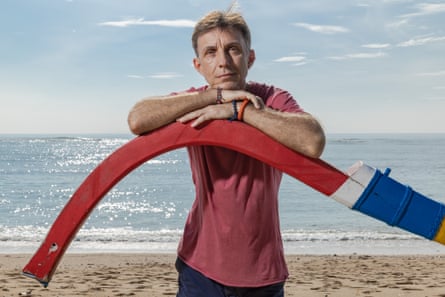
When the coastguard finally arrived, Marek explained the situation. The commander instructed two of his divers to head into the cave, but Tom was concerned. The men were putting on scuba diving equipment – gear that was not suitable for an underwater cave, for which you would usually be kitted out with a strong torch, two oxygen tanks and a backup dive computer in case the first one failed. He explained his concerns repeatedly to the commander, but they were dismissed.
The two divers descended underwater and approached the cave. As Frolec and Tom had done, one diver waited outside while the other swam down the tunnel.
An hour passed and fear began to grip those on the boat. One of the divers came to the surface and shouted something at his commander in Croatian. His diving partner was still inside. Frolec and Tom suited up again and embarked on a second rescue mission.
The sun’s rays penetrated the water’s surface and illuminated the black hole, showing how deep it truly was. Tom soon emerged from the long chimney alone, complaining of how bad the visibility was. It appeared the deadly cave had taken a second man. They rose to the surface and, an hour later, a Croatian police boat joined them. Marek was told to follow it. As they approached the pier, police officers were waiting for them. “I didn’t think anything of it because this was clearly an accident,” says Frolec. They were taken to a police station where they were called in one by one to give their testimonies about the events. They were told they could not leave the station and would have to stay there overnight. “We thought: they’re investigating the incident, maybe this is what they do in Croatia,” says Frolec.
The next morning, Frolec and Ivo were woken up by an officer who led them into another room to have their photographs and fingerprints taken. Alarm bells started to ring and Florec asked for a Czech-speaking lawyer. The pair were separated and Florec was taken into a room where the duty lawyer was waiting. Florec was hooked up to a machine and wires were connected to his fingers. He was about to undergo a lie-detector test.
“How did Michael die?” the officers asked immediately. That was it, confirmation he was dead. “Did you know that he was stabbed with a knife? Was it your knife? Did you know it was a murder?” At this point, says Florec: “It became obvious they were trying to blame us because the navy diver died.” Only later would he learn that he failed the lie-detector test. Further tests followed: Florec’s blood was taken and his nails clipped. Then he was hauled into a room with two police officers, a Czech interpreter and a state prosecutor. He was utterly exhausted when the final blow was dealt. He, along with Ivo, was a suspect in Michael’s murder. “I felt shock combined with fear. The situation began looking very dangerous,” says Florec.
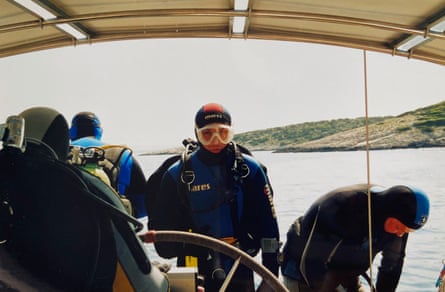
After another sleepless night in the police station, Florec was introduced to his Czech-speaking lawyer and then swiftly moved to the police gym, where a pile of diving gear lay on the floor. It was his. He searched for his dive computer, which would prove he didn’t enter the cave, meaning it would have been impossible that he murdered Michael, but it wasn’t there. An officer told him they had taken it away as part of the investigation. Florec began to suspect he was being framed. “This was the moment where I started to worry about whether this was a fair investigation, fearing they would manipulate it,” he says. Then came the handcuffs.
He was escorted to court with Ivo, who was also in cuffs. “There were no court proceedings or anything like that. We were brought in front of a judge who told us why we were there and that we were going to be sent to jail for at least a month while the police carried out their investigation,” says Florec. They faced the prospect of being imprisoned without charge for up to six months.
Everything felt like a blur, he says, and he could no longer think straight. “I hadn’t brushed my teeth for three days. It was such a small thing, but it was a really horrible feeling.” After his first night in jail, he woke up and met his cellmates. Two were there on suspicion of drug dealing and the other was awaiting trial for killing his wife. Other inmates would soon refer to his cell as “two dealers, two killers”.
Despite the apparently dodgy company, he got on well with his with cellmates: “We shared a lot of laughter.” The language barrier made it difficult for Florec to explain why he was there, but it became clear to everyone when that day’s newspaper arrived. A picture of the Domani was plastered on the front page, along with his and Ivo’s full names, and the accusation that they had murdered Michael. He became tearful, feeling that things were stacking up against him. “I felt quite desperate. Everybody believes what is written in the newspaper,” he says.
Jarka was at work when she received a call from an unknown woman asking if she was Frolec’s girlfriend. The Czech consul in Croatia was calling to tell her that her boyfriend had been arrested on suspicion of murder. Jarka was tasked with telling Frolec’s parents, whom she had never met. “Jarka went to my parents’ apartment and rang their bell. That’s how they first got to know each other,” he says. Before she was able to tell them what happened, their son’s picture flashed up on the evening news.
For Frolec, the first days in jail were tough. Another front-page story accused him, Ivo and Michael of being in a gay love triangle, which led to some “verbal provocations” from other inmates. The prospect of serving 40 years (the maximum sentence for murder in Croatia) weighed heavy. “It was a very strange and frightening feeling. I had to convince myself that this option was not on the cards,” he says. But this proved even harder when Jarka was finally able to visit him. “I planned to remain calm, but I screwed it up. She cried and then I cried,” he says. Jarka vowed to get Frolec a better lawyer.
After money was deposited into his prison account, one of the first things he bought was a “kid’s notebook with Cinderella on the front page” to chronicle his time in custody – from thoughts on the world outside, coloured by his anguish at being in custody and shortsighted fears of living in a post-9/11 society, to recording calm moments watching The Simpsons with his cellmates and his shock at inmates pretending to swallow antidepressants in front of guards before spitting them out and using them as prison currency.
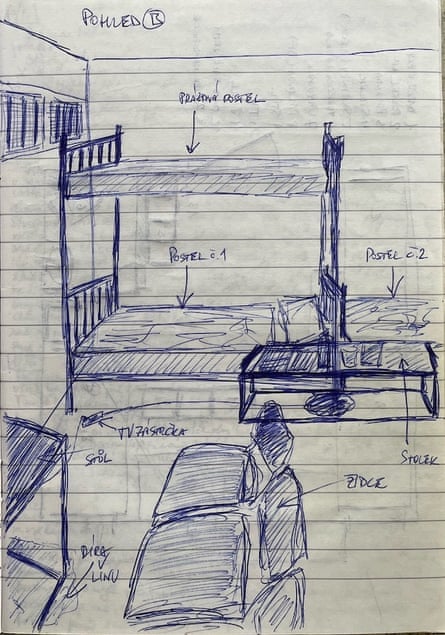
After a few weeks, things began to look more positive. His new lawyer seemed to have a better handle on the case. He told Frolec that his diving buddies had testified in front of the investigating judge and more or less disproved the police’s theory that Michael was murdered, which was further backed up by his late friend’s dive computer. It showed that Michael had been alive for 30 minutes looking for a way out of the cave. But there was one thing left: red stains on the Domani that the police claimed were bloodstains. Frolec knew that they were marks left from mooring ropes, but he was unable to leave prison until DNA tests confirmed this.
The bodies of Michael and the coastguard diver were eventually found in the cave. The DNA tests came back confirming that the red stains were not blood (Michael’s stab wounds were thought to be self-inflicted). After nearly a month in jail, Frolec and Ivo were released. “I remember the moment the cell door opened and the guard telling me: ‘It’s your time,’” says Frolec. The following hours are a blur, but he recalls going for a “really nice meal” with his lawyers and planning his return to Prague the next day with Ivo. When they arrived there, they were greeted by a media frenzy at the airport.
The experience, he says, “influenced my life in a way that I actually value a lot. Not many people experience being stuck in a room like that. I value my freedom and I take everything with a lot less stress now.”
The details about Michael’s final moments still haunt Frolec. Michael’s bubbles would have disturbed the silt near the tunnel entrance, hampering visibility. As a result, he was probably scrambling blindly for the exit as his air supply was running low. “He must have been in a state of panic,” says Frolec.
After settling back into a routine, he had an important visit to make. Back on the boat, hours before the fateful event, he had taken a photograph of Michael eating, with a beaming smile. He framed the photograph and decided to visit Michael’s mother, along with the crew of the Domani, to give it to her. “It was very emotional because we realised that her life had changed for ever,” he says.
Ivo had also come close to having his life destroyed. Does Frolec feel any guilt about inviting him on the trip at the last minute? “If he felt angry or devastated by the experience, I would definitely feel more guilty. But, like me, he’s a pragmatic person, and we made it out of jail,” he says. The pair remain good friends. Frolec lives in Bali with Jarka, now his wife, and their two children. The experience was “confirmation that we belong together”, he says.
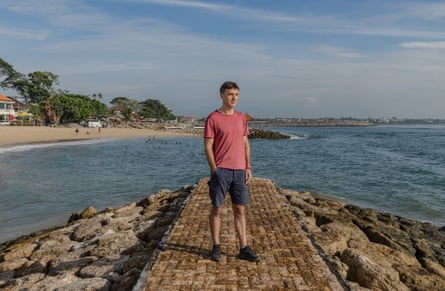
Frolec still dives: he went a few weeks ago with friends in Bali. But, now that he has children, he draws the line at cave diving – although he did do cave-diving training in Florida after the ordeal because he “felt useless waiting for Tom” on that fateful night.
Once a year he visits Prague, where he always sees Ivo. At first, the topic of Croatia would come up every time, but in the more than two decades that have passed, they have both moved on. During their annual reunion last year, meeting in Prague’s city centre, they “grabbed a good Czech beer and caught up on other stuff in our lives”.