2 months ago
77
2 months ago
77
“It’s very hard to imagine what’s going on beneath the water when you look at a river – but you have billions of fish making these epic migrations, some of the largest animal migrations on Earth,” said Dr Zeb Hogan, at the University of Nevada in the US.
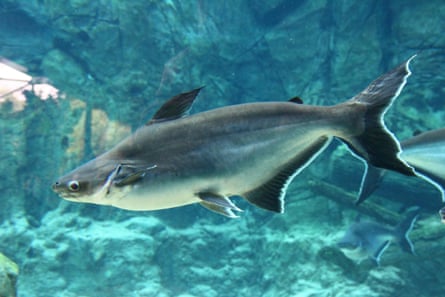
The longest migration of any freshwater fish species is that of the dorado catfish, which makes a migration of 7,000 miles (11,000km), from spawning in the foothills of the Andes to feeding in the Amazon estuary and back again. The silver-gold fish themselves were incredible, said Hogan: “They get to about 2 metres long.”
Such fish migrations happen in rivers across the world – salmon and eels are more familiar examples – but many are rapidly collapsing, according to the most comprehensive assessment to date. The analysis, by the UN’s convention on the conservation of migratory species (CMS) and led by Hogan, found freshwater fish populations worldwide have crashed by about 81% since 1970.
Freshwater species are especially vulnerable to harm caused by humans because pollution often drains into rivers and lakes, dams block vital waterways and overfishing decimates populations. The climate crisis is adding to the damage by raising water temperatures.
“Animal migration is one of nature’s great wonders,” said Amy Fraenkel, the CMS executive secretary. “Their journeys, which can cross multiple national borders and even continents, are extraordinary feats of timing and endurance. But these species face mounting pressures at every stage of their life cycles. International cooperation is essential to ensure that such species survive and thrive.”
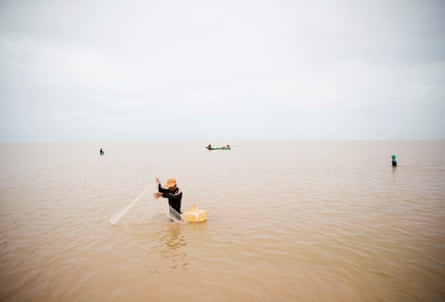
Migratory freshwater fish also underpin some of the world’s largest inland fisheries and sustain hundreds of millions of people but are among the most imperilled wildlife on the planet. The huge Tonlé Sap lake in Cambodia, part of the Mekong river system, has more than 100 migratory species. Hogan said: “They can catch several tons of fish in an hour.”
The 132 countries that are part of the CMS are meeting this week in Brazil – the relatively undeveloped Amazon is one of the last great strongholds for migratory freshwater fish – and improved international cooperation to protect migrating fish is high on the agenda. Measures would include removing or preventing barriers in rivers, ensuring water flows, tackling pollution and coordination of fisheries catches.
Half of the Earth’s land surface lies within river basins shared by more than one country, but the report found the collapse of river migrations was a largely overlooked biodiversity crisis. It assessed data on more than 15,000 species of freshwater fish and found 325 that crossed borders and could meet the criteria for being listed for protective action. Only 24 have been listed to date, mostly sturgeon, which have long been targeted for caviar.
“Rivers don’t recognise borders – and neither do the fish that depend on them,” said Michele Thieme, at WWF-US. “The crisis unfolding beneath our waterways is far more severe than most people realise, and we are running out of time. Rivers need to be managed as connected systems, with coordination across borders and investments in basin-wide solutions now before these migrations are lost for ever.”
One of the 325 species identified is the piraiba, or goliath catfish, which can reach 225kg (500lbs) and migrates in the Amazon basin. “People think of the Amazon as forest, but in the rainy season huge expanses of it are flooded,” said Hogan. “So you actually have this forested aquatic wonderland for fish.”
Brazil and other countries have already proposed a decade-long action plan for migratory catfish, which could be a model for other basins. “The action that we’re seeing in the Amazon is very hopeful. Keeping rivers free flowing and healthy is incredibly important,” said Hogan.
The Mekong river basin is in particular trouble, with all the large migratory freshwater fish now at risk of extinction, including the colossal giant catfish, which has halved in size in recent years due to overfishing. However, none of the key Mekong nations – Thailand, Cambodia, Laos and Vietnam – are yet members of the CMS treaty. Brazil’s main political goal for the summit, Cop15, is to get more countries onboard.
Other priority river basins identified by the report are the Danube, Nile, and Ganges-Brahmaputra.
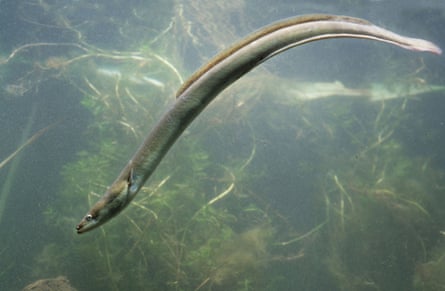
Animals undertake mammoth migrations to capitalise on food or habitats that they need at different life stages. For example, salmon use the clean upstream waters with gravel beds to lay eggs but then move downstream to take advantage of more abundant food. European eels do the opposite, spawning at sea and then returning to rivers – an 8,000-mile round-trip – and the species is already listed as in need of protection. “There’s a big effort in Europe and the US to improve connectivity through, for example, dam removal,” Hogan said.
Some migratory fish have already been lost, such as the Chinese paddlefish from the Yangtze river. “It was the first of these big, iconic migratory species to go extinct,” said Hogan, with its demise blamed on the building of the Gezhouba hydroelectric dam in 1981.