2 months ago
67
2 months ago
67
Summary
Welcome to the Guardian’s continuing coverage of the US-Israel war on Iran.
The United States and Iran have agreed to a two-week ceasefire barely an hour before Donald Trump’s Wednesday deadline to obliterate the country was set to expire, with Tehran saying it will temporarily reopen the vital strait of Hormuz.
Both sides claimed to have won the more than month-long conflict that has roiled global financial markets and sent oil prices skyrocketing, with Trump telling the AFP news agency the deal was a “total and complete victory” for the US.
Iran too cast the ceasefire as a win and said it had agreed to talks with Washington to begin Friday in Pakistan on a path to end the conflict.
“The enemy has suffered an undeniable, historic and crushing defeat in its cowardly, illegal and criminal war against the Iranian nation,” said a statement from the Iranian Supreme National Security Council.
“Iran achieved a great victory.”
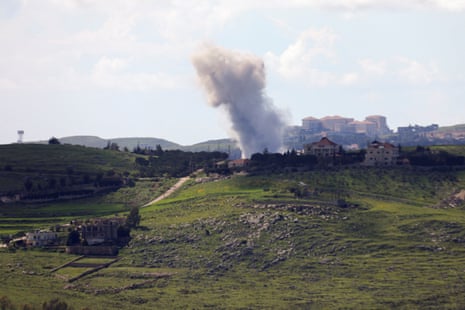
The White House said Israel had also agreed to the ceasefire, but prime minister Benjamin Netanyahu said it does not include Lebanon, where Israeli assaults in response to rocket fire by Iranian-backed Hezbollah have led to more than 1,500 deaths, according to Lebanese authorities.
-
Iran’s Supreme National Security Council said it had conditionally accepted a two-week ceasefire if attacks agains Iran are halted.
-
Iran’s foreign minister said passage through the strait of Hormuz will be allowed for the next 2 weeks under Iranian military management.
-
Iranian state media said negotiations with the US would be held in Islamabad to finalise details of an agreement, with the aim of “confirming Iran’s battlefield achievements”. Talks will begin on Friday 10 April and may be extended, state media reported. State media also reported that talks with the US do not amount to the end of the war.
-
Pakistani prime minister Shebaz Sharif announced that Iran, the US and their allies agreed to an immediate ceasefire everywhere, including Lebanon. Sharif has been a key figure in attempting to reach a diplomatic solution between the two warring parties. In his statement, Sharif invited delegations to Islamabad on “Friday, 10th April 2026, to further negotiate for a conclusive agreement to settle all disputes”.
-
Benjamin Netanyahu said Israeli welcomed the ceasefire but said fighting Hezbollah in Lebanon was not part of it.
-
Trump said Iran had proposed a “workable” 10-point peace plan. According to Iranian state media, the ten-point proposal includes a number of conditions that the US has in the past rejected. Among them are controlled transit through strait of Hormuz coordinated with Iranian armed forces and withdrawal of all US forces from regional bases. The plan would also require the lifting of all primary and secondary sanctions, payment of full compensation to Iran and release of all frozen Iranian assets.
-
Iranian state media also said the 10-point plan for securing an end to the war would require Washington to accept its uranium enrichment program, a previous red line for the Trump administration.
-
Even as the ceasefire was proposed, missile alerts continued in the United Arab Emirates, Qatar and Israel.
Key events Show key events only Please turn on JavaScript to use this feature

Peter Beaumont
Analysis: US power has been severely diminished
The likely biggest consequences are the ones most difficult to assess. But it seems clear that the despite a bellicose assertion of US military power under Trump and his defence secretary, Pete Hegseth, US power has been severely diminished by an illegal adventure with ill-defined war aims.
With Iran still in control of the strait of Hormuz, a middle ranking global military power that has suffered under years of punitive sanctions has not only managed to survive weeks of heavy US and Israeli bombardment but pursued a succeessful strategy of horizontal escalation that imposed heavy global economic costs.
The more militarily significant Gulf states, to the surprise of few, turned out to be paper tigers, despite a huge investment in arms. Netanyahu, who promised an easy war was revealed, not for the first time, to be hopelessly unrealistic in his assessments about Iran and the wider region.
Across the globe friends and foes will draw their own conclusions. China and Russia will have noted the limits of US power and that, despite the jaw-jaw, the US did not commit ground troops to its chaotically conducted campaign.
The damage wrought by Trump to a weakened Nato will also have been well-noted, even as European countries have moved to distance themselves from Washington.
Practically, other big questions remain. Does the ceasefire deal cover Lebanon, as mediator Pakistan has suggested? In the run-up to the ceasefire, one suggestion was that one off ramp from the war would see the US and Israeli assault on Iran halt while Israel continued with an expansionist campaign against Lebanon to get Netanyahu off the hook.
“Trump lost this war in every possible sense – morally, legally, politically, economically, reputationally, and strategically”, suggested Timothy Snyder, a historian of authoritarianism, echoing the views of many experts.
Allow content provided by a third party?
This article includes content hosted on embed.bsky.app. We ask for your permission before anything is loaded, as the provider may be using cookies and other technologies. To view this content, click 'Allow and continue'.
“Trump has given the theocracy in Iran another lease on life with this failed war,” said Trita Parsi, an Iran expert at the Quincy Institute for Responsible Statecraft, “just as Saddam Hussein did in 1980 when he invaded Iran and, by that, ensured that Ayatollah Khomeini could consolidate his power.”
It is hard to disagree.
Analysis: Trump's 'deal' is a huge strategic failure for the US
Peter Beaumont
A genocidal threat, and then the US president, Donald Trump, blinked – without any apparently meaningful concessions from Iran. As in so much concerning the second Trump administration, the two week ceasefire “deal” that will see the strait of Hormuz reopened – if it can be described as such – is maddeningly vague and short on detail, apparently kicking the can on key issues down the road.
Iran’s nuclear issue, Trump said, would be solved “perfectly.” “It was a big day for world peace”, Trump posted on Truth Social. “Iran can start reconstruction” he added. “Big money” could be made. Yada. Yada. Yada.
The reality is that as the current circumstances stand, this represents a huge strategic failure for the US. Despite having killed Iran’s Supreme Leader Ali Khamenei and other senior leaders, the regime change initially promised by Trump and US prime minister Benjamin Netanyahu failed to materialise. Instead it appears the regime has consolidated around a more hardline core centred on the Islamic Revolutionary Guards Corps.
Far from being a new, more reasonable and less radical regime, as Trump has repeatedly suggested, it remains essentially the same regime – wounded, wary, and perhaps even more hardline.
Blasts and missile alarm warnings have been heard in Bahrain, despite the announcement of the temporary ceasefire in the region. The country’s interior ministry reported a fire had been extinguished at a facility after an Iranian attack, with no injuries sustained.
Israel said it was also intercepting missiles and striking back at sites in Iran, while Saudi Arabia, Kuwait and the United Arab Emirates also activated warning sirens and air defence systems in the hours after the ceasefire announcement. It remains unclear when the ceasefire will take effect.
Mark Saunokonoko
The ceasefire has offered some immediate relief to countries struggling with fuel supply, but hopes the truce will quickly restore normality are misplaced, analysts have suggested.
Saul Kavonic, the head of energy research at MST Financial, said the two-week pause provided “an off-ramp for Trump’s overly bombastic ultimatum, but not yet an off-ramp for oil markets or the war”. He told Reuters it was unlikely the shut in oil and LNG production would resume until there was more confidence in a lasting ceasefire.
Ron Bousso, Reuter’s energy correspondent, agreed that even if tankers could safely exit the Gulf, shipowners would probably remain cautious about re-entering the region when any resumption of hostilities could result in the loss of vessels or crew.
Prashant Newnaha, a senior strategist at the Singapore-based TD Securities, said a renewed escalation could not be ruled out, “but markets are treating this ceasefire as the real deal and all parties involved will sell the ceasefire as a major win.
“Looking further out, oil prices are not returning to pre-war levels. This will leave inflation persistence as a key theme for markets to ponder,” he said.
Many other countries have also issued statements welcoming the tentative ceasefire, including South Korea, New Zealand and Iraq, alongside reactions from Australia, Japan and Pakistan as we reported earlier.
South Korea’s ministry of foreign affairs issued a statement that they hoped “negotiations between the two sides will be successfully concluded and that peace and stability in the Middle East will be restored at an early date”, as well as wishes for “free and safe navigation of all vessels through the strait of Hormuz”.
A spokesperson for New Zealand’s foreign minister, Winston Peters, welcomed the “encouraging news” but noted “there remains significant important work to be done to secure a lasting ceasefire”. Iraq’s foreign ministry likewise called for “serious and sustainable dialogue” between the US and Iran “to address the root causes of the disputes”.

Justin McCurry
Japan has welcomed the temporary ceasefire in the US-Israel war on Iran, adding that it “expects” the move to result in a “final agreement” after Washington and Tehran begin talks on Friday.
Describing the ceasefire as a “positive move”, the chief cabinet secretary, Minoru Kihara, told reporters that Tokyo wanted to see a de-escalation on the ground in the region, adding that the prime minister, Sanae Takaichi, was seeking talks with the Iranian president, Masoud Pezeshkian.
A temporary end to hostilities will come as a relief to Japan, which depends on the Middle East for about 90% of its crude oil imports, most of which is transported through the strait of Hormuz.
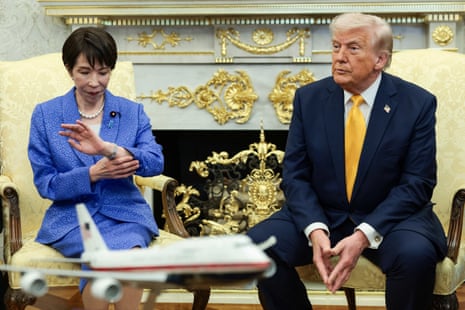
Takaichi has condemned Tehran for its partial blockade of the waterway and Iran’s attacks on other Middle Eastern countries, but has refused a request from Donald Trump to send Japanese maritime self-defence forces to help secure safe passage for ships using the strait.
The Japanese PM reportedly explained to Trump that military involvement was impossible under Japan’s postwar constitution, which bans it from using force to settle international disputes.
Trump has since condemned Japan – and Washngton’s other north-east Asian ally South Korea, along with Australia – for refusing to join the war.
Markets in Asia responded positively to news of the ceasefire, with the Nikkei stock index surging 4.8% and South Korea’s Kospi gaining 5.6% on Wednesday morning.
There was relief in Japan, too, over the dip in crude oil prices, after warnings that a prolonged conflict could push inflation higher and dampen domestic demand in the world’s fourth-largest economy.
Takahide Kiuchi of the Nomura Research Institute said Japan and other countries in Asia that rely on oil imports could face “serious economic risks” if the conflict continued to drag on.
“If shipping operations in the strait of Hormuz do not return to normal, Japan will eventually face a severe crude oil shortage,” Kiuchi told the Nikkei Asia business paper. “Should such risks escalate, the government would likely call on households and businesses to curb gasoline and electricity consumption, much as it did during the oil shocks of the 1970s.”

Lauren Gambino
US political leaders and many Americans breathed a sigh of relief on Tuesday evening, after Donald Trump announced a provisional ceasefire deal following threats to destroy Iran’s “whole civilization”.
“I’m glad Trump backed off and is desperately searching for any sort of exit ramp from his ridiculous bluster,” Chuck Schumer, the Senate Democratic leader, said on Tuesday night.
Several Republicans cheered the president’s decision, casting it as shrewd and tactical.
“Excellent news,” Senator Rick Scott of Florida said. “This is a strong first step toward holding Iran accountable and what happens when you have a leader who puts peace through strength over chaos and weak appeasement policies.”
Senator Lindsey Graham, one of the chamber’s loudest and most aggressive Iran hawks, said on Tuesday evening he shared the hope that “we can end the reign of terror of the Iranian regime through diplomacy”.
But he added: “We must remember that the strait of Hormuz was attacked by Iran after the start of the war, destroying freedom of navigation. Going forward, it is imperative Iran is not rewarded for this hostile act against the world.”
Donald Trump claims 'a big day for world peace'
Donald Trump has called Tuesday “a big day for world peace” on a social media post, claiming that Iran has “had enough”. He said the US will be “helping with the traffic buildup” in the strait of Hormuz, and that “big money will be made” as Iran begins reconstruction.
In the statement on Truth Social, he added that the US would be just “hangin’ around” in order to make sure everything goes well” and that he was confident it would. He later added “this could be the Golden Age of the Middle East”.
The two-week ceasefire with Iran remains conditional in nature, and Washington has yet to publicly accept an invitation to talks planned for Friday in Islamabad.
Some points in Iran’s 10-point plan for a ceasefire have previously been rejected by the US in the past.
Australian prime minister Anthony Albanese has welcomed a two-week ceasefire deal between the US and Iran that is set to temporarily reopen the strait of Hormuz, as he issued a rare criticism of Donald Trump for threatening a “whole civilization will die”.
The prime minister said news of the conditional ceasefire was “very positive” and was hopeful it would lead to the permanent end to a conflict that has sent global fuel prices soaring.
In an interview with Sky News, Albanese said threatening to destroy civilian infrastructure was an “extraordinary statement to make”.
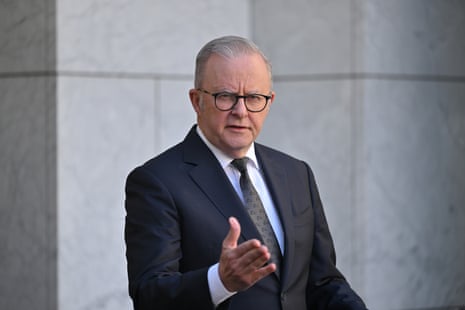
“I don’t think it’s appropriate to use language such as that from the president of the United States. And I think it will cause some concern, which is there,” the prime minister said.
“We’ve said very clearly that the conduct of any conflict must be within international law and that provides for making sure that civilians – who aren’t parties to the conflict – are given every protection possible.”
Albanese would not be drawn on whether the bombing of civilian infrastructure would constitute a war crime, which is the view of legal experts and officials from numerous countries.
Israel says ceasefire does not include Lebanon
Israel supports Donald Trump’s decision to suspend strikes against Iran for two weeks, but said the ceasefire does not include Lebanon, prime minister Benjamin Netanyahu’s office said on Wednesday.
The office said Israel backed the US move, provided Tehran immediately opens the strait of Hormuz and stops attacks against the United States, Israel and countries in the region.
The Pakistani prime minister, Shebaz Sharif, had previously said the ceasefire extended over Lebanon.
Israeli attacks on Lebanon since the start of the war have killed more than 1,400 people, including 126 children, and displaced more than 1 million, according to Lebanese authorities. The renewed Israeli war on Lebanon was launched after Hezbollah – the Iranian-backed Lebanese militant group – fired rockets into northern Israel in response to the killing of the former Iranian supreme leader, Ali Khamenei, in joint US-Israeli airstrikes.
Israel also said it supports US efforts to ensure Iran no longer poses a nuclear, missile or “terror” threat to US, Israel and Iran’s Arab neighbours, adding that Washington had told Israel it was committed to achieving their shared goals in upcoming negotiations. Iran said on Wednesday negotiations with the US would begin on Friday 10 April in Islamabad.
Summary
Welcome to the Guardian’s continuing coverage of the US-Israel war on Iran.
The United States and Iran have agreed to a two-week ceasefire barely an hour before Donald Trump’s Wednesday deadline to obliterate the country was set to expire, with Tehran saying it will temporarily reopen the vital strait of Hormuz.
Both sides claimed to have won the more than month-long conflict that has roiled global financial markets and sent oil prices skyrocketing, with Trump telling the AFP news agency the deal was a “total and complete victory” for the US.
Iran too cast the ceasefire as a win and said it had agreed to talks with Washington to begin Friday in Pakistan on a path to end the conflict.
“The enemy has suffered an undeniable, historic and crushing defeat in its cowardly, illegal and criminal war against the Iranian nation,” said a statement from the Iranian Supreme National Security Council.
“Iran achieved a great victory.”
The White House said Israel had also agreed to the ceasefire, but prime minister Benjamin Netanyahu said it does not include Lebanon, where Israeli assaults in response to rocket fire by Iranian-backed Hezbollah have led to more than 1,500 deaths, according to Lebanese authorities.
-
Iran’s Supreme National Security Council said it had conditionally accepted a two-week ceasefire if attacks agains Iran are halted.
-
Iran’s foreign minister said passage through the strait of Hormuz will be allowed for the next 2 weeks under Iranian military management.
-
Iranian state media said negotiations with the US would be held in Islamabad to finalise details of an agreement, with the aim of “confirming Iran’s battlefield achievements”. Talks will begin on Friday 10 April and may be extended, state media reported. State media also reported that talks with the US do not amount to the end of the war.
-
Pakistani prime minister Shebaz Sharif announced that Iran, the US and their allies agreed to an immediate ceasefire everywhere, including Lebanon. Sharif has been a key figure in attempting to reach a diplomatic solution between the two warring parties. In his statement, Sharif invited delegations to Islamabad on “Friday, 10th April 2026, to further negotiate for a conclusive agreement to settle all disputes”.
-
Benjamin Netanyahu said Israeli welcomed the ceasefire but said fighting Hezbollah in Lebanon was not part of it.
-
Trump said Iran had proposed a “workable” 10-point peace plan. According to Iranian state media, the ten-point proposal includes a number of conditions that the US has in the past rejected. Among them are controlled transit through strait of Hormuz coordinated with Iranian armed forces and withdrawal of all US forces from regional bases. The plan would also require the lifting of all primary and secondary sanctions, payment of full compensation to Iran and release of all frozen Iranian assets.
-
Iranian state media also said the 10-point plan for securing an end to the war would require Washington to accept its uranium enrichment program, a previous red line for the Trump administration.
-
Even as the ceasefire was proposed, missile alerts continued in the United Arab Emirates, Qatar and Israel.