 2 months ago
73
2 months ago
73
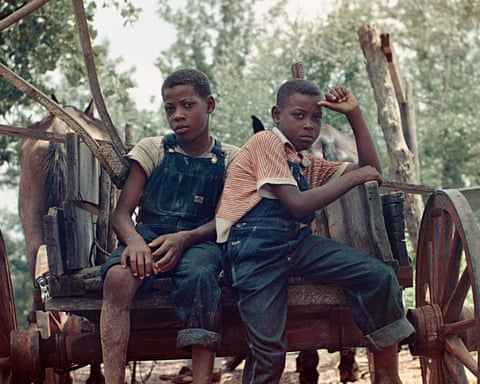
The great photographer documented black family life in postwar Alabama – and the dignity and resilience people showed under discriminatory Jim Crow laws
Documenting US life and culture … Shady Grove, Alabama, 1956 by Gordon Parks.Wed 8 Apr 2026 08.00 CEST
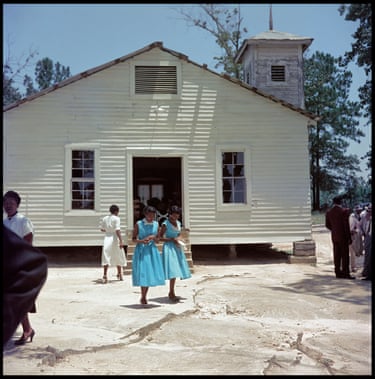
Untitled, Shady Grove, Alabama, 1956
In a career that spanned more than 50 years, the US photographer, film-maker, musician and author Gordon Parks (1912–2006) created a groundbreaking body of work that made him one of the most influential artists of the 20th century. All photographs by Gordon Parks. Gordon Parks: The South in Colour is at Jackson Fine Art, Atlanta, Georgia, until 13 June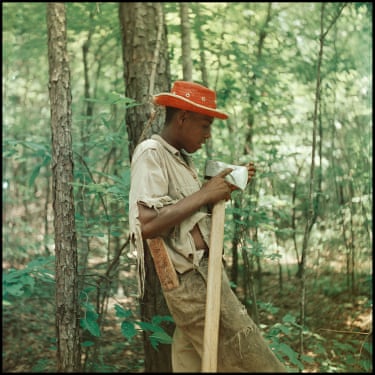
Untitled, Shady Grove, Alabama, 1956
Beginning in the 1940s, Parks documented US life and culture with a focus on social justice, race relations, the civil rights movement and the African American experience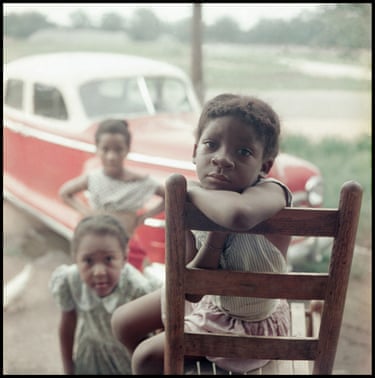
Untitled, Shady Grove, Alabama, 1956
The exhibition is timed to commemorate two milestones: the 70th anniversary of the publication of Parks’ landmark images of the segregated US south in Life magazine, and the 20th anniversary of the founding of The Gordon Parks Foundation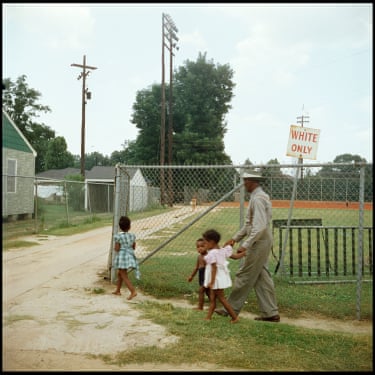
Untitled, Mobile, Alabama, 1956
With more than 30 photographs from the artist’s Segregation Story series, and debuting a brand-new portfolio published by the foundation, this exhibition puts many previously unshown works alongside his most recognised to deepen their emotional and historical resonance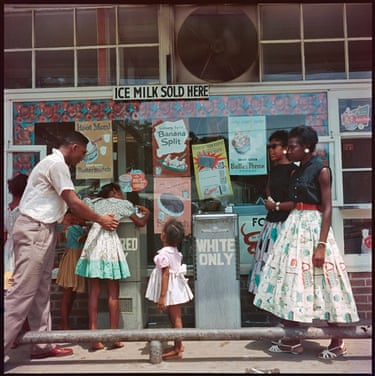
Untitled, At Segregated Drinking Fountain, Mobile, Alabama, 1956
The Jim Crow laws established in southern states ensured that public amenities remained racially segregated. These laws applied to schools, public transport, restaurants, recreational facilities and even drinking fountains. This image shows the prevalence of such prejudice, while capturing a scene of compassion. Here, a gentleman helps one of the young girls reach the fountain to have a refreshing drink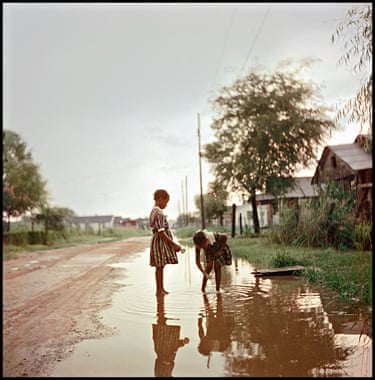
Untitled, Alabama, 1956
Parks employed a handheld, twin-lens Rolleiflex camera to photograph the daily lives of the Thornton family and their extended relatives, among them the Causey and Tanner families. His camera selection and decision to shoot in colour resulted in the carefully composed, lush, square format images in the exhibition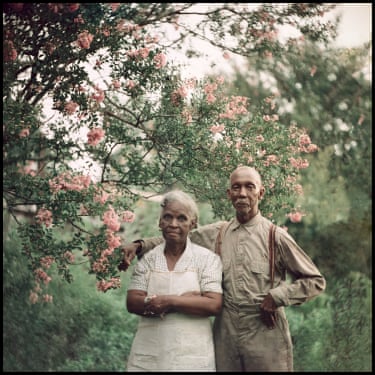
Untitled, 1956
Photographer Dawoud Bey, the exhibition’s curator, writes about how Parks’ choices of ‘tool, material and sensibility lend the Black southern presence, often under siege, a sense of lives fully and expressively lived’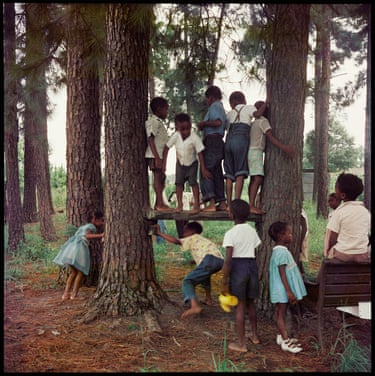
Untitled, 1956
Born into poverty and segregation in Fort Scott, Kansas, Parks was drawn to photography as a young man. Despite his lack of professional training, he won a Julius Rosenwald Fellowship in 1942. This led to a position with the photography section of the Farm Security Administration in Washington DC and, later, the Office of War Information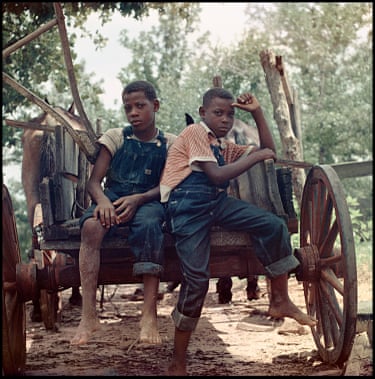
Untitled, Shady Grove, Alabama, 1956
By the mid-40s, Parks was working as a freelance photographer for Vogue, Glamour, Ebony and more. Then he was hired in 1948 as a staff photographer for Lifemagazine, where for more than two decades he created some of his most notable work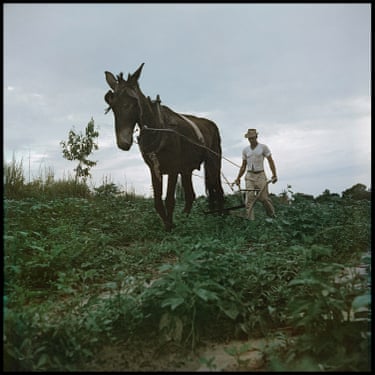
Untitled, Willie Causey, Mobile, Alabama, 1956
In 1969, Parks wrote and directed a major feature film, The Learning Tree, based on his semi-autobiographical novel. His next directorial endeavour, 1971’s Shaft, helped define the Blaxploitation genre. Parks continued photographing, publishing and composing until his death in 2006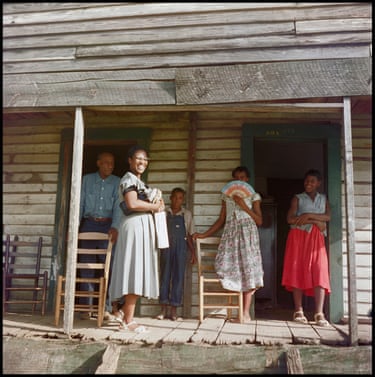
Untitled, 1956
When Parks was 11, three white boys threw him into the Marmaton River, believing he couldn’t swim. He had the presence of mind to duck underwater so they wouldn’t see him make it to land. His mother died when he was 14 and he spent his last night at the family home sleeping beside her coffin, seeking not only solace but also a way to face his own fear of death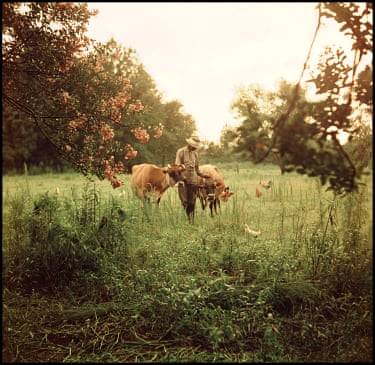
Untitled, 1956
Parks attended a segregated elementary school. His high school had both black students and white students, as the town was too small for segregated high schools. Black students were not allowed to play sports or attend school social activities, and they were discouraged from developing aspirations for higher education. Parks related, in a documentary on his life, that his teacher told him that his desire to go to college would be a waste of moneyExplore more on these topics