 2 months ago
77
2 months ago
77
The musical world’s present for Easter is Bach, Bach and more Bach. These next two days alone, there are performances of his St Matthew Passion in every musical city you care to name, from London to Leipzig, Rome to Rotterdam. In the classical charts, from the “official” one to the, er, other official one, and Apple Music’s, one composer dominates more than any other, from Yunchan Lim’s Goldberg Variations to Raphaël Pichon’s St John Passion. Why?
Two descriptions of his music have particularly struck me this past week. Bach the zombie and Bach the meat-grinder. The phrases belong to the violinist James Ehnes and the Guardian’s Clive Paget, reviewing Pichon’s new recording. Meat-grinding is how Paget describes the St John Passion’s opening chorus; a fantastic expression of the viscera of human feeling that Bach exposes especially in Pichon’s drama-filled recording. Bach’s composition in this chorus is made of obsessive repetitions in the churning figuration of the strings; there are the wailing agonies of the dissonances in the woodwind lines before the voices of the chorus make their first shocking appearance, not so much singing as screaming their demands to Christ to witness his passion in its “glory” and its “humiliation”. The opening chorus, all eight minutes of it, makes a gigantic cross shape in musical time: the surging, relentless rhythms are the horizontal planes, the harmonies that sear through them are implacable verticalities. And that’s just the opening chorus. This is the darkness of the Passion story.
But Bach’s music gives life and hope, as well as terrifying spiritual exorcism. That’s where the zombies come in. But we’re not talking about a Resident Evil-style gore-fest. The zombies that Ehnes meant – he talked to me for my Saturday morning programme on Radio 3 – reference how Bach’s instrumental music can survive any amount of arrangement, recomposition and reimagination, and yet still communicate its essence. It is indestructible.
That’s been the case in the wildest transcriptions of Bach’s music you can imagine; from remaking the Goldberg Variations for saxophone quartet to Wendy Carlos’s sublime synths, Leopold Stokowski’s lush orchestrations and the way that Bach’s music has been used on screen. Bach is everywhere on film: including the unbelievably slow and stately performance of the final chorus of the St Matthew Passion in the soundtrack of Pasolini’s The Gospel According to St Matthew in 1964; and the way the Goldbergs’ Aria is chosen by horrifying aesthete Hannibal Lecter, to listen to as he chews a prison guard’s face off, in The Silence of the Lambs. Bach as spiritual salve and serial-killer inspiration: his music makes them all work because of its implacable self-sufficiency, its ability to sustain all these meanings, and to survive them. We’re a long way from Easter – or maybe not.
But it’s not only in seemingly extreme examples like these. Any performance of Bach’s music is always a transcription, an arrangement, and a present-tense for whatever time it’s performed. Bach never knew the modern piano or its flattened-out tuning, so any pianist who plays the Well-Tempered Clavier on a Steinway is making a version of the piece that Bach wouldn’t have even imagined. As the pianist Víkingur Ólafsson, who performed the Goldbergs more than 90 times in a single year wrote for the Guardian, each performance is different, making a modern experience that feels “like a religious pilgrimage, or a conceptual work of art”.
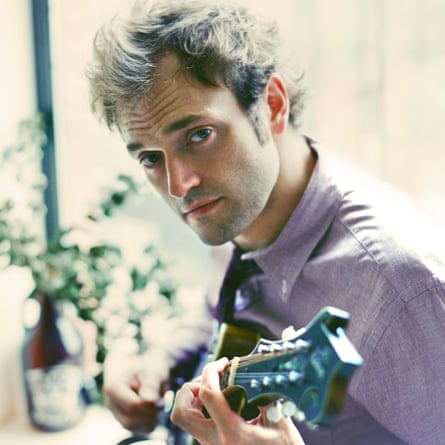
The Bach-zombies keep on multiplying. One of my recent favourites is Chris Thile’s second volume of his version of the complete Sonatas and Partitas – originally for solo violin, but played by Thile on his mandolin and recorded in New York’s parks. In the C major fugue, maybe Bach’s single most complex movement in any of the Sonatas or Partitas, Thile was in Tompkins Square park; you hear the sounds of the city, birdsong, footsteps, fellow buskers and the voices of passersby complimenting him, Bach’s (and Thile’s) groove adding to the “the effortless fugue of city life”, Thile says. This is the most energising performance of this piece that I know, putting Bach at the centre of life, not a sequestered simulacrum of it.
This Easter, don’t be scared: thanks to Thile, Ólafsson and Pichon, and all the rest, get down with Bach – the life-giving zombie.
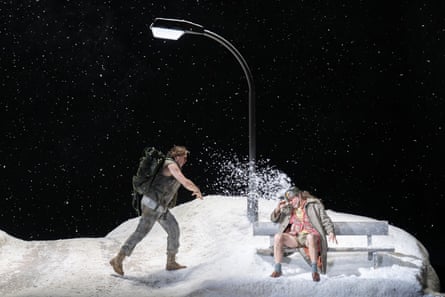
This week Tom has been listening to: Wagner’s Siegfried, as Covent Garden’s production rightly takes all the plaudits available. Andreas Schager’s performance as Siegfried is a magnificent answer to all the philosophical crap that Wagner himself and so many others spout about his music. The character is an idiot, a murderer and an un-innocent fool, but Schager’s staggering vocals and simple delight in his own virtuosity makes it an astounding human achievement. Heroic, even. You can listen to it on Radio 3 on 27 June, and if you’re quick, catch it in cinemas this week.