 4 hours ago
4
4 hours ago
4
The Robinson family once looked forward to Sundays. It was the day they would gather with dozens of their closest relatives and friends to eat, laugh and catch up. “Sunday was the day that we cherished the most,” said RoShanda Robinson, the oldest child in the family.
But in the fall of 2020, these get-togethers abruptly stopped. A day that used to include bountiful meals and booming laughter suddenly became a painful reminder of life-changing loss.
On the morning of 8 November – a Sunday – André Robinson Jr, the second youngest child in the family, was shot and killed while dropping off breakfast at his girlfriend’s home in Oakland, California. He was 19.
In the nearly six years since the death of André Jr, whom the family refers to as “Lil Dre”, grief and angst have pulled his four surviving siblings apart. He was the glue that kept the siblings together, they said, always the one to ease tense situations with his combination of silliness and wisdom. “He was one of my closest friends,” RoShanda said. “It was never a dull moment with him. He always had a smile on his face.”
It wasn’t just the absence of Lil Dre’s caring words that fractured the relationship between the Robinson siblings – RoShanda, the oldest, JaDen, the youngest, and their middle sisters Sherrell and De’Andraney. The grief and trauma that accompanies deaths, especially violent ones, often upends family structures. Siblings are left to tend to their parents’ and children’s grief, while navigating new family dynamics. Siblings also get less help from government and community programs for victims’ families, since they often don’t qualify or even know they exist.
After their brother was killed, JaDen, 17, and RoShanda, 34, say their parents tried to be present and maintain some sense of normalcy in their lives. RoShanda remembers watching them shop for the family’s Thanksgiving meal, even though it was the day after André Jr’s funeral. JaDen saw his dad, André Robinson Sr, continue the greeting he would give André Jr and his friends when he came home from work: “What’s up, pretty boys?”
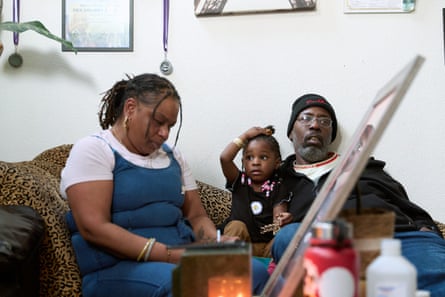
But it was undeniable that André Sr had lost a lot of his playful energy after his son’s death. And in their sadness, the siblings couldn’t find the glue that had held them together their whole lives.
“When my brother died, it separated us,” said JaDen, who was 12 when André Jr was killed. “My sisters, they all got separated. My brothers, they all separated. My mama used to be happy, but now she’s not happy. My dad was a playful dad, and it’s not there any more.”
JaDen remembers talking to his older brother on the phone the night before he was shot and killed. “I’m going to come pick you up,” André Jr had told him. The next day, he was waiting for André Jr to come home. Instead, his mother came in the house screaming and crying; she told him that his brother was dead.
JaDen sat shocked for a moment. “It wasn’t real,” he told himself. “I literally talked to him. He was going to come get me.”
JaDen remembers bonding with his brother over video games. They talked all the time. His brother was one of the few people he would confide in – whether about challenges at school or getting in trouble with their parents. “He was there when I needed to talk, and when he needed to talk to me, I was there,” JaDen said. “He would offer me advice about school. Or when I got in trouble he would come in my room and tell me, ‘Do better.’”
After André Jr’s killing, JaDen became withdrawn. The immense pain he felt was compounded by a sense of invisibility amid the family’s whirlwind of grief, dealing with police and homicide detectives, and making funeral arrangements. He felt like he fell through the cracks.
“I was pushed away,” he said.
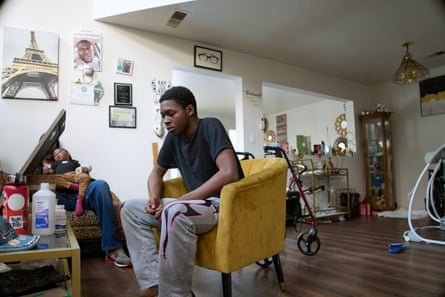
De’Andraney Robinson, 28, one of the middle sisters, remembers wanting to do everything to take care of André Jr. Even though he was just three years younger than her, she would often iron his clothes and lay out his outfits for school.
André Jr was the little brother who always wanted to tag along on trips to the mall or when she would hang out with friends. “Our dynamic was: don’t annoy me, but you can come with me,” she said. Looking back, she realizes that he looked up to her.
“Me doing those things gave him the idea that he could do more with himself,” she said.
De’Andraney had a good relationship with her older sisters, but describes André Jr as her best friend; they had a spiritual tie, she said.
De’Andraney can still picture the day her brother was killed, but struggles to put it into words. “I didn’t want sympathy, I was just angry and mad and I just wanted to do something about it. I was angry as fuck.”
After André Jr’s killing, a rift began between De’Andraney and her mother over who they thought was responsible for the killing. After the funeral, De’Andraney went four months without talking to her. She says she’s mostly estranged from her parents, with the exception of family gatherings to commemorate André Jr’s birthday and an annual candlelight vigil to mark the day of his death.
She still talks to JaDen daily and has a good relationship with RoShonda, but otherwise she doesn’t come around. While she says this separation is a necessary part of her healing, it’s also deepened the rift among them.
“I don’t know how to be emotionally available for [my family] if I wake up some days and don’t know what the fuck to do,” she said. “But I know it comes off as me being distant and don’t care.”
RoShanda always thought of André Jr as the peacekeeper of the family, even though he was one of the younger siblings. He was mature beyond his years, she says, and let the stress of life roll off of his back. “The other siblings, we all get mad, we all show that side. But I’ve never seen him get mad,” she said.
He was one of her best friends, as well as her favorite shopping partner. She remembers his constant joking, and the many Saturdays they spent together picking up the latest Jordan sneakers. “That was our thing. Saturday: let’s get a few shoes,” she said.
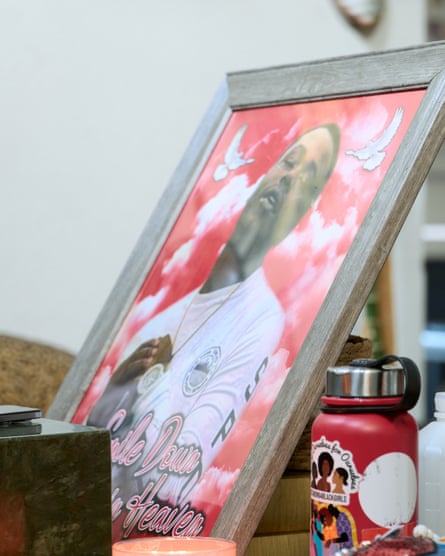
Without André Jr as a center of gravity, tensions between the siblings quickly arose, she said. As the eldest child, RoShanda says she tries to help her parents maintain their connection with their children by showing up to family events and checking in on JaDen, who still lives with her parents. Still, she says, she and her sisters struggle to communicate their feelings without the conversations turning into screaming matches, compounding hurt feelings and furthering the divide between them.
“With me being a big sister, I try so hard, but I can only try so hard,” RoShanda said.
She was on a weekend trip when André Jr was killed. While she was napping, she saw her mom calling her back-to-back, but ignored the calls, planning to return them later in the day. Then, she saw one come in from her father, and knew something was wrong.
When her father told her that her younger brother had been shot, she was confused, but quickly rushed home. “I didn’t even pack my bag. I just instantly got my friends in the car,” she said.
André Jr was still in surgery when she got to Oakland. But once her dad came into the waiting room and could barely speak through his tears, she knew her brother was dead. “For a minute, I couldn’t believe it. I just couldn’t believe it. Like, this is not happening to our family,” she said.
RoShanda had seen gun violence from up close before; she had witnessed shootings and lost friends to gunshot wounds. But she never expected her brother to fall victim.
She still hasn’t found a way to process it. While JaDen has leaned heavily on his friends for comfort, RoShanda began self-medicating with alcohol. She also says her relationship with her son, Denzel, isn’t as close as she would like, but she is glad that he and JaDen have managed to stay close.
After two drunk driving incidents, RoShanda said that she’s drinking less and trying to be more present for JaDen while their parents continue to heal.
“I’m going to be here because I still have another sibling. I’ve got to still be there for him.”
The US has nearly 23,700 homicides on average each year, meaning there are hundreds of thousands of people in the US who have had their family structures upended due to violence.
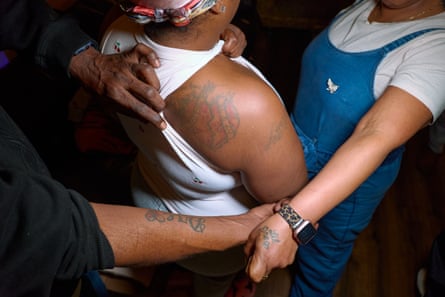
Siblings of victims are often forced to navigate their own trauma without adding strain to their parents and other family members, says Tinisch Hollins, the executive director of Californians for Safety and Justice (CSJ), a nonprofit that advocates for services for victims of violent crimes. Meanwhile, she said, they can feel forgotten amid the intense grief of parents and the bureaucracy of dealing with police and planning funerals, and have less access to paid time off.
“For a lot of siblings, we’re forced to negotiate how we carry our grief while we also manage everyone else’s feelings,” she said. “We do this without having that same compassion extended to us.”
Hollins lost three first cousins who she was raised with and considered brothers. Two were shot and killed. The other died by suicide.
Through her own life, and in her work at CSJ, she’s found that the fallout from violent loss looks different for siblings than it does for the parents of victims. “It’s a different type of trauma,” she said.
As the oldest of her siblings, Hollins said she felt pressure to be a stable presence for her younger siblings and was spread thin while she managed the logistics of notifying other family members of her brothers’ deaths and planning funerals. “We take on the mantle of advocating for everyone else,” she said of eldest siblings. “I saw my family unraveling and knew that their mom can only take so much.”
Chevist Johnson, a violence prevention professional who works with shooting survivors at the UC Davis medical center, said these types of family dynamics are common. In his eight years working for the hospital’s violence intervention program, Johnson says he’s seen teens have to step into parental roles, feeding their younger siblings and making sure they get to school, while their parents care for their injured sibling or can’t get out of bed from the pain of losing their child.
“A lot of times the parenting changes because of that grief and because of thoughts of ‘What can I have done differently?’” he said. “Unfortunately sometimes parents just check out.”
He’s also seen children and teens who’ve lost an older sibling go on to live in a way that honors them, whether it’s pursuing a sport or degree that their sibling aspired to. Other times, they may end up perpetuating the same cycle of violence that claimed their sibling’s life.
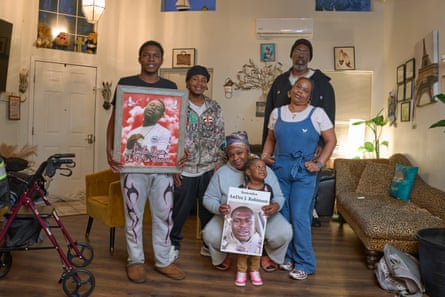
While resources like grief counseling for entire families are available through government programs and nonprofits, they’re often not as well-promoted, Johnson said. People can’t access things they don’t know about, he says. This support can determine whether the loss of a sibling leads someone in a path toward healing or compounded trauma.
“If a sibling is left to their own devices, or if they’re being fed negativity, then that’s what they’re going to latch on to,” Johnson said. “Or they can have someone come alongside them, validate their emotions and give them a safe space to cry and vent so they can move forward and honor their sibling.”
Brielle Savage, a doctoral fellow at the New Jersey gun violence research center, agreed: “The cost of healing a grieving child is far less than incarcerating that child investigating a homicide that comes from their unaddressed grief.”
She researches how Black people interact with the justice system, victim services and nonprofits after losing a loved one to gun violence. Several of the participants in her study have lost siblings. A common theme is the feeling of invisibility and the desire for the same level of attention and support that their parents get.
“There was so much going on at the time of the loss that no one checked on if they were coping,” Savage said. “That invisibility can fester and lead to more trauma and harm.”
For the Robinsons, André Jr’s death continues to hurt every day. The pain is compounded by the lack of answers about who killed him and why. André Sr regularly emails the homicide division for updates, but the family is also looking toward the future.
Last year, JaDen’s son was born. The arrival of the little one, and close relationships with friends and his nephew Denzel, give him a chance to talk about losing his big brother and heal. “I had my patnas and they helped me get through it, and my son helped me get through it, too,” he said. “We have personal talks. I go to school with them. I walk with them. So I know they’ve got my back like I’ve got theirs.”
JaDen says he tries to be the same strong shoulder for Denzel that André Jr was for him. “I’ve got to show my nephew that I’m going to be bigger than this,” JaDen said. “I’ve got to be bigger like Dré was. He didn’t cry in front of any of us so I’m not going to cry in front of my nephew.”
While the Robinsons sat and reflected on André Jr and how his death has changed them as individuals and as a family, RoShanda’s three-year-old daughter Brooklyn giggled, ran around her grandparents’ home and playfully demanded snacks from her grandfather.
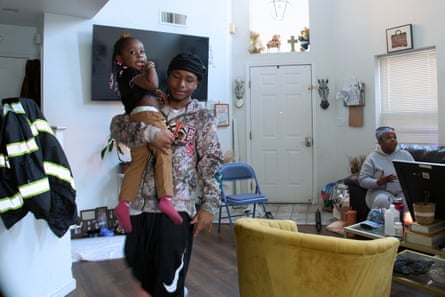
Brooklyn, and JaDen’s infant son, have given LaTanya a much-needed sense of purpose, she said. The babies are helping her move forward.
“I’m never going to get my son back, but I still try to live because I’m thankful to have my two new grandbabies,” LaTanya said. “I’m in love with them so they give me the strength to keep going.
The stagnation she sees among her children, though, pains her.
“When I look back and see that my kids are still in that same space, it hurts.”
She hopes she can help mend their relationships. “Why are we not loving each other? We just lost somebody. We can never get him back. We need to be loving on each other,” she said.
The years since André Jr was killed have not been all bad for the Robinson family, LaTanya said. Outside of her estranged daughter, the other siblings show up for family events thrown in André Jr’s honor, and keep their arguments to a minimum out of respect for her and André Sr. And the loss of LaTanya’s mother just before Mother’s Day has also led to better communication among siblings.
“I have faith that my kids will conquer this,” she said. “They’ve had good times together in these past five years. But I can tell that the bridge that kept them together is cracking.”