 2 hours ago
7
2 hours ago
7
Kenya’s health minister told a court he had ordered preparations for a US-run Ebola quarantine facility to stop, after being held in contempt for ignoring a previous order to end work.
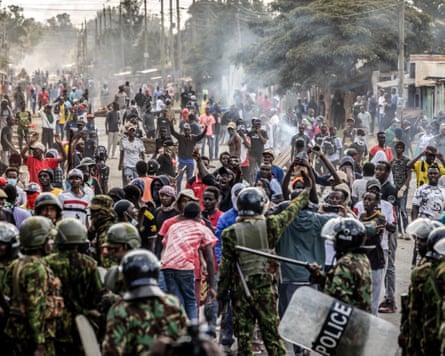
Many Kenyans strongly oppose the facility, with deadly protests erupting since the complex was announced in May for US citizens evacuated from the Democratic Republic of Congo, which is grappling with a widespread Ebola outbreak.
There have been more than 1,000 confirmed cases of Ebola in the DRC and more than 250 deaths as of 20 June. Neighbouring Uganda has recorded 20 confirmed cases and two deaths.
The US facility was being constructed at Laikipia air base in Nanyuki, about 125 miles (200km) from the capital, Nairobi, with about 50 isolation beds. It was expected to be managed by US medical staff.
Rights groups had petitioned the court, saying the facility was being developed secretly and without consultation. Last month, the high court ordered a stop to the centre’s construction until the groups’ case was heard.
After the government continued to press ahead, the court said on Monday it was holding the health minister, Aden Duale, in contempt of the order, and that he would appear for sentencing.
On Tuesday, Duale apologised to the court, saying he had ordered “the immediate and complete cessation of any intended construction, site preparation, or related activities concerning the Laikipia airbase facility pending the hearing and determination of the substantive petition or until further orders of this court”.
The judge, Patricia Nyaundi Mande, discharged Duale with a warning against further disobeying the court’s orders.
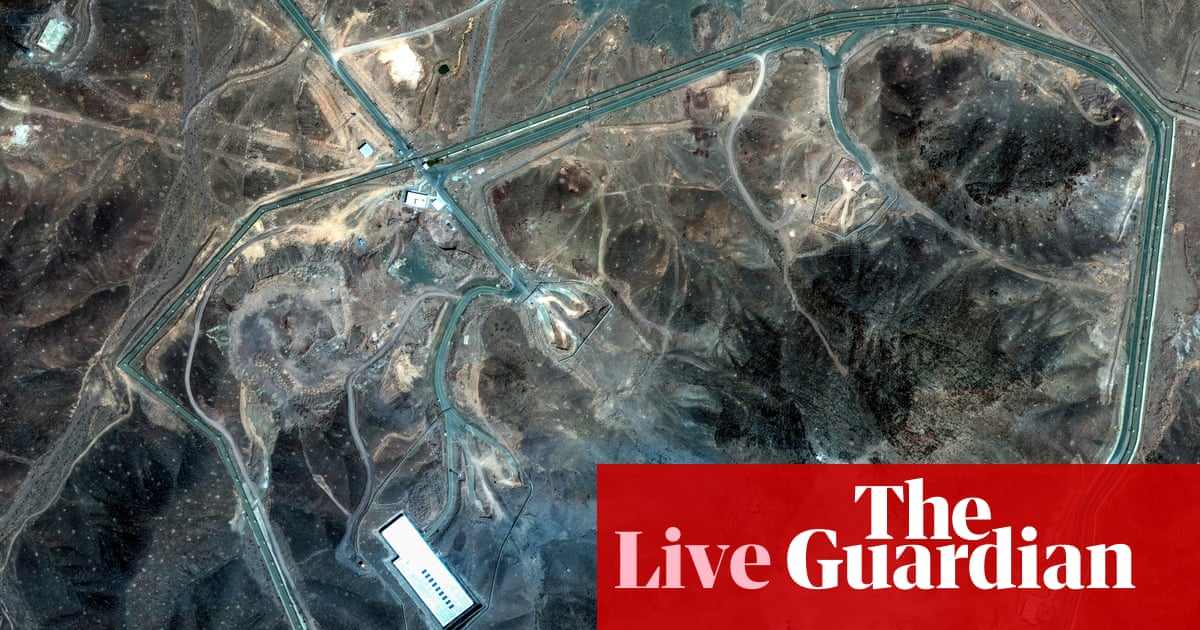
Specialist staff and medical equipment continued to be flown into the airbase after last month’s order, US officials and diplomats told Reuters. There was also a buildup of structures, including tents and paved areas, according to satellite imagery from 22 June viewed by Reuters.
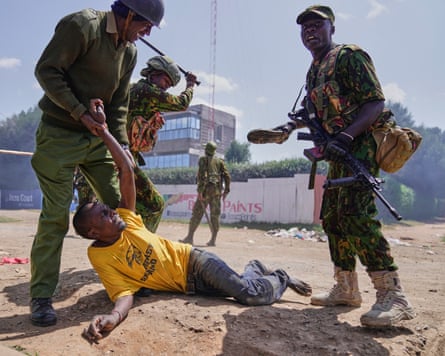
Three people have been killed in protests against the quarantine centre. Two died on 1 June and another was shot dead by police on 9 June.
Kenya has never recorded a case of Ebola and many Kenyans oppose bringing potential carriers of the highly contagious disease into the country.
“If it is too dangerous for America, it is too dangerous for Kenya,” Dr Davji Atellah from the Kenya Medical Practitioners, Pharmacists and Dentists Union said last month.
In court on Tuesday, Duale defended the US quarantine facility, saying that fears Ebola would spread beyond it were “scientifically unfounded”. The president, William Ruto, said earlier this month that Kenya was doing “the right thing” by allowing the facility to go ahead.
The US has promised $13.5m (£10.2m) to support Kenya’s Ebola preparedness efforts, but critics also oppose what they see as the arrangement’s colonial overtones.
During previous Ebola outbreaks, the US allowed its citizens to return home for treatment. This time, officials have said they would not allow anyone with the disease to enter the US. In May, an American doctor who contracted Ebola in the DRC was flown to Germany for care, along with his wife and four children.
On 29 May, the US state department said on X: “We are aware of the court action filed in Kenya against the Ebola isolation facility. We are in touch with Kenyan authorities and are optimistic we can resolve objections.”
The World Health Organization (WHO) declared the outbreak on 15 May, and two days later said it was a public health emergency of international concern. However, experts believe the virus was circulating undetected weeks before.
Modelling by the US Centers for Disease Control and Prevention suggests the current Ebola outbreak could be the largest on record. The previous biggest outbreak affected west Africa from 2014- to 2016, infecting more than 28,000 people, killing more than 11,000.
The current strain of Ebola is the rare Bundibugyo virus, which has no vaccine or approved treatment.
Agence France-Presse and Reuters contributed to this report.