 2 months ago
70
2 months ago
70
Donald Trump has said he is “absolutely” considering withdrawing the US from Nato, warning that the matter was “beyond reconsideration” after the refusal of US allies to join the US-Israeli war against Iran.
The president’s threats, his most determined to date, have left the alliance facing its worst crisis in its 77-year history, a former US ambassador has warned.
Trump has long been vocally sceptical about the benefit of Nato membership to the US, but since North Atlantic allies have refused to take part in the month-long, faltering US-Israeli assault on Iran, the president has stepped up his rhetoric.
He told Reuters news agency on Wednesday he was “absolutely without question” considering withdrawal, after telling the Telegraph the matter was “beyond reconsideration”, insisting he had never been “swayed by Nato”. He signalled that he would express his disgust for Nato in an address to the nation scheduled for Wednesday evening.
It could be politically and constitutionally difficult for Trump to bring about formal withdrawal from the 1949 Washington treaty, Nato’s founding document, but Ivo Daalder, US permanent representative at Nato headquarters from 2009 to 2013, argued the serious damage to the alliance had already been done.
“This is by far the worst crisis Nato has ever confronted. Military alliances are, at their core, based on trust: the confidence that if I am attacked, you will come help defend,” Daalder wrote in an online commentary. “It’s hard to see how any European country will now be able and willing to trust the United States to come to its defence.”
Trump launched the war on Iran on 28 February in partnership with the Israeli prime minister, Benjamin Netanyahu, but without consulting Nato allies. He did not invoke article 5 of the treaty, which triggers collective defence from other members in the event of an “an armed attack against one or more of them in Europe or North America”. Such an attack had not taken place.
More than a month into the war, there is no sign of the regime change or collapse that Trump and Netanyahu had hoped for, and Tehran’s response – closing the economically vital strait of Hormuz – has caused an oil price surge and a worldwide shortage of fertiliser and other essential goods, threatening a global recession.
Trump has swung between claiming a negotiated end to the war is imminent and threatening a ground assault, while calling on US allies to join the fight and force the strait back open. None of Washington’s traditional partners have come forward. Some European allies have declared the US-Israeli attack to be illegal and several have withheld the overflight rights and use of bases on their territory.
Trump has consequently lashed out at European capitals, denouncing them as “cowards”, and expressing particular contempt for the UK. “You don’t even have a navy,” Trump told the Telegraph. “You’re too old and had aircraft carriers that didn’t work.”
The anti-Nato rhetoric has been echoed by the US defence secretary, Pete Hegseth, and by the secretary of state, Marco Rubio, who was a staunch supporter of the alliance when he was a senator.
Rubio told Fox News: “We are going to have to re-examine whether or not this alliance, that has served this country well for a while, is still serving that purpose or has now become a one-way street, where America is simply in a position to help Europe but when we need the help of our allies, they deny us basing rights and overflight.”
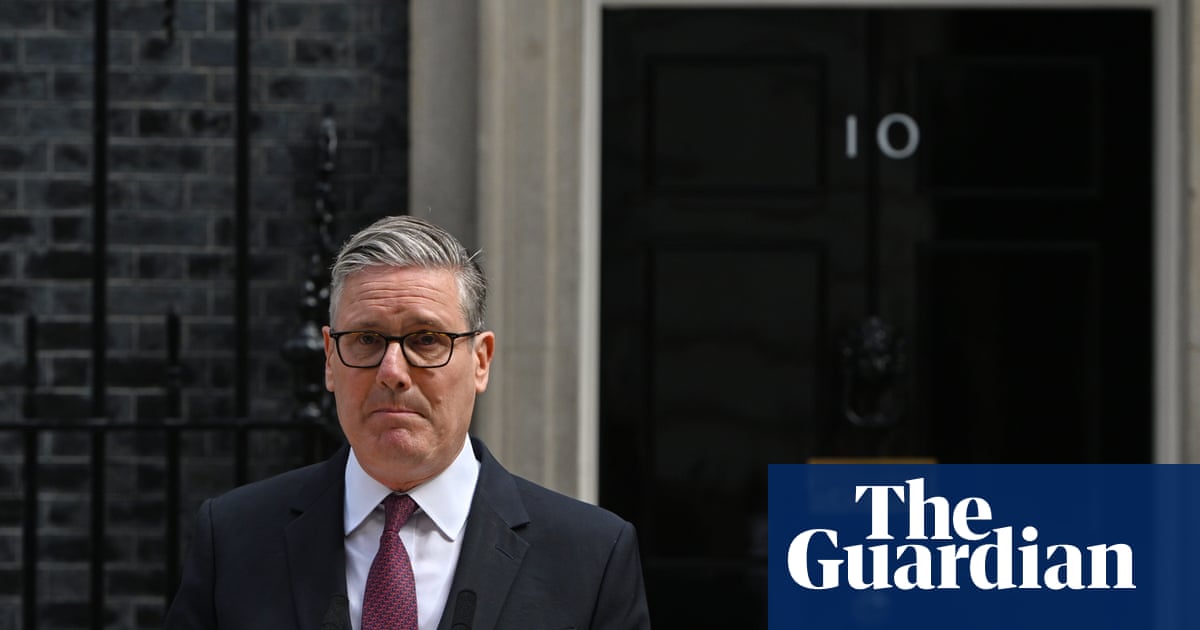
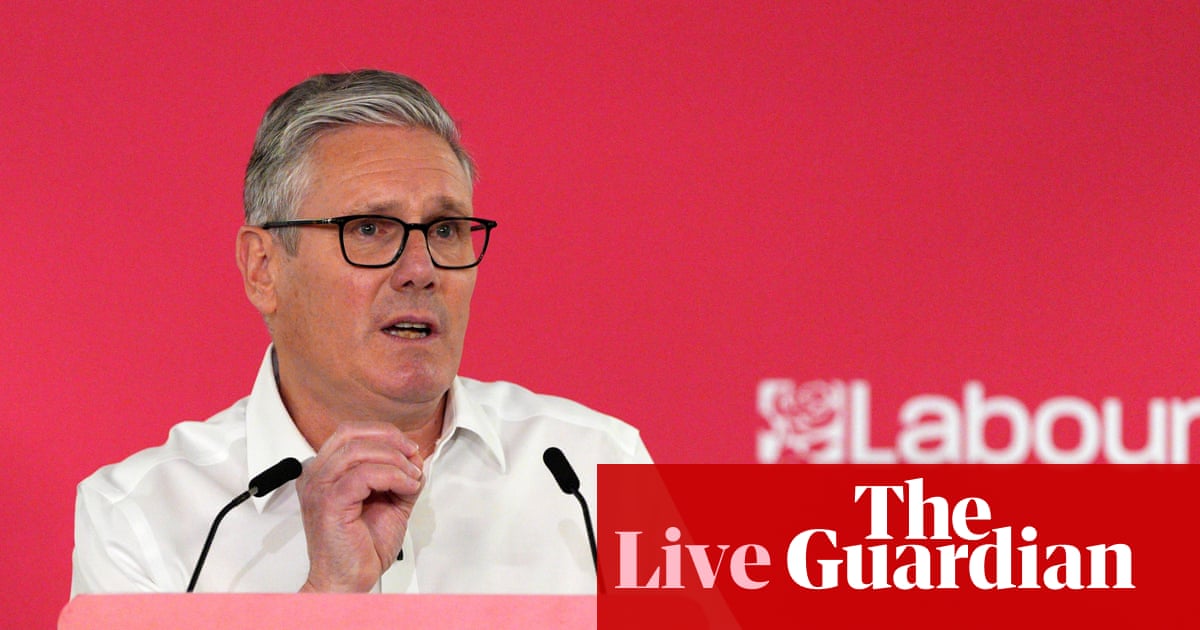
The UK’s prime minister, Keir Starmer, has shrugged off the administration’s jibes as “noise”, insisting that “Nato is the single most effective military alliance the world has ever seen”. He restated his position on the Iran conflict that “this is not our war, and we’re not going to get dragged into it”.
In a phone call with Trump on Wednesday, Finland’s president, Alexander Stubb, said he told the president that “a more European Nato” was taking shape and that Europe was “shouldering responsibility”.
In response to previous Trump criticism, the UK and other European allies have raised their defence spending and tried hard, with diminishing success, to persuade him to maintain US support for Ukraine’s defence against Russia. Nato’s secretary general, Mark Rutte, has gone out of his way to flatter Trump, to the extent of expressing support for the Iran war, despite the opposition of almost all the alliance’s other 31 members.
“Backing one ally when 31 oppose isn’t the best way to maintain unity,” Daalder said. “We also now know that Trump does his own thing and doesn’t listen to anyone, including Trump whisperers.”
In an effort to “Trump-proof” the alliance, Congress passed the National Defence Authorization Act (NDAA) in 2024, prohibiting a US president from unilaterally withdrawing the US from Nato without two-thirds Senate approval or an act of Congress – a provision co-sponsored by Rubio. The NDAA also prohibits using any federal funds to facilitate a withdrawal.
“Congress will not sit by while this president tries to unravel an alliance that has kept Americans safe for decades,” the Democratic senator Mark Warner said on Wednesday. “Our commitment to Nato is ironclad, and we will use every tool available to defend it.”
Any attempt to leave Nato formally would be likely to trigger a constitutional crisis that would almost certainly go to the US supreme court. However, the court has a record of siding with the executive in disputes over foreign policy issues.
“Other presidents have withdrawn from treaties,” Daalder pointed out. “In any case, whatever the legal status, Trump can undermine Nato by withdrawing troops, pulling US personnel from the Nato command structure and doing little if anything in case of an attack – all perfectly legal.”
Nathalie Tocci, a professor at the Johns Hopkins School of Advanced International Studies Europe, pointed out that Trump had threatened to leave Nato before and the threats were not as damaging as his “betrayal of Ukraine” and his insistence earlier this year that the US would seize Greenland, the sovereign territory of a Nato ally.
“The fact that Trump hates Europe is an ascertained fact,” Tocci said. “All this is part of a coherent Trumpian onslaught on Europe and European leaders are finally moving away from the sycophantic Rutte approach to him.”
Ruth Deyermond, a senior lecturer at the department of war studies in King’s College London, said the crisis facing the alliance would not simply recede at the end of Trump’s White House tenure. “This is wishful thinking,” Deyermond said on Bluesky. “The failure to understand the importance of the alliance for US security and the taking of allies for granted isn’t unique to the Trump administration.”
“This is why the old Nato is gone and Europeans (plus Canada), need to develop a new security framework to replace it,” she said. “It’s frightening, difficult, and expensive, but that doesn’t make it less necessary or urgent.”
Starmer signalled on Wednesday that he would use an upcoming summit with EU countries to solidify economic and security ties, calling for: “A partnership for the dangerous world that we must navigate together.”