 4 hours ago
16
4 hours ago
16
After six books, three seasons of television and a film-length finale, Heartstopper has come to an end. Often dubbed the most wholesome show on TV, Netflix’s adaptation of Alice Oseman’s young adult LGBTQ+ graphic novel series, which itself began life as a web comic, is a legitimate cultural phenomenon, turning its two leads – Kit Connor and Joe Locke – into household names, while racking up tens of millions of views. In print, meanwhile, the Heartstopper series has sold over 10m copies worldwide, including about 1.3m in the UK alone.
Yet these figures only tell one side of the story of Heartstopper’s impact. At the queer and feminist bookshop where I work part-time in Sheffield, the young people who come in are immediately drawn to copies of Oseman’s books, and often take pictures of the now permanent window display depicting Nick and Charlie, the couple at the story’s heart. I see young queer people’s faces light up when they see we have the book in stock, even though they probably already have a copy at home.
I witnessed something similar in 2023 when I was invited to speak to an LGBTQ+ group at a secondary school in London. I was there to speak about queer history and my career as a journalist. When the students learned that I had once interviewed Oseman, though, all they wanted to discuss was Heartstopper. I could see how much the varied and positive queer representation in Oseman’s work meant to them, how Nick and Charlie’s delicate and sweet love story continued to bring them so much joy.
For adults, Heartstopper has had a similar effect. When the show premiered in 2022, many older queer people voiced their love for the show, while acknowledging the grief they felt that such a thing hadn’t existed during their own adolescence. While Heartstopper was not made for a mature audience – it is, ostensibly, a children’s TV show – for queer people like myself, who grew up under the tyranny of Section 28, which prohibited the so-called “promotion” of homosexuality in school, it was hard not to feel a little wistful at the love and acceptance the queer characters in Heartstopper often experienced.
That both the books and TV show were offering LGBTQ+ people of all ages, but particularly young people, a lifeline was not lost on those involved – as Connor said in a recent interview: “It’s the biggest thing that will ever happen to any of us.”
It’s perhaps why, despite its syrupy reputation, Heartstopper maintained a political edge. While it lacked the bite of, say, Russell T Davies’s It’s a Sin or a film like 120 BPM, Oseman and the show’s executive producer, Patrick Walters, didn’t skirt around serious topics. The third season, for example, highlighted the bait-and-switch tactics employed by the media after Elle, a young trans character played by Yasmin Finney, is invited to discuss her art on a local radio station, only for the host to try to drag Elle into a toxic debate about transgender identities. Likewise, in Heartstopper Forever, Netflix’s film conclusion, Elle brings up the ban on hormone blockers for young trans people, as well as the rollback of trans rights in the UK more broadly. “If I was a few years younger,” she says, “I wouldn’t even have been able to take hormone blockers legally.”
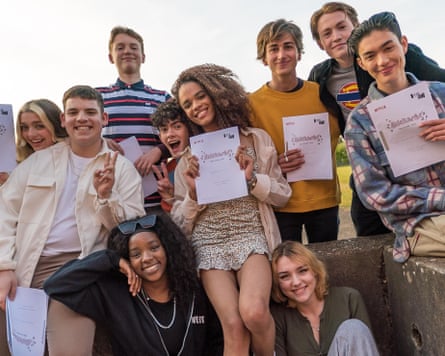
Heartstopper touched on other serious topics, too, such as mental health issues, self-harm and disordered eating. The TV show was sometimes criticised for feeling like an afterschool special, its rose-tinted representation of larger issues more focused on educating and reassuring its young audience than delivering hard-hitting drama. But as Oseman said in a recent interview: “It was always my intention with Heartstopper to find the middle line, the balancing point, between showing these issues in a realistic way while also keeping that tone of, like, ‘It’s going to be OK and things will work out.’”
The cynicism surrounding Heartstopper’s sanitised depiction of queer adolescence is understandable, though, especially when so many younger LGBTQ+ people do still feel isolated and while also engaging in risky behaviours like using sex apps while underage. Dramas like the recent adaption of Paris Lees’s memoir, What It Feels Like for a Girl, and even older shows like Skins, are perhaps more accurate representations of the messiness of growing up queer.
Young LGBTQ+ people deserve realistic portrayals of their lives. But they also deserve joyful escapism, too. Young queer people are still more likely to experience mental health problems, with a 2024 study by The Trevor Project highlighting how the majority of LGBTQ+ young people reported symptoms of depression, anxiety or self-harm. At times, Heartstopper might seem like make-believe, but the significance of seeing queer teens not only surviving but also thriving shouldn’t be sneered at.
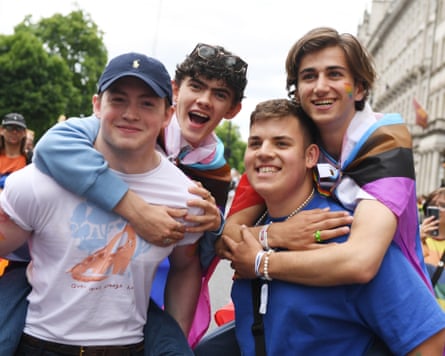
In fact, this is perhaps more imperative than ever. According to Glaad’s annual study tracking LGBTQ+ representation in film, there has been a continued decline of queer characters on the silver screen over the last three years. This follows a similar trend in TV, where the number of LGBTQ+ characters on screen has also decreased since 2021. Pair this with a global rise in anti-LGBTQ+ rhetoric, rising hate crime, especially against trans people, and the rollback on trans rights in the UK, and it must feel like a particularly volatile and scary time to be a young queer person.
When I consider this, I think back to that LGBTQ+ secondary school group I spoke to in 2023. With recent reports of schools cancelling talks by queer authors and of growing censorship in libraries, both in the UK and the US, I hope their enthusiasm for queer stories can be maintained and protected, and that they continue to see themselves on screen and on bookshelves for years to come.
Whether Heartstopper is truly forever, as the film’s title suggests, remains to be seen: Oseman has suggested she would like to write for adults next, while Locke and Connor are headed to Hollywood. But even as Nick and Charlie’s story reaches its conclusion, the need for joyful queer stories remains. Having seen the impact firsthand, for young queer people to lose out on the hope and reassurance they can offer would be a profound shame.