 6 hours ago
15
6 hours ago
15
Passports can resemble abridged memoirs, their stamps telling romantic stories of wanderlust, freedom and belonging.
But they are also a symbol of global inequalities and shifting geopolitical fortunes. Passports from some places allow their holders to travel abroad simply by booking a flight and packing a bag. Others, however, entail booking an appointment at the nearest consulate, presenting documents to prove identity and financial means, then waiting weeks for a decision.
How does the status of your passport compare globally? How has its power changed over time?
Search to find out …
How has passport strength changed?
In the last 10 years, more countries have gained access to more destinations and, at first glance, it would seem that the world is opening up.
“People think that walls are increasing as the extreme right is coming [into government] in various places around the world,” says Armand Arton, who runs Passport Index, a website that tracks visa requirements. “But what the statistics are saying is that an increasing number of countries are signing visa-free agreements.”
You can chart a passport’s strength by counting the number of countries, states and territories its holder can enter visa-free, or with a visa on arrival, an electronic travel authorisation (ETA), or a fast-track e-visa. This is known as a mobility score.
Small island nations’ passport strength rose as they earned visa-free status from developing countries. Arton attributes the rise to these countries’ often small populations, which are not seen as a national security threat, and to a sense among some governments of a moral obligation to offer visa-free travel to people on the frontlines of the climate crisis.
China has moved up the rank by opening up and expanding bilateral agreements with regional neighbours. Since signing a bilateral visa-free agreement with Singapore in February 2024, there was a sharp increase in travel between the two countries.
When countries sign a visa-free agreement with the Schengen area, which comprises 29 European countries, the standing of their passports can shoot up the ranking almost overnight. That is why Georgia, Ukraine and Kosovo are among the biggest climbers in the passport table.
Vjosa Musliu is an associate professor at Vrije Universiteit Brussel who has written about the experience of travelling with a Kosovan passport, which has gained in mobility. She describes the joy of seeing her relatives and friends being able to travel.
“These were upper-middle class people with decent jobs who never travelled because of the cost of getting a visa, which is sometimes close to £300,” she says. “[People] who wanted to see grandmas and grandpas and not celebrate birthdays on FaceTime.”
But visa-free travelling does not mean you automatically get free entry, she adds. “Technically you can travel for free, but there is still subjective interrogation that takes place at borders.”
The lowest-ranking passports
Most passports have gained mobility in the last decade, but some have fallen in the tiered ranking. Vanuatu fell 14 positions when the EU and the UK removed it from their visa-exempt list, citing concerns over Vanuatu’s investor citizenship scheme. The US dropped five places to ninth tier this year, mostly due to countries applying reciprocity in their visa systems in response to Washington’s tightening of its visa requirements.
Then there are countries such as Afghanistan, Iraq, Syria, Pakistan and Somalia, for which the world is still mostly closed. Anyone with an Afghan passport can only travel visa-free to three countries, and will have to apply for a visa at a consulate before travelling to 113 countries.
Afghan passport holders are also barred from entering the US, where citizens of 19 countries face a full travel ban, and another 20 face partial restrictions.
Having a weak passport can sour even life’s greatest achievements. Omar Artan was to become the first referee from Somalia to officiate at a World Cup after being named on Fifa’s final list for the tournament, but he was denied entry to the US.
It can also delay your plans. Visual artist Syed Hussain, who is from Pakistan, was granted a US residency in 2019 – but it took three attempts until he was finally granted the visa so that he could travel in 2024.
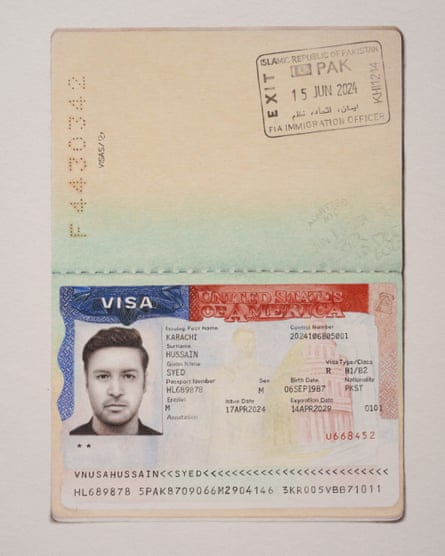
“You get the chance to go somewhere, and they hold you back for five years, and they don’t give you the reason why, they just give you a yellow paper and refuse the visa,” Hussain said. “It’s a 10-minute interview in which you cannot clarify your things, or bring your portfolio.”
How reciprocal are the measures?
Passport Index has introduced a “welcoming score”, which counts the number of countries whose passport holders are eligible to enter a destination visa-free, or with a visa on arrival, an ETA or an e-visa. Although some e-visas still require documents to be submitted and reviewed, they are generally considered less burdensome than traditional visas.
Setting up the welcoming scores against the mobility scores of countries paints a mixed picture. The US, Canada, Australia and New Zealand hold some of the world’s strongest passports, yet keep their own borders comparatively closed. At the other end of the spectrum are countries such as South Sudan, Nigeria, Ethiopia and the Democratic Republic of the Congo, whose citizens need visas to travel to most destinations but whose governments admit foreign visitors relatively easily.
The Schengen effect
The 29 European countries that belong to the Schengen agreement (plus four that apply the same rules), grant visa-free access to almost half of the countries in the world.
But people who cannot travel visa-free must obtain a visa in advance from a consulate. This applies mostly to passport holders from south and south-east Asia, northern Africa, central Asia, the Middle East, and most of sub-Saharan Africa.
The future
Beyond the Schengen area, passport mobility is likely to increase through new bilateral and regional agreements. Africa remains the least integrated region, with only 29% of travel within the continent taking place visa-free.
The balance will also shift as more countries replace traditional visas with digital ETAs and e-visas, “driven by advances in border security, traveller screening, and digital immigration management”, says Arton. This might spell the end of the paper visa.
But it also means, according to Arton, that travellers who previously enjoyed visa-free access will increasingly be required to obtain an electronic authorisation prior to departure. The EU, for example, is expected to introduce its Etias travel authorisation system by the end of the year for visitors who currently travel visa-free.
Passport data from Passport Index as of June, 2026. Visa requirements can change and may include additional conditions. Always check the relevant embassy, consulate or official government website before travelling.