3 hours ago
14
3 hours ago
14
Shipwrecks, ice football and igloos for dogs … the digitisation of Frank Hurley’s photographs shows the heroic trek more clearly – and unlocks some remarkable new details
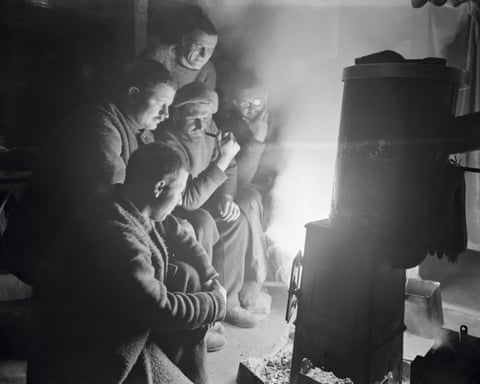
‘A sixth crew member was revealed’ … The Nightwatchman’s Story, March 1915Sarah King
Thu 23 Jul 2026 11.20 CEST
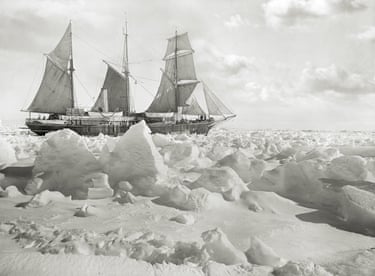
The Endurance in Full Sail January 1915
Sir Ernest Shackleton’s Trans-Antarctic expedition of 1914–17 is widely considered to be the most heroic story of survival in exploring history. When the Endurance was crushed by ice in the Weddell Sea, the 28 expedition members began a 10-month trek over ice and sea until their rescue from Elephant Island. This work showcases the finest of Frank Hurley’s expedition photographs with new, high-definition scans of original glass-plate negatives. The Endurance Photographs is published by Riverside Press in collaboration with the Royal Geographical Society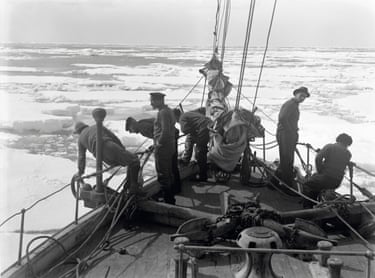
On the Bow of the Endurance, 9 Dec, 1914
Departing South Georgia on 5 December 1914, the Endurance reached the pack-ice of the Weddell Sea just a few days later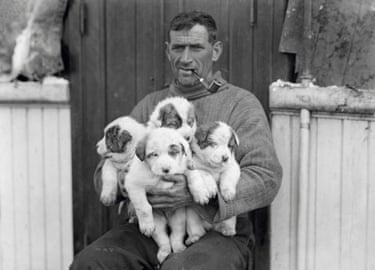
Tom Crean with Newborn Puppies
There were 28 men on the Endurance, including Frank Wild, a British naval officer and Antarctic explorer, and Irishman Tom Crean, who had sailed with Captain Scott’s 1910–1913 Terra Nova expedition. Frank Hurley, an Antarctic veteran, was already established as a hardy photographer and documentary film-maker. As official photographer on the Australasian Antarctic Expedition of 1911–1913, his cinefootage of the trip was released in British cinemas in 1913. It’s suggested that this film prompted Shackleton to recruit Hurley as his expedition’s official photographer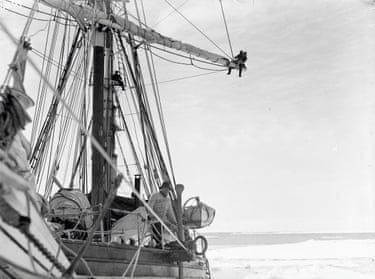
Frank Hurley Aloft, Ernest Shackleton on the Deck of the Endurance, December 1914
To achieve the best photographs, Hurley would often put himself in dangerous situations, sometimes climbing to the extreme end of the top-gallant yard arm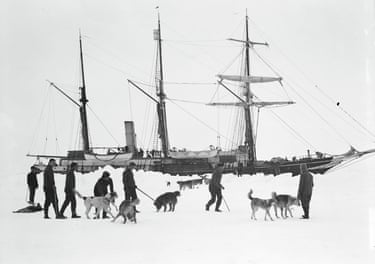
Exercising Dogs on the Ice, January 1915
On 6 January 1915 the Endurance was able to anchor to a large floe, allowing the dogs their first run in over a month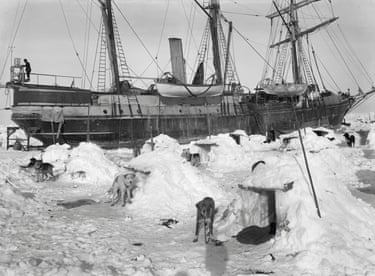
‘Dogloo’ Kennels on the Ice, February, 1915
Frank Hurley: ‘Dogs all placed on shore, much to their delight. All hands engaged in building igloos, or as the sailors term them, “dogloos”, from ice blocks and snow’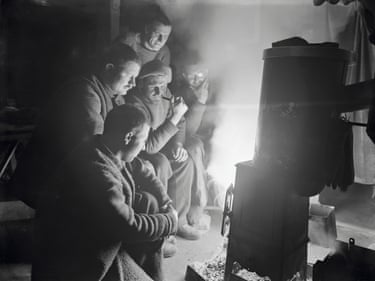
The Nightwatchman’s Story, March 1915
The digitisation of the negatives in 2015 unlocked remarkable details captured originally by Hurley, but invisible in previous reproductions. In this image, a sixth crew member was revealed, hidden behind the smoke from the stove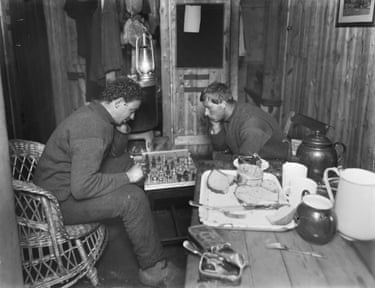
A Game of Chess, May 1915
Frank Hurley (left) and Leonard Hussey (right) playing chess and eating sardines during their Night Watch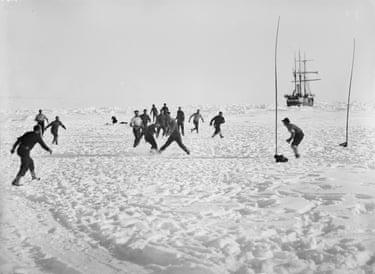
Playing Football on the Ice
The heavy floes of pack-ice and bergs continued to impede progress for the Endurance. In order to maintain spirits, the men set up an impromptu football match on the ice. The teams were selected based on the two watches: ‘Port’ and ‘Starboard’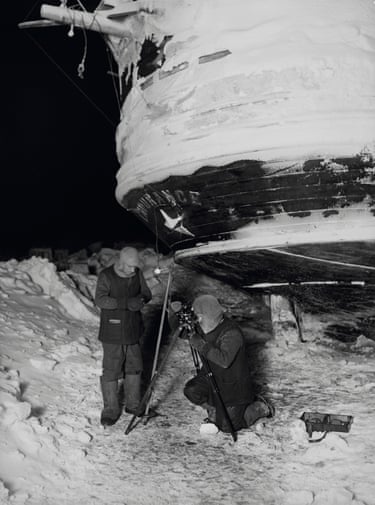
Frank Worsley and Reginald James Observing Stars During Winter, June 1915
Alexander Macklin, surgeon: ‘Worsley and James had a large telescope which they set up, and by getting the exact moment of occultation of certain stars, were able to work out the exact time’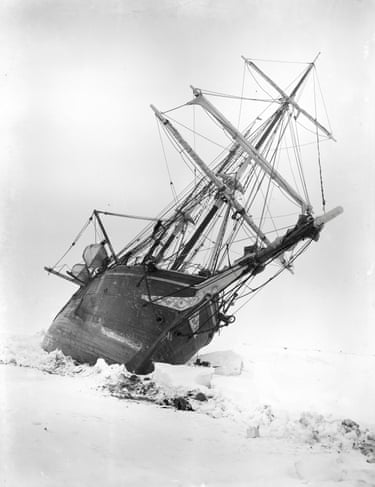
The Endurance Keeling Over, October, 1915
In October the Endurance suffered a new wave of pressure, straining the timbers and buckling the iron floor plates. As the floes came together, the pressure forced the ship up out of the ice, keeling her over 30 degrees to port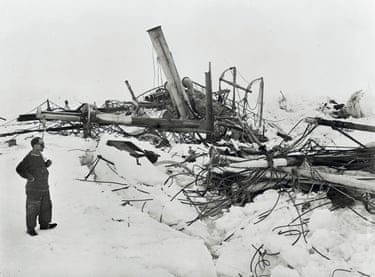
Frank Wild at the Wreck of the Endurance November 1915
At 5pm on 21 November 1915 the Endurance sank beneath the ice. Frank Hurley said of this image: ‘The final official visit to the wreck, with the Chief and Wild. Yesterday’s mild blizzard has put a final touch to the destruction wrought by pressure and the salvage gangs. But for the stump of the foremast and the funnel, one would be sceptical that the collection of fragmentary timbers and twisted rails was once a ship’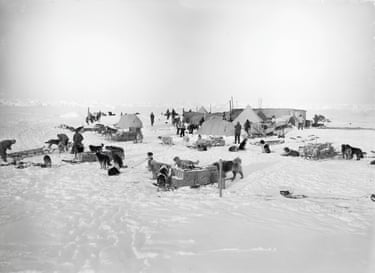
Ocean Camp, November 1915
Hurley rescued the fragile glass-plate negatives he could carry, but made the agonising decision to smash 400 others on the ice. After a failed attempt to march 300 miles (480 kilometres) across the ice to reach land, a more permanent camp, named Ocean Camp, was set up on a thick, stable ice floe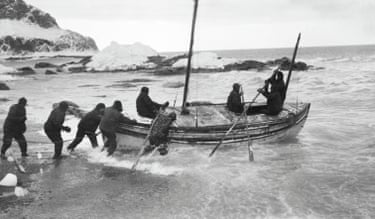
Launching the James Caird, April 1916
Realising there was little chance of rescue from Elephant Island, Ernest Shackleton and five men departed on the James Caird, aiming to sail 800 miles across the Southern Ocean to South Georgia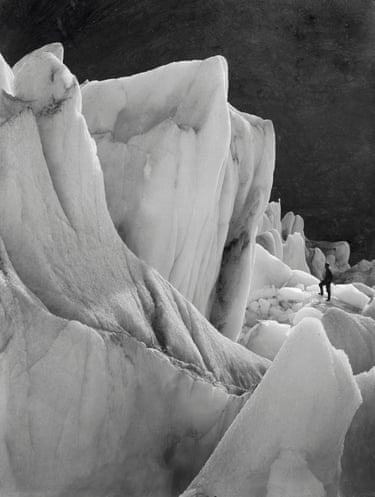
Glacial Surface, South Georgia
Alexandra Shackleton: ‘Hurley was a superb photographer, not only for his vision but for his commitment. He would lie down in front of the moving ship and climb high in the mast, burdened with very heavy camera equipment. Results were all. Hurley regarded himself as primarily an artist rather than simply a recorder of events. He did not scruple on occasion to embellish his subject matter and to add or subtract details’Explore more on these topics