 4 hours ago
21
4 hours ago
21
Supreme court to release opinions with several high-stakes rulings to come including birthright citizenship
Hello and welcome to the US politics live blog.
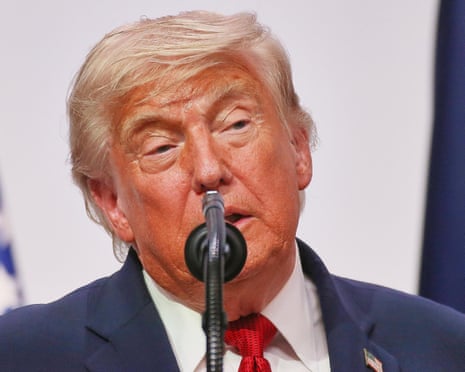
The supreme court is expected to render at least one judgment today as the term is set to come to an end later this month. There are a series of cases yet to be decided that are relevant to Donald Trump, including his attempt to limit birthright citizenship and plan to remove legal protection from Haitian and Syrian immigrants.
Generally, terms last between October and late June – but the most significant cases are often left until the end of the term.
There are two main immigration-based decisions yet to be made. One pending ruling is on Trump’s desire to ban birthright citizenship for the children of undocumented immigrants and those whose parents are temporary residents.
“Birthright citizenship is one of America’s most consequential commitments – the idea that where you are born, not where your parents came from, determines your belonging to this nation,” said Adam Strom, executive director and co-founder of Reimagining Migration, in The74. “For the millions of immigrant-origin children in our schools, this isn’t an abstraction. It’s the ground they stand on.”
The court also has a case that will decide if the US can terminate the Temporary Protected Status that has allowed Haitian and Syrian immigrants to live and work in the country.
Other significant cases include Trump’s wish to fire a member of the Federal Reserve’s Board of Governors.
In other news:
-
Donald Trump has signed a 14-point agreement with Iran, claiming it delivered a “major win” for the US. The Guardian’s Andrew Roth argues that the US entered war with maximalist goals and exited it with a pragmatic decision to end conflict despite political cost.
-
A teenager has died after being thrown to the ground on Wednesday when a Central Park carriage horse bolted away from its driver, police in New York have said.
-
On Wednesday, court proceedings revealed that Luigi Mangione’s legal team plans on pursuing a psychiatric defense during his upcoming Manhattan state court trial over the killing of UnitedHealthcare executive Brian Thompson.
Key events

Jonathan Yerushalmy
Republican senator Lindsey Graham, a key Trump ally, appeared to soften his view of the memorandum of understanding with Iran yesterday after a “very lengthy and productive” conversation with US special envoy Steve Witkoff.
“After this discussion, it is my opinion that signing the MOU will be beneficial to the United States, in as much as the strait of Hormuz will begin to open, and the hostilities with Iran will stop,” Graham wrote on X. “Whether or not the United States can reach an acceptable, verifiable deal with Iran regarding its nuclear program and other issues is yet to be determined, but I see little downside to trying.”
A handful of other Senate Republicans were more critical in their views. Bill Cassidy, who Trump failed to back in a tightly fought primary last month, said: “Iran’s nuclear ambitions were not curbed, and they have learned that threatening the strait of Hormuz works and will undoubtedly leverage it in the future.”
Before the war, the strait was open, Iran was being crushed by sanctions, and 13 service members were still alive. Now, 13 Americans are dead, families have paid billions at the pump, sanctions will be lifted, and the bombing has stopped. This is the worst foreign policy blunder in decades.
Ted Cruz, who has backed the war, said the president was getting “very poor advice when it comes to this deal”.
Susan Rice, a former official in the Obama and Biden administrations was more blunt in her assessment, calling it “the biggest national security blunder in decades”, while Democratic senator Adam Schiff said it was “hard to imagine a more thorough capitulation”.
Iran gets sanctions relief, the release of frozen funds, the ability to export oil, and a $300 billion reconstruction fund. The US gets a reiteration of the vague promise Iran won’t develop a nuke.
Trump signed the agreement during a dinner with French president Emmanuel Macron at the palace of Versailles, the site of the 1919 agreement which formally ended the conflict between Germany and allied powers after the first world war. The outcomes of that agreement were short lived, and Europe was again consumed by war just 20 years after it was signed.
In case you missed it, last night Donald Trump signed a 14-point agreement with Iran, claiming it delivered a “major win” for the United States – even as it made significant political and financial concessions to Iran to reopen the strait of Hormuz and prevent a “worldwide depression”.
In extraordinary remarks yesterday, Trump went from threatening Iran with a new wave of attacks to suggesting the country had basic rights to enrich uranium for civilian use, that he would not pressure Tehran to abandon its ballistic missiles programme and the US was “going to have to give back” billions of dollars in frozen Iranian assets.
Those remarks, as well as the full text of the agreement – which was hailed by the Hezbollah chief, Naim Qassem, as a “great victory” – are likely to fuel anger in Israel and among hardliners in the Republican party who had urged Trump not to make a deal with Tehran.
Iran’s president, Masoud Pezeshkian, signed the agreement yesterday from Tehran. US vice-president JD Vance is also expected to sign the deal at a more formal ceremony in Geneva tomorrow.
Iran’s chief negotiator, Mohammad Bagher Ghalibaf, said:
The agreement is a record of US failure. People will see it and judge.
Supreme court to release opinions with several high-stakes rulings to come including birthright citizenship
Hello and welcome to the US politics live blog.
The supreme court is expected to render at least one judgment today as the term is set to come to an end later this month. There are a series of cases yet to be decided that are relevant to Donald Trump, including his attempt to limit birthright citizenship and plan to remove legal protection from Haitian and Syrian immigrants.
Generally, terms last between October and late June – but the most significant cases are often left until the end of the term.
There are two main immigration-based decisions yet to be made. One pending ruling is on Trump’s desire to ban birthright citizenship for the children of undocumented immigrants and those whose parents are temporary residents.
“Birthright citizenship is one of America’s most consequential commitments – the idea that where you are born, not where your parents came from, determines your belonging to this nation,” said Adam Strom, executive director and co-founder of Reimagining Migration, in The74. “For the millions of immigrant-origin children in our schools, this isn’t an abstraction. It’s the ground they stand on.”
The court also has a case that will decide if the US can terminate the Temporary Protected Status that has allowed Haitian and Syrian immigrants to live and work in the country.
Other significant cases include Trump’s wish to fire a member of the Federal Reserve’s Board of Governors.
In other news:
-
Donald Trump has signed a 14-point agreement with Iran, claiming it delivered a “major win” for the US. The Guardian’s Andrew Roth argues that the US entered war with maximalist goals and exited it with a pragmatic decision to end conflict despite political cost.
-
A teenager has died after being thrown to the ground on Wednesday when a Central Park carriage horse bolted away from its driver, police in New York have said.
-
On Wednesday, court proceedings revealed that Luigi Mangione’s legal team plans on pursuing a psychiatric defense during his upcoming Manhattan state court trial over the killing of UnitedHealthcare executive Brian Thompson.