 3 hours ago
2
3 hours ago
2
Thirty years on from Super League’s debut night in Paris, British rugby league’s premier competition returns on Thursday evening with a bang – and if you look closely enough, there are more themes tying that inaugural season of summer rugby to the 2026 edition than separate it.
Just like in 1996, this year’s season begins with a new structure and new feel. After more than a decade running as a 12-team competition, we are back to 14 this year following the elevation of debutants York Knights and the returning Toulouse Olympique, with Bradford Bulls – more on them shortly – replacing Salford Red Devils after their financial problems finally caught up with them.
There are glimmers of hope that Super League, which was deemed the most important and revolutionary move for rugby league since its inception in 1895, is finally starting to cut through. Attendances are on the rise, IMG’s long-term partnership with the sport appears to be improving its profile and the action on the field remains as compelling as ever.
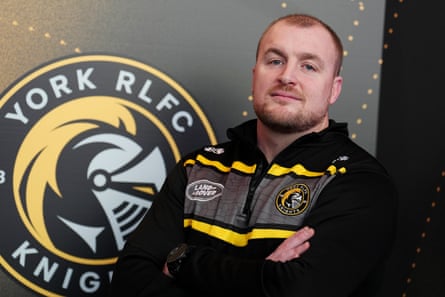
That positivity will continue on Thursday evening when Super League breaks new ground in North Yorkshire. A full house will be at the home of York Knights to welcome the defending champions Hull KR, who have the World Club Challenge against Brisbane Broncos a week later, followed by a clash with Leeds Rhinos in Las Vegas.
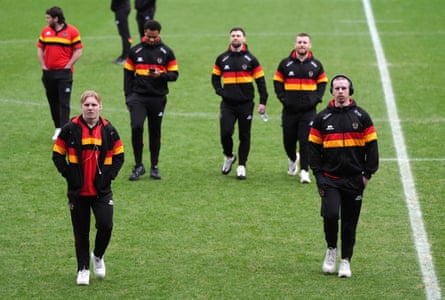
Bradford’s return is also one of great intrigue. The former world champions were arguably the biggest club in the game in the early 2000s when they won four Super League titles, but since their relegation in 2014 they have gone out of business, reformed in the third tier and now worked their way back to the elite.
They start at Hull FC on Saturday and will bring another boost to Super League’s growing attendances across the board, with Toulouse’s return after a solitary season in 2022 also a huge shot in the arm for rugby league in France. It has already led to a new TV deal – secured by IMG – to show all Toulouse and Catalans games across the Channel.
But on that subject, just as it was 30 years ago, one of the primary big pre-season talking points away from the field revolves around the broadcasting of the sport. Sky Sports’ partnership with Super League in 1996 was groundbreaking and they have remained loyal long-term partners ever since. But the value of the deal to Super League has gradually dwindled over the last decade – and it is hard not to feel there are cracks appearing.
Super League clubs pushed through an expansion to 14 teams despite acknowledging the two extra teams in York and Toulouse would have to receive no central distribution as there simply wasn’t enough money in the pot to split 14 ways. In the end, they got half: about £650,000, while the other 12 teams received £1.3m. Ten years ago, that figure was north of £2m.
Rugby league in Europe is heavily dependent on the value of its broadcast deal and with Sky Sports’ existing contract ending this year and the broadcast landscape rapidly changing before our eyes, this could be an era-defining year for Super League. Sky will want to renew, Super League will too: but there are those close to the situation who are privately hoping that new broadcasters come forward to promote some sort of bidding war. A decision will be made before the summer.
Because rugby league in this country probably cannot operate at this level of financial income for much longer. That view was sharpened this week when Halifax Panthers, one of the second tier’s top clubs, were liquidated in the courts after a winding-up petition. They are the third club inside six months to fall by the wayside after Featherstone Rovers and Salford.
Simply put, there is not enough money in the pot for so money professional rugby league clubs, with Super League’s bumper TV deals no longer trickling through the pyramid. Even at the highest level, losses continue to mount with many elite clubs dependent on the deep pockets of their owners. That is a very unsustainable way to operate as a sport and cannot last for ever.
Perhaps that is why Super League and some of its elite clubs are starting to think differently. There is a growing events culture across the sport, with Magic Weekend and Las Vegas now firmly in the calendar. Wigan and Warrington, two of the competition’s real progressive thinkers, will also look to play a game in Dublin next year, amplifying the need to escape the sport’s typical boundaries.
At ground level, there remains a sport with untapped potential and the IMG partnership appears to be bearing fruit with metrics like attendances and TV viewing figures on the rise. Three new teams – and one extra game each round – will create more opportunities for stories and narrative. But the biggest story worth tracking in terms of Super League’s medium and long-term future is the one bubbling away under the surface. One way or another, it will lead to a very different outlook for the competition by the end of this year.