 3 hours ago
3
3 hours ago
3
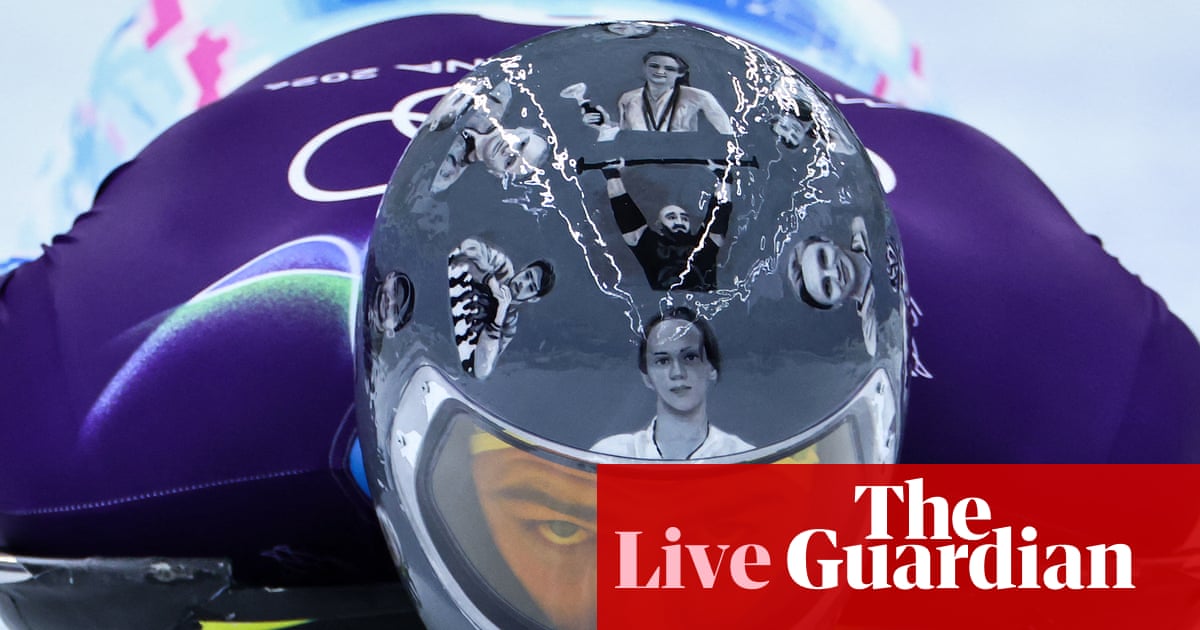
The Ukrainian skeleton racer Vladyslav Heraskevych has been kicked out of the Winter Olympics after he refused to back down from wearing a “helmet of memory” in honour of Ukraine’s war dead.
The decision was announced by the International Olympic Committee just 21 minutes before the first round of the men’s skeleton competition in Cortina on Thursday after last-ditch talks between the IOC president, Kirsty Coventry, and Heraskevych failed to find a breakthrough.
In a terse statement, the IOC said it had removed Heraskevych’s accreditation because of “his refusal to comply with the IOC’s Guidelines on Athlete Expression”.
“Having been given one final opportunity, skeleton pilot Vladyslav Heraskevych from Ukraine will not be able to start his race at the Milano Cortina 2026 Olympic Winter Games this morning,” it said.
“The decision followed his refusal to comply with the IOC’s Guidelines on Athlete Expression. It was taken by the jury of the International Bobsleigh and Skeleton Federation based on the fact that the helmet he intended to wear was not compliant with the rules.”
“The IOC has therefore decided with regret to withdraw his accreditation for the Milano Cortina 2026 Games.”
Heraskevych was seen as a contender for a medal but being stripped of his accreditation means he now needs to leave the Olympic Games immediately and will not be allowed back into the athletes’ village.
Reacting to his disqualification, Heraskevych told reporters at the track: “It’s hard to say or put into words. It’s emptiness.”
He also confirmed that he would appeal to the court of arbitration for sport, but with the competition already underway there seems little hope of success.
The decision was immediately criticised by Britain’s skeleton Olympic champion Lizzy Yarnold, who said that the Heraskevych was owed an apology by the IOC.
“It’s actually quite shocking,” she said. “Lots of the sliding community have been in contact straight away. There is shock and confusion.
“The reaction to something which was an act of memorial, and incredibly emotionally important to him, I’m quite shocked. I think the IOC owes him an apology. I think this was the wrong decision. He was also a medal contender for the race. He’s a phenomenal athlete.”
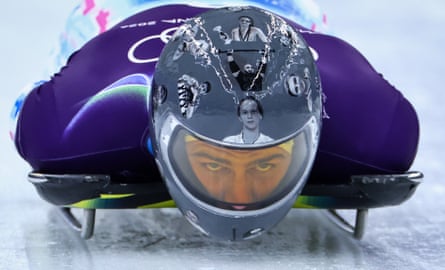
Under Article 50 of the Olympic Charter, political statements are forbidden while in competition. However, the Ukrainian delegation had insisted all week that the helmet, which shows 24 images of athletes and children killed since Russia’s invasion, did not violate any laws because the helmet is about remembrance.
However that argument ultimately fell on deaf ears, despite numerous meetings with the IOC, who claimed that Heraskevych refused to listen to any form of compromise, including the offer to wear a black armband.
“Despite multiple exchanges and in-person meetings between the IOC and Mr Heraskevych, the last one this morning with IOC President Kirsty Coventry, he did not consider any form of compromise,” the IOC statement said.
Coventry spoke with reporters after the meeting, tears rolling down her face as she made here statement. “I was not meant to be here but I thought it was really important to come here and talk to him face to face,” she said.
“No one, especially me, is disagreeing with the messaging, it’s a powerful message, it’s a message of remembrance, of memory. The challenge was to find a solution for the field of play. Sadly we’ve not been able to find that solution” she added, choking up. “I really wanted to see him race, It’s been an emotional morning.”
Earlier on Thursday, Heraskevych made a last plea to the IOC to allow him to compete wearing his helmet.
“I never wanted a scandal with the IOC, and I did not create it,” he said. “The IOC created it with its interpretation of the rules, which many view as discriminatory.
“Although this scandal has made it possible to loudly speak about Ukrainian athletes who have been killed, at the same time the very fact of the scandal distracts a tremendous amount of attention away from the competitions themselves and from the athletes participating in them.
“That is why I propose to end the scandal. I ask: 1. Lift the ban on the use of the “Memory Helmet”. 2. Apologise for the pressure that has been put on me over the past few days. 3. As a sign of solidarity with Ukrainian sport, provide electric generators for Ukrainian sports facilities that are suffering from daily shellings.”
It was a call that went unheeded.