 5 hours ago
5
5 hours ago
5
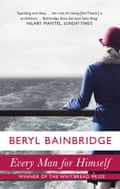
10 Every Man for Himself (1996)
Bainbridge’s novel of the last days on RMS Titanic was acclaimed and popular (“They probably thought it was the book of the film,” she said), and the scenes of the sinking are brilliantly delivered. “There is about me an element of showmanship,” says one character, but Bainbridge’s own showmanship is muffled here by her need to stick with facts, meaning the novel lacks the humour, fluidity and eccentricity of her others. And unlike her earlier books, the final tragedy never feels personal to the characters.
Sample line: “He did have layers, but like an onion they were all the same.”
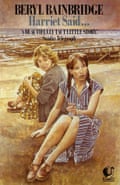
9 Harriet Said … (1972)
Bainbridge’s darkest novel is about the teenage narrator and her older, cooler friend Harriet. “I’ve always run wild,” our girl says: a common trait in Bainbridge novels. (She herself was “expelled from school at the age of nine because of some dirty rhyme”.) When the narrator and Harriet get involved with a married man, there’s a lot of “adolescent trembling, swirls of nerves gone gold” – and mortal danger. It’s a story of power and corrupted innocence: but who’s corrupting whom?
Sample line: “It was nothing really. I hardly noticed. Just like going to the dentist. Not even as bad.”
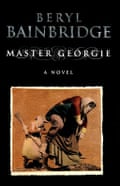
8 Master Georgie (1998)
The fifth of Bainbridge’s novels to be shortlisted for the Booker prize – “our table was always the most cheerful, because we didn’t expect to win” – was another based on historical events. She turned to these after she “used up”her life in her earlier autobiographical novels. A subtle book that rewards rereading, it’s set around the Crimean war, narrated in turn by the hangers-on of medic George Hardy. The story comes as a series of snapshot moments, as the characters hurtle toward disaster. “One should never underestimate the disruptive force of haphazard actions,” says one, and Bainbridge’s characters know all about those.
Sample line: “Some people only weep inside, which I think wasteful.”
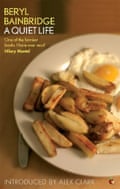
7 A Quiet Life (1976)
Of all Bainbridge’s novels, this offers the most direct account of her “terrifying” childhood in Liverpool when, as she later recalled, her mother and father fought so much “my brother and I would never be out of the house at the same time [so as] to stop them killing each other”. Through siblings Alan and Madge, we see their mother’s restless domestic rearrangements (“Everything in its place, though never for long”) and a bad-tempered father, but also the demons that drove him there. Little wonder that “Madge threw herself about in a transport of unexplained grief”. But it’s also a charming, funny, bittersweet portrait of a vanished world of meat pies, fruit drops and poultices on boils.
Sample line: “Though the war was over, Father was still caught in a cross-fire, harassed by battles, by phantom cities tumbling about his ears.”

6 Sweet William (1975)
Many of Bainbridge’s characters long for the transformative effects of love, are so hungry for change that they grab on to it, even if it’s not the right change. Playwright and lothario William provides it for as many women as will have him. (“What did you think when I first met you?” “I thought I had flu.”) Even as his deceits are uncovered, he gets away with it. “You don’t want to expect normality from him,” one of his lovers says to another. “He’s an artist after all.” The novel has the delicious shiver provided by a really good bad guy.
Sample line: “Her doctor said she was a healthy young woman – all normal. Not my heart, she thought. Surely my heart’s not normal.”
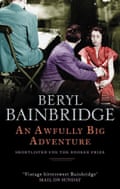
5 An Awfully Big Adventure (1989)
Set, like many of Bainbridge’s novels, in post-war Liverpool, this book brings us an ungovernable girl, Stella, and her efforts to become an actor. (Bainbridge acted before she wrote, and appeared in the eighth episode of Coronation Street in 1961.) She falls for the director, Meredith Potter, with his “Gestapo monocle”, as he prepares a production of Peter Pan. This is Bainbridge at her most demanding – “I don’t like to be obvious or spell things out” – and the reader must stay alert, but the rewards are rich.
Sample line: “[Meredith] had never known a father, being the issue of a man who smoked cigars and a girl plucked from the typing pool of the Cunard buildings in 1913.”
after newsletter promotion
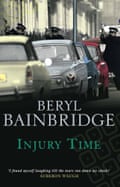
4 Injury Time (1977)
Bainbridge’s best books are both funny and sad: when, early on, her publisher suggested she write a black comedy, “it was like taking a cork out of a bottle”. This is an extreme example of the form: a farce, where everyone seems to be having an affair with everyone else, turns into a hostage drama as a dinner party is invaded by criminals. The darkest moments are rough even by Bainbridge’s standards, but the overall tone is exuberant, even antic.
Sample line: “Why couldn’t he pretend that he longed to leave his wife, so that she in return could pretend she wished he would?”
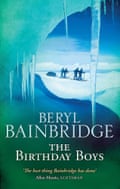
3 The Birthday Boys (1991)
Easily the best of Bainbridge’s novels based on historical events, this takes us into the minds of Robert Scott (“I’m simply no good when I’m not doing something”) and the four men who went with him to the South Pole – and part of the way back. “We did our business in our britches and shook the turds out when they froze.” Each voice is distinct and a brilliant act of ventriloquism from Bainbridge, but what underlies the men’s relationships as they crawl toward disaster is the great immovable glacier of the English class system.
Sample line: “How curious it is that passion has so little to do with feeling cheerful.”
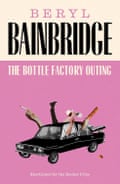
2 The Bottle Factory Outing (1974)
Most of Bainbridge’s novels end in death: this one opens that way too. Mismatched friends Freda (who “longed to be flung into the midst of chaos”) and Brenda (who wears a coat in bed) both work at a bottling factory, where they navigate desires for and attention from their Italian colleagues. A works day out leads to chaos with horses, a broken toilet, a barrel of brandy, and more death. Here, slapstick and tragedy don’t alternate, but happen at the same time, as Bainbridge once more makes us laugh at things we shouldn’t be laughing at.
Sample line: “She supposed it was the fumes from the wine that kept them all in a constant state of lust.”
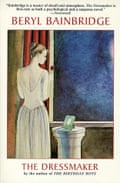
1 The Dressmaker (1973)
Desperate romantics are Bainbridge’s speciality. Sensible Nellie (“Never sit down on someone else’s lav and never eat a shop-bought meat pie”) isn’t one, but her sister Marge (“the big blaze that died down through lack of fuel”) is. So is the niece that lives with them, Rita, who falls in love with an American GI. This is Bainbridge at her best: shocking, sinister, and perfectly expressing her characters’ internal turmoil, which by some process of alchemy results in the blackest of comedy.
Sample line: “She wished she was Bette Davis, Joan Crawford, languidly sitting in a long dress, calling them darling, loving and loyal always – but cool like a snake, telling them to go before they told her.”