 5 hours ago
5
5 hours ago
5
The first alarm bells sounded nearly 10 years ago, and since then, a deluge of books, podcasts and roundtables has tried to get at the bottom of the problem: why is gen Z not having sex?
Recently it’s as though culture has been recalibrated to make up for the youth’s apparent frigidity. “Smut” literature is on the rise, prestige TV is now depicting OnlyFans models, and indie films have taken a turn towards kink. This summer, through confused young protagonists and their sexual misadventures, the movies are zeroing in on generational attitudes about sex.
There is a contradiction behind gen Z chastity: despite being the most sexually progressive generation ever, zoomers live under the influence of rampant sexual conservatism. After the 2022 overturning of Roe v Wade, for instance, 16% of single gen Z adults are more afraid to date. This tension is at the heart of One Night Only, a new romcom that imagines a world in which Congress has outlawed premarital sex. For one night of the year, the government lifts the ban, essentially enacting the purge for single people’s sexual freedom. On this night, after a series of missed encounters and wrong turns, Owen (Callum Turner) and Allie (Monica Barbaro) meet cute.
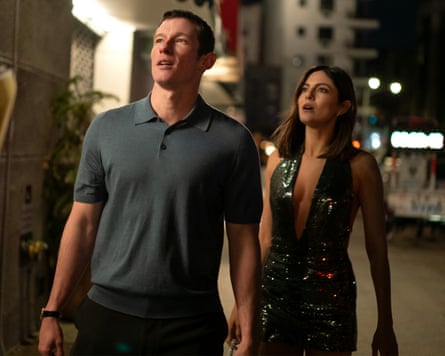
Despite its political tenor, One Night Only’s vision of dystopia is not a comment on America’s rapid hurtle toward authoritarianism. It merely presents obstacles for Allie and Owen to overcome – such as the $2,000 price tag for the condoms Owen attempts to procure – much like the missed connection brought about by a busy phone line in a 90s romcom. We know nothing about what these characters’ lives were like before the ban, which means that Allie’s complaints about the difficulty of finding her “Prince Charming” come off generic, indistinguishable from any number of complaints that I, a married zoomer, have heard from my single friends about dating in the age of apps.
Silly hi-jinks aside, One Night Only misunderstands today’s sex recession as libidinal, when really, it’s existential. It’s not that zoomers aren’t horny, or can’t find a man: they are the first generation to grow up fully under the influence of the internet, with its attendant alienations; worse, its youngest members came of age during the pandemic. Knowing how to relate to one another is hard enough, let alone how to initiate sex – a process often awkward, if not outright painful, for everyone no matter their age (This much, at least, One Night Only gets right.)
Other films this summer understand that sex can’t solve the fundamental alienation brought about by modern life. It’s loneliness that ails Elliot (Cooper Hoffman), the flush-cheeked studio assistant to the provocative artist Erika Tracy (Olivia Wilde) in Gregg Araki’s I Want Your Sex. For the most part Araki’s characters stay in their boxes, with Erika the worldly provocateur to Elliot’s gullible dork. But in the film’s best moment, a doomed threesome with Elliot’s sexually confused roommate Apple (Chase Sui Wonders), that order is disturbed. The arrival of a third person with her own muddled desires – does Apple want Erika, Elliot, or both? Do they want her? Does she want to be wanted? – leads Erika to lose her grip, and Elliot to rebel against his part. Standing there half naked, they might as well be worlds apart.
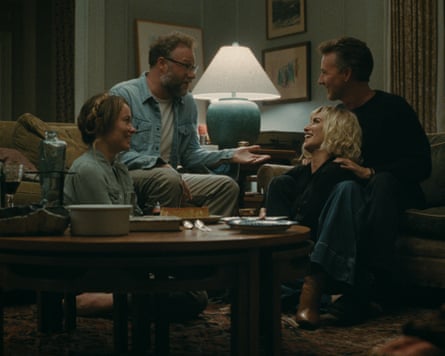
I Want Your Sex shares a dynamic with The Invite (in which Wilde also stars, and which she directed) and Jane Schoenbrun’s Teenage Sex and Death at Camp Miasma: a younger and less experienced person (or couple) becomes entangled with an older, sexy woman who shows them the path to self-knowledge through desire. But whereas sex is an all-consuming problem for the characters in The Invite and I Want Your Sex, Camp Miasma presents sex, death and art as intertwined human impulses that are impossible to separate from one another. Tasked with rebooting the Camp Miasma slasher franchise that first prompted her “queer awakening,” 29-year-old filmmaker Kris (Hannah Einbinder) has one theme on her mind: “DESIRE”, as she scrawls in her journal, in big block letters.
By letting us into Kris’s process of self-discovery, Miasma addresses generational concerns in more nuanced ways than its counterparts this summer. Through her relationship with her muse Billy Presley (a wonderful Gillian Anderson), Camp Miasma’s original final girl, Kris learns that to arrive at artistic epiphany or sexual climax, one must let go of control, let the movie play out. To Billy, slashers are as elemental as sexual desire: she teaches Kris that sex, like art, is a visceral experience not easily theorized.
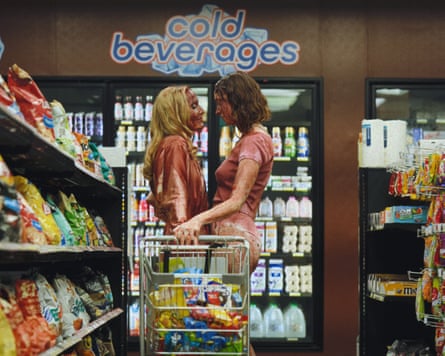
While One Night Only plays threats to bodily autonomy for laughs and I Want Your Sex’s Erika rolls her eyes at gen Z’s “wokeness”, Camp Miasma strikes a more sincere tone. Kris is initially drawn to reboot the Camp Miasma films to correct the franchise’s transphobia, but only discovers a physical and emotional experience of art when she learns to stop overintellectualizing slashers. It’s only then that she can really connect with Billy, and it’s only through their connection that she can make a film that is true.
These movies don’t exactly present zoomers with a model for how to be a young person who has sex; if anything, they’re more like cautionary guides showing what kinds of behavior to avoid. But that’s precisely where their value lies. After decades of unrealistic depictions of sex on screen and a few worrisome years when it seemed likely that sex would disappear from the movies altogether, it’s a relief to see sex return to screen – messy awkwardness and all.