 1 month ago
42
1 month ago
42
Shell is considering fossil fuel investments in Venezuela worth billions of dollars, according to its chief executive.
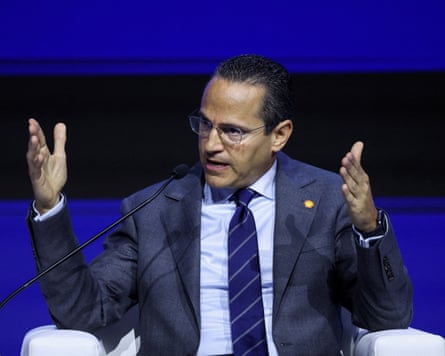
Wael Sawan said Europe’s largest oil company is weighing plans for production projects off the Venezuelan coast that could begin yielding gas in the next couple of years. “These are opportunities that could potentially be activated within months,” he told CNBC, adding that the company was now awaiting approvals.
Shell’s fresh interest in the South American country has emerged a week after Venezuela passed sweeping reforms to its hydrocarbon laws to encourage increases in oil and gas production and foreign investment, in line with calls from the US president, Donald Trump, to revive the industry.
Trump called for America’s biggest oil companies to reignite Venezuela’s struggling oil industry after removing the former president Nicolás Maduro last month, but the suggestion received a tepid response from executives, including the chief executive of ExxonMobil, Darren Woods, who said that political stability was vital before investments could take place.
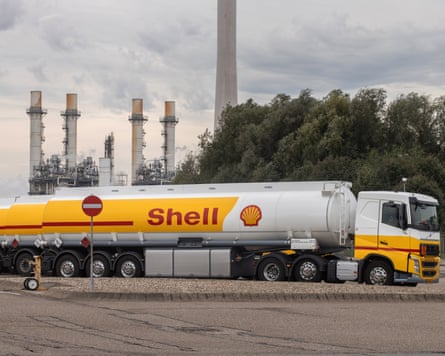
Shell signalled its interest in Venezuela as it handed investors bumper payouts despite reporting its third consecutive year of falling profits following weaker oil prices.
The oil company reported a 22% fall in adjusted earnings to $18.5bn (£13.6bn) for 2025, down from $23.7bn in 2024, owing to steadily falling global oil market prices.
It is the third year in a row that the company has reported falling profits since making almost $40bn during the 2022 energy crisis.
Shell’s earnings for the last quarter of the year were $3.25bn, missing analyst expectations of $3.5bn and well below the $5.4bn reported for the previous three months.
Despite the weaker profits, the company handed its shareholders a 4% increase in dividends and $3.5bn worth of share buybacks – its 17th consecutive quarter of at least $3bn of buybacks.
Meanwhile, its net debt climbed to $45.7bn by the end of the year, or almost 21% of its total capital, up from $41.2bn at the end of September, as oil prices continued to slide.
The international price for crude fell below $60 a barrel for the first time in almost five years at the end of 2025 as political leaders began to inch towards a Russia-Ukraine peace deal, which could increase the glut in the global market if western sanctions were lifted on Russian exports.
Overall, oil prices slumped by almost 20% in 2025, marking the biggest annual loss since the Covid pandemic, and the first time that the oil market has recorded three consecutive years of annual losses.
Sawan said the year showed “accelerated momentum” for the business, with “strong operational and financial performance across Shell”.
“We generated free cashflow of $26bn, made significant progress in focusing our portfolio and reached $5bn of cost savings since 2022, with more to come,” he added.
Shell’s lucrative investor payouts have continued, despite the falling oil price and as the company reportedly consults with shareholders over plans to increase Sawan’s pay packet by at least £4.6m a year alongside one of the most generous long-term incentive plans in the FTSE 100.
Mark van Baal, founder of the activist shareholder group Follow This, said Shell’s steadily declining profits despite rising global oil and gas demand had exposed “weakening fossil fuel economics” in the energy sector.
“We expect that every shareholder wants to know how the company will create shareholder value in a declining oil and gas market,” he said.
“Even shareholders who don’t care about climate risk and only care about the value of their shares in Shell should be worried about Shell’s stubborn disregard of market forces such as the exponential growth of renewable energy and electric vehicles.”
Shell also attracted criticism from green groups. Fossil Free London staged a mock “profits party” protest outside Shell’s headquarters on Wednesday, where it accused the company of fuelling the climate crisis in pursuit of profit.
Maja Darlington, a climate campaigner for Greenpeace, said the oil company’s profits “could cover the UK’s £2.8bn climate damage bill from floods, fires, storms and droughts almost five times over.
“It is reprehensible that Shell is allowed to act with impunity. Governments must make these oil giants pay for the climate chaos they have created,” Darlington added.