 2 months ago
103
2 months ago
103
Naked mermaids and prancing horses, silk carrots and unshelled peanuts, gilded elephant trunks, drums and masks – and those are just a few of the buttons. The V&A’s lavish spring show is a weird and wonderful tumble down the rabbit hole that is Schiaparelli, fashion’s house of surrealism.
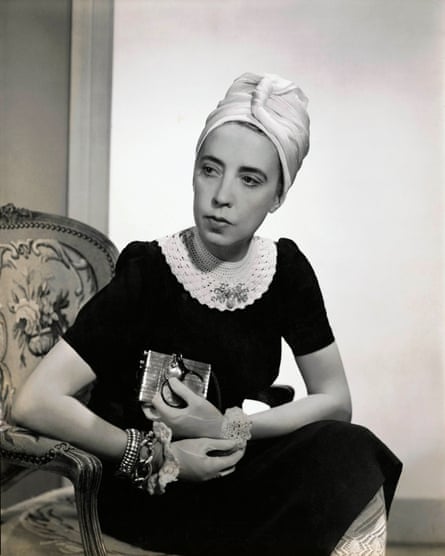
Elsa Schiaparelli designed clothes to be witty, not just pretty, and that lively spirit runs through this show. A shoe becomes a hat, bones grow on the outside of a dress, a telephone dial becomes a compact mirror. A stroll through the galleries feels less like admiring a beauty pageant lineup of frocks, and more like taking a turn through a 1930s Paris cocktail party with Schiaparelli and her friends Salvador Dalí and Jean Cocteau: bracingly avant garde, mildly unsettling, all visual puns and in-jokes and never a dull moment. Turn a corner from a Man Ray painting of a lit candle wearing a harlequin coat and you encounter a mannequin perched on a ledge, wearing a jacket that sprouts gold palm trees at the shoulders. It is wild, and it works.
Coco Chanel, Schiaparelli’s contemporary and – in modern parlance – frenemy, was being catty when she called her “that Italian artist who makes clothes”. This show reframes that label as a compliment, minus the waspish backhand. It argues that Schiaparelli was not a fashion designer who hung out with surrealist artists, but an artist in her own right. A case in point: Dalí’s lobster telephone is included in the show, next to the lobster dress, famously worn by Wallis Simpson, which Schiaparelli made in collaboration with Dalí. The dress preceded the telephone by a year.
Next to her famous skeleton dress of 1938, another Dalí collaboration, with padded ribs and spine of cotton wadding protruding eerily from black crepe, is a letter from Dalí’ – “Dear Elsa, I like the idea of ‘bones on the outside’ enormously” – which clearly credits the idea to her. A Picasso portrait of the artist Nusch Éluard, dressed in Schiaparelli with a hat in the shape of a horseshoe, captures a moment when Éluard walked into his studio and Picasso was so mesmerised by her outfit that he insisted on painting her immediately.
Schiaparelli, who was born into a smart family in Rome in 1890, seems to have been born with surrealism in her bones. In her memoir, she tells of how as a child she thought herself plain and was envious of her sister’s beauty. Her solution was to take seeds from the prettiest garden flowers and plant them in her mouth, nose and ears, hoping they would bloom “like a heavenly garden”. Already, she was thinking differently. (Spoiler: it didn’t work, it just made her cough.)
She moved to London in her 20s, and arrived in Paris in her 30s, divorced, with a baby daughter to support, at which point she launched her fashion career with a range of trompe l’oeil sweaters with knitted “optical illusions” to suggest a bow or a waistcoat. Within a few years, she had a staff of 400, and Vogue was lauding her as “the designer of the most exciting clothes in Paris”. We meet her in the first room of this show, photographed in a dark suit and lace-up brogues in her studio in Place Vendôme in Paris. Napoleon on his column is visible through the window behind her; it is hard to say who looks the more formidable.
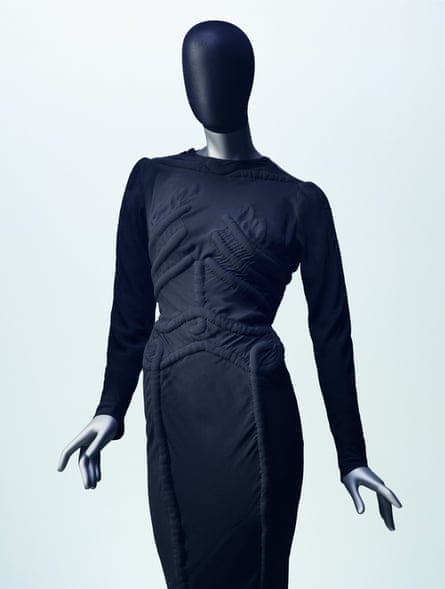
Schiap – as she was known to her friends – loved to shock. Her favourite colour was shocking pink, and she made it part of her brand. For a while, a taxidermied pink polar bear was displayed in her shop window; when she died in 1973, 19 years after retiring, she was buried in pink.
This show includes a coat she made for Jane Clark, wife of the art historian Kenneth Clark, to wear for the coronation in 1937, which fastens with a single button – a gleaming naked mermaid – at the bosom. Fashion as performance art did not, it turns out, start with the Kardashians or the Met Gala.
Schiap emerges as a prescient character, collaborating across the culture to explore her creativity and promote her brand almost a century ahead of her time. So it is to his enormous credit that Daniel Roseberry, the American designer spearheading the brand’s current revival, holds his own with the modern pieces that are interspersed with the archive. Roseberry, who joined in 2019, just gets it: the humour, the glamour, the eroticism. He knows to lean into the oddness – what he calls “the pebble in the boot” – while maintaining the spine of clear thinking that stops the jokes dissolving into comedy.
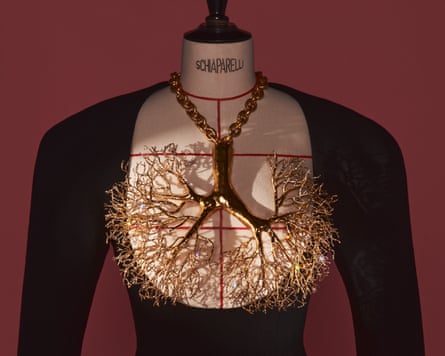
A younger audience who come to Schiaparelli through TikTok and viral red carpet moments will delight in seeing the dress in which Bella Hadid caused a red carpet sensation in Cannes in 2021, a golden breastplate in the shape of a pair of lungs, and the “robot baby” made of old flip phones and circuit board shards that starred on a 2024 runway.
Schiap’s reputation has always rested on how you feel about fashion mixing with art. Those who feel fashion should stay in its lane may not like this show; those who appreciate clothes that can be outrageous and intelligent and in conversation with culture will. And – most importantly – no one will be bored.