 2 months ago
71
2 months ago
71
Over the past decade, “idol” culture has turned east Asia into a pop music powerhouse as global audiences have flocked to Japanese and especially South Korean groups. Formed and exactingly trained by big entertainment conglomerates, bands such as BTS and EXO have blown up internationally thanks to bombastic songs, sensational dance routines and marketing campaigns designed to build a parasocial relationship between performers – idols – and their fans. Their neighbour China, however, the population of which is roughly eight times that of Japan and South Korea combined, has produced few groups with similar fame.
Until 2021, Chinese versions of Korean idol-training shows – think The X Factor with considerably more challenging choreography – were gaining huge audiences. But the shows, and the fan culture they inspired, drew the ire of the Chinese government. It cracked down on “toxic” fandom, an initiative that included banning idol-development shows. “It was an excuse to regulate the internet,” says Emily Liu, who runs the popular idol newsletter Active Faults. The government has also unofficially prohibited Korean pop idols from performing in mainland China for the last decade due to geopolitical tensions.
The ban on idol shows irrevocably damaged China’s mainstream idols such as IXFORM and Into1, who disbanded soon after their respective shows were cancelled. While groups weren’t forced to disband, they lost the exposure needed to build performing careers lucrative enough to justify the significant upfront costs of idol training. “It’s like they blocked the end of the river that flows into the industry,” Liu says. “They blocked opportunities for them to make a living.” Many idol-show participants – such as Duan Xingxing and Tang Jiuzhou from IXFORM – moved into more lucrative fields such as acting, while other would-be idols shifted to China’s livestream industry, where viewers pay to make special requests to dancers.
But a scene developing within China is shifting the idea of what an idol can be. Fans and part-time performers are forming grassroots “alt-idol” groups, in opposition to demanding, restrictive blueprints of corporate pop. “People are exhausted by Blackpink and BTS and all these household names,” says Liu. “People want something new, especially in China.”
Zhao Beichen, the founder and producer of the alt-idol group Transparent Classroom and Parallel Girls, compares this movement with the arrival of alt-rock in the US in the 1980s. In Japan, “underground idol” typically refers to idol groups training for the mainstream; Zhao calls her group “alternative” because it centres on sincerity and artistic freedom instead of the rigid standards mainstream groups must live up to: inflexible (if unwritten) criteria around qualities such as weight, complexion and technical perfection in choreography. When she selects band members, she says: “I choose people who are not what the idol industry says are suitable to become an idol.”
Silver, one of the six-strong group, says: “When I was little, there was no one like me on television in China.” She and another member of the group have short-cropped hair, which is rare in the idol world. Silver grew up listening to K-pop, as well as Radiohead, and auditioned for several mainstream idol groups. On the verge of giving up, she met Zhao at a flea market where Silver was selling her guitars.
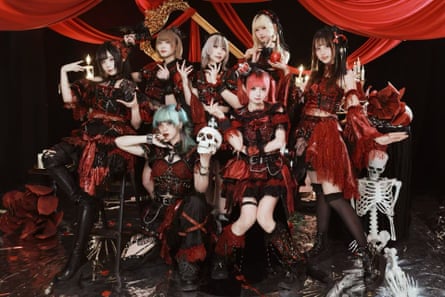
Zhao had conceptualised her group while living in Japan, where, impressed by the underground groups’ “heart-moving power”, she did graduate research on the scene and spent several years working for an idol producer. In 2019, she moved back to China to launch her own act, arriving at a turning point in China’s pop music industry.
While mainstream pop has been decimated, the number of alt‑idol groups has been expanding. Although these groups retain many classic idol tropes – choreographed dancing, synchronised costumes and the cultivation of individual member personae – they are sonically and stylistically more experimental than those formed through the pressure-cooker commercial training programmes in Japan and Korea. Many are self-produced and based outside the international hubs of Shanghai and Beijing, allowing more localised scenes to flourish. Transparent Classroom are from Changsha in central China, while fellow alt-idol group 7Sins are based in the southern city of Guangzhou.
Listen to Guardian music’s Chinese ‘alt-idol’ playlist … Spotify
“When we debuted in 2022, Guangzhou basically had no underground idol groups,” says Kumiko from 7Sins. “Now, there are idol events held in different live houses every weekend.” While live houses – local music venues open to smaller acts – don’t allow groups to build massive fanbases as rapidly as idol shows, they have given idol groups a platform outside the strongly regulated internet and a closer connection with fans. Ma, a Beijing-based fan of Transparent Classroom, says watching them in Changsha “makes me feel like I’ve returned to my spiritual home town”.
7Sins and Transparent Classroom employ gothic fashion and space-explorer chic; 7Sins’ songs veer towards high-octane rock, while Transparent Classroom’s discography is an eclectic mix of jangle-pop, punk, house, post-rock, jazz and other influences. This experimentation became an important part of their appeal for fans such as Ma. “I felt they were different from what I or most people imagine when they think of mainstream idols, who might just wear pretty clothes and sing very sweet songs,” he says.

The lack of supportive commercial structures means that alt-idol work is rarely a full‑time gig. Silver also works as an English teacher, while Kumiko is finishing her graduate studies. It can also make the scene more fragile. “Changes in membership have a big impact on our image because, unlike company-formed groups, our group is built on close-knit bonds between members,” Kumiko says. 7Sins recently announced they would be disbanding in June, partly because of concerns about long-term continuity in their lineup.
The broader landscape is also shifting. Last year, BTS’s parent company, Hybe, opened a Beijing office, signalling a potential thaw in China’s de facto freeze on Korean pop culture. While Zhao is hopeful that the idol sector is large enough to allow niche scenes to thrive, she is uncertain how such changes would affect alt-idol groups. “I can’t say for sure whether the future trend of this industry will squeeze this subculture, or if it will grow along with it,” she says.
Kumiko has already developed an alt-rock solo project under the name Kum1k0, and when I ask Silver what her “main job” is, she corrects me: “My career is music. Even though I have to spend most of my time making money as a teacher, I am thinking about music all the time.”
Silver’s words reveal the truth underlying the alt‑idol world. Without the possibility of a future payout, the scene is sustained by the passion of its members, who are in it for little more than the joy of performing. “Even if no one was watching, I would be dancing all day,” says Silver. “To be able to have audiences watching you sing and dance – that’s a privilege.” The very existence of China’s alt-idol groups is a testament to the impossibility of tamping down a culture that speaks to its members. You can block the river, but the water will find a way through.