 1 month ago
37
1 month ago
37
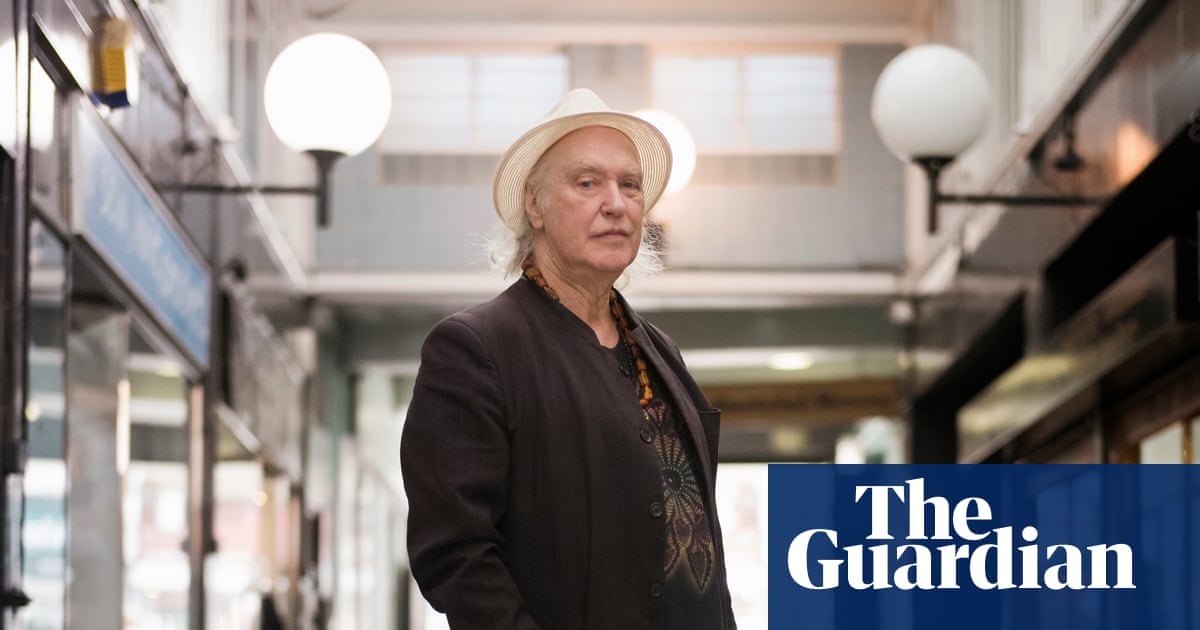
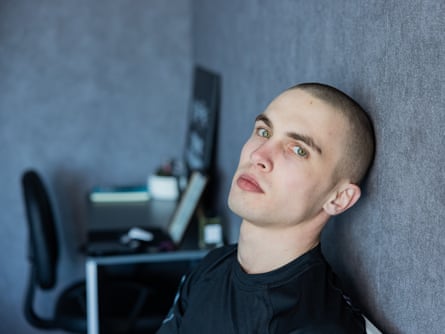
Valentyn Polianskyi, 24 – poet, tailor, ex-prisoner
After his mother died when he was very young, Valentyn Polianskyi was raised in the Kherson region by his aunt and his grandmother.
Now 24, he says he felt a little embarrassed by his love of sewing clothes, believing it was “more for women than men” so after studying tailoring at university he signed a contract with the 36th marine brigade, where he served as a material support sergeant.
He met a girl and they fell in love so quickly that within months they were engaged. “We were at the flowers and candy stage,” he says. When the Russian invasion came on 24 February 2022 he was deployed in Mariupol, at the Illich steel plant.
The seaport city was battered and besieged; tens of thousands of Ukrainians were killed and 90% of the city was destroyed. On 12 April, as his unit was told by their commander to surrender to avoid being wiped out, Polianskyi learned his girlfriend was pregnant. It was the 48th day of war when he was taken into Russian captivity, and Polianskyi spent the next three years being beaten, starved, tortured and poisoned.
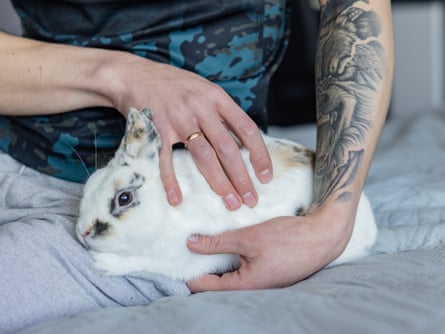
“Sometimes, I find it easier not to talk at all. It’s very hard to talk about captivity,” he says. “You get up at 6am and have to stand up until 10pm. So your legs get swollen and lumps of blood form beneath the skin.” After the hours of standing, “you cannot even walk up the one step to the toilets, it is agony. Always there are beatings.
“There are men castrated; chemicals forced into people. There are no doctors, so older men, if they have health problems, they die. My friend died of pneumonia – he was 47.
“When I came back, I found I had a wife and a two-and-a-half-year-old child. That was hard. Before the invasion we were closer; it was very romantic. Now we are a lot colder and my daughter is struggling to see where I fit into their lives. Sometimes she calls me Daddy but sometimes she calls me Valentyn.
“I’m suffering with feelings of aggression. I can’t find anyone I trust to get help, so to cope I stay away from alcohol, I meditate and write my poetry.”
Polianskyi now works with an organisation helping other released prisoners, but the formerly gentle tailor is now a steelier man. “I would kill each Russian with my bare hands,” he says calmly. “Even my grandchildren will know they are bastards.”
Henadii Udovenko, 53 – builder, father, commander
Henadii Udovenko had been working on the renovation of a government official’s apartment when he first heard talk of war. “So I had thought about it and already decided I would enlist. The morning of the invasion, I took the metro to Kyiv’s military registration office,” he says.
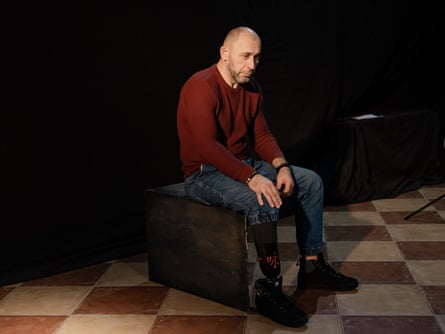
“What was I thinking? I was thinking I was glad I didn’t take my car because already there were traffic jams of people leaving the city.”
Before the war, Udovenko had his own small building company. They did a bit of everything – plumbing, electrics – and he and his wife had two children, a daughter and son, who were doing well in their education.
“I was afraid at first. I didn’t know how I would react in a combat zone – I was interested to see if I would be a coward or not. But you come to war stage by stage.
“I can’t talk for other men, only me, but I have wanted to challenge myself all my life and I realised in the army that I had the skills to get through it. I have no doubt that the war has made me a stronger person, that it makes many men stronger.”
Udovenko, who rose through the ranks and now commands a unit, was wounded in the trenches in 2023. He lost a leg, but chose to return to the fighting as soon as he was able. He shrugs when asked about his decision: “My family needed me less than the men at the front needed me. I couldn’t just leave them.
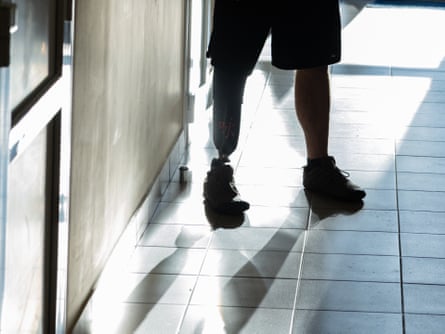
“My wife and I are closer since the invasion, especially since my injury. Young men have it harder – young women think the war is too much, too long. They are so fed up and are arguing with their men, but really there is no choice here.
“There are huge misunderstandings between Ukrainian men and women, lots of difficulties in relationships. The invasion has turned ordinary men into warriors, and that seeps into and divides the family.
“As soldiers, men function differently,” he says. “You are with this tight group and you know each other completely because you have to open up fast. Everything in war happens so quickly.”
Udovenko holds his country dear for its potential: “For 30 years we have lived as an independent country – made some stupid mistakes, yes, but it shouldn’t be all destroyed. Russia is a prison country, with no possibility to have your own thoughts and independence.
“I don’t hate Russians; Russia has the same poor people as here, they are not our enemy. My enemy is the people who sit in those trenches every day and shoot and shell us.”
Denys Monastyrskyy, 29 – gamer, sniper, weapons trainer
“There was no noise. Just the explosion. I felt the pain in my left hand and I could taste metal,” Denys Monastyrskyy says of the day that two of his fingers were sliced off by shrapnel.
“Amputation is a thing you live in fear of – you think about what part you’d rather lose. I was a boxer and love sport, so I didn’t want to lose anything.
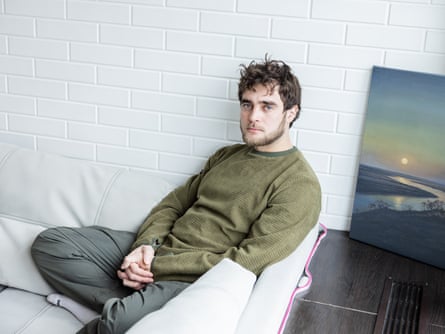
“We have a lot of injured guys, we talk about ‘what does it feel like?’ This felt like an intense burn. It was all very fast. Then the training kicked in and I applied the tourniquet. But I was thinking, ‘how will I tell my mother?’”
Monastyrskyy joined the army in 2014, aged 17, just as Russia invaded, and annexed, the Crimean peninsula, starting the Russia-Ukraine war, which has been subsumed and escalated by the 2022 invasion. His father was killed in the fighting and he had thought his own wound in 2017 would end his military career.
“My commander called the doctors and told them ‘save his hand’. Otherwise I think they would just have amputated all of it.”
The full-scale invasion has drawn Monastyrskyy, and many other veterans, back into uniform. “We knew war was coming. None of us expected that if we went, we would come back. But I was excited: this enemy was our enemy.
“They took my fingers; they killed my father; they are on my land. I knew this would be the most important event of my life and for my country.
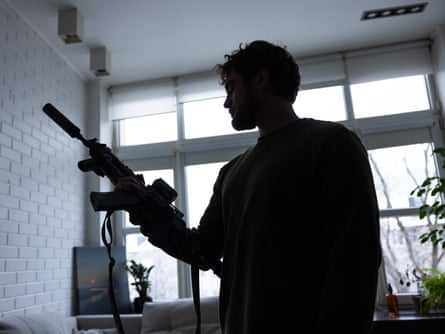
“When I first joined the army, I felt to my very soul that I belonged. We work together, we sleep together. We are a family that’s more than blood.”
He has lost 40 friends in the war but says: “Ukrainians never give up.”
Monastyrskyy always wanted to be a soldier. “I asked my mum to buy me camo trousers at the market when I was eight. I was always playing war games, preparing myself,” he says.
“We are afraid and we become adults too fast, but I don’t feel cheated out of my youth; it was unavoidable,” he says. “War gives you [the] possibility to understand what strength you have – your good sides, your bad sides. For all different ages, war gives you a commonality as men.” But he says it is impossible to think about a future, about finding a wife or having children.
“Ukrainians don’t give up, but what does suffer is the relationship between the sexes. A lot of couples are doing very worse now; lots of women left with the children. The days off – you can be 100 or 200 days on the frontline, about 15 days a year leave to see your family.
“It is very sad, but war is very sad. War doesn’t knock on your door, it just barges in.”
Masi Nayyem, 41 – refugee, lawyer, soldier
Masi Nayyem, an Afghan-Ukrainian lawyer, was on a date, busily telling his new girlfriend there would be no war, when he had an alert on his phone. As a reservist – he had served as a paratrooper in Donbas in 2016 – he was being called up. Two days later came the invasion.
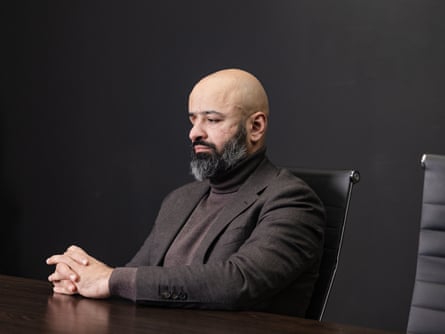
“On the day of the invasion I went home, drank some wine, then the next day took my gun and went to the army offices.
“It’s easy because your friends, and all of civil society, are going to war. I never thought about leaving Ukraine, I love this country and I just thought: it’s time to be a man, now you can show who you are.
“I don’t like guns, I don’t like anything about war. But as a man in war you find you trust your comrades more than your girlfriend or your parents.
“Once I was on the frontline I asked myself: ‘Am I afraid?’ I thought, if I’m wounded, then please not my legs, I love to walk my dog. [This bargaining] does go through your head: ‘OK, if I’m wounded then take my hands’ – then I think, no, I’m being stupid! No sex without hands.
“In the end, I left behind an eye and part of my brain. It was an explosion, a mine. I woke up in hospital and saw my brother there. He told me I’d lost my eye and I said: ‘OK, now I can park my car like a bastard.’”
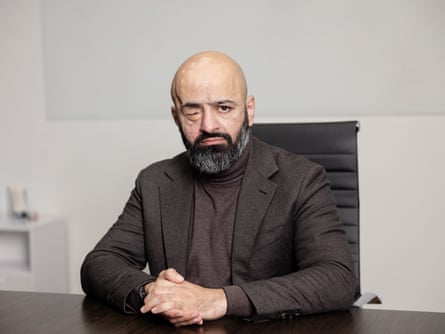
Nayyem was born in the middle of a war, in Afghanistan. When his mother died of an infection 10 days after his birth because the Afghan authorities said the hospital was “only for warriors”, his father fled the country. First to Russia, then, when Nayyem was six, to Ukraine, where they arrived as refugees with $300 and a box of Chinese-made umbrellas to sell.
After he was wounded in June 2022, Nayyem was devastated to see racist trolling about him on social media. “But then I realised it was all Russian bots. That was a huge relief, because I believe this war has united Ukrainians, more than we have been in the last 100 years.”
Now, as co-founder of the legal aid centre Pryncyp, Nayyem dedicates himself to Ukraine’s hundreds of thousands of wounded soldiers, lobbying government for a veterans’ policy. “Civil society needs to hear their problems,” he says.
“Relationships suffer because when you go to war you need to be free to be a good warrior. Ukrainian women are understanding, but you can’t explain everything.
“You speak with men in one language but when you go home it’s a different language, and you need to find strength to communicate.
“It’s a hard thing for veterans to find people who understand. Psychologists are hard to find and it’s harder still to find one you can work with. We don’t have a culture of going to psychologists, taking antidepressants.
“It’s like when you are stabbed with a knife and you aren’t supposed to take the knife out. That is now, a silent time; the knife is still in and the bleeding will come later.”
Alex Tomkin, 35 – video producer, DJ, soldier
Tomkin is open about his terror of being sent to the frontline: “I’m no traitor, but who wants to die?”
In the months after the invasion, some of Tomkin’s friends joined the military but he was busy, helping at a civilian food kitchen and running a music club.
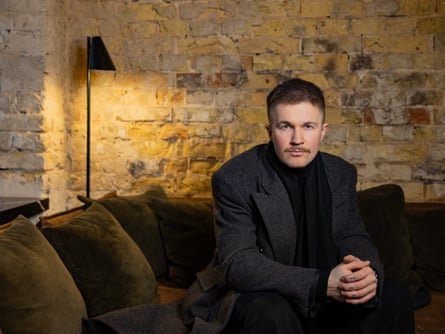
In June 2022, he left Kyiv to DJ at a three-day party in Odesa, and was sleeping on the bus back when it was stopped by soldiers. “They pulled me off the bus and said ‘you’re in the army now.’”
“When I was young I found the whole idea of the military and all that macho bullshit really, really scary, but the army has changed me, given me an internal confidence in myself,” he says. “Before, I constantly doubted myself. In the army you either decide or you break. I learned to stand by my choices and defend my position.
“You can’t judge people by looking at them because everyone is in uniform, so you start to understand it’s not about how a guy looks, it’s what’s inside.”
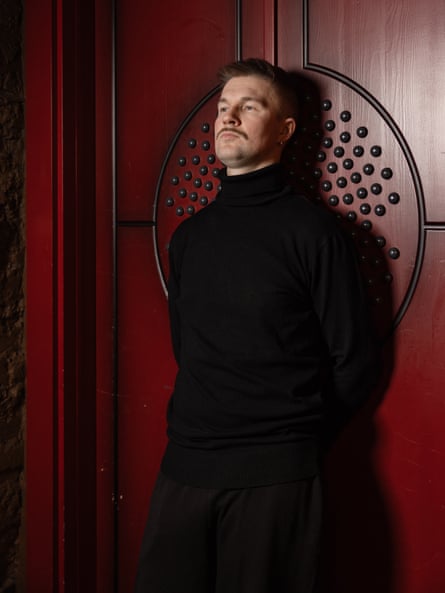
His understanding of relationships with the opposite sex has also changed. “With every year of war, stress builds up more and more in men. Women can go outside, live their lives, move freely. Men, on the other hand, are increasingly afraid even to leave their homes. Some people close themselves off completely.”
Being apart from women makes him long to be near them – but it also leaves him feeling separated by a gulf of experience.
“When you don’t see women for a long time, you start valuing them differently. You want to hear their voice, to feel that feminine presence. It doesn’t even matter who it is, a friend or just someone you know. You simply need that energy. And you start noticing beauty in ways you didn’t before.”
He remembers his first time off-duty in the city. “All the girls looked unbelievably beautiful. My cheeks were red – I didn’t know where to look. On my birthday, we went to a restaurant, had some beer, tried to talk to girls. But there was this invisible ice between us and them.
“We created it ourselves,” Tomkin says, “because they couldn’t understand what state we were in.”
“A friend told me she noticed how much I had changed. She joked that in war men have only one chakra working: survival. And it’s true. After that rotation I didn’t feel desire for intimacy.
“My service in Kyiv was brutal: one day on, one day off, almost no sleep. Standing in a vest with a rifle, two hours on post, two hours’ rest, your body and mind are in survival mode. Romance just doesn’t exist in that space.
“But distance from women helped me. It cleared my head. I started seeing who was right for me and who wasn’t. Before, I had short relationships all the time. Honestly, I was a demon. Now, I want something real, something for life.”