4 hours ago
13
4 hours ago
13
Gene Folkes, 62, based in Manhattan, was a contestant on season 10 of The Apprentice, which aired in 2010. A former air force recruiter until 1991, he retrained as an investment banker, then launched his own business before appearing on the reality show. He was fired by Trump in episode 5. He now runs the technology consulting firm OshunX and hosts a podcast, Folkes Unfettered.
I didn’t audition to be on The Apprentice. I received the call out of the blue: “Would you be interested in doing this show?” I didn’t know a lot about it. However, like any young business person, you look for people who you consider titans. There’s this mythology around Trump. He was one of the people I wanted to emulate.
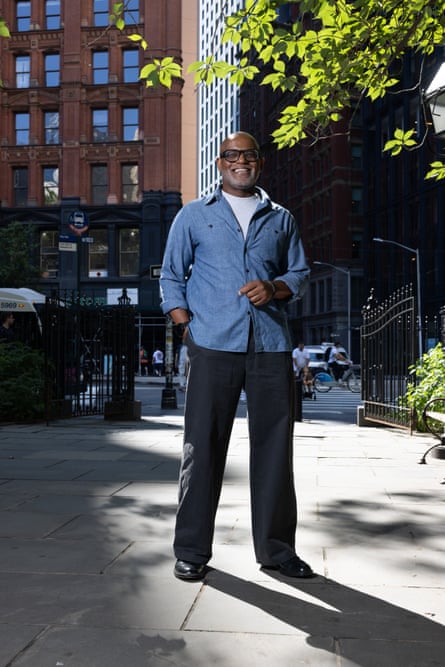
The first morning, wardrobe comes into your room at 3.30am. You meet the other contestants for the first time, then within an hour you’re on your first task. You learn really quickly that you’re playing a game and the rules can change at any moment.
The first time we met, Trump was outside his building on Wall Street. He is an imposing figure. When he walks into a place he owns the room and there’s not a lot of air for anyone else to breathe. I thought, “OK, he’s presenting as exactly who I believed him to be.” There was a sense of admiration and aspiration. It was only when you dug deeper that you realised the emperor had no clothes.
In the corporate world, there are certain things you just don’t do without consequences. And they were so natural for him. The first time we met him in the boardroom, Trump asked us if we thought the women were attractive. He would make these innuendoes – things that were sort of hard to pin down – but you felt kind of icky afterwards.
The first round was split men v women. I put myself forward to be the project manager for the men’s team. Task one was to design a modern office space. We won that task, and my prize was a one-on-one with Trump. His desk in Trump Tower was rather small and somewhat messy. Initially, I felt he knows how to connect with people. There was charisma, there was charm; he evokes a certain amount of confidence. You can really get drawn into all things Donald, but as I sat back and started really listening to him, I thought, “Oh, I don’t think this is the person that I have tried to model myself after.”
I didn’t feel empathy from him: I was more product than person. I think about it a lot now, because I believe that anyone who wants to lead a nation has to have a certain amount of empathy. If you don’t, then how can you relate to someone who’s a single mom or dad who’s struggling to put food on the table?
A producer told me the series was mine to lose. The week I got fired, I didn’t feel like it was coming. We had to put on a fashion show for Rockport. When you’re an air force recruiter, like I had been, all you do is publicly speak, so my project manager selected me to be master of ceremonies. I wear glasses. In that episode I decided to wear my contacts. They weren’t bifocals, and I remember saying, “I need to go back and get my glasses.” We never got to it. We got on to the test and I couldn’t read a freaking thing on the script.
When we went to the boardroom and we lost, they brought in three of us. Trump really took me off guard. The narrative shifted from, “Hey, I couldn’t see, and I wasn’t going to admit that I couldn’t see, because I didn’t want to start making excuses”, to one where I became illiterate: I couldn’t read; I couldn’t speak. It was very coded language that I was familiar with. It dawned on me: oh my God, he is framing me as a dumb person of colour. I’m sitting here with a degree in finance and he’s talking to me like I’m a moron. At that point I pushed back and said, “No one gets to talk about my speaking abilities. I don’t know what the bleep you’re talking about, but that’s not me.”
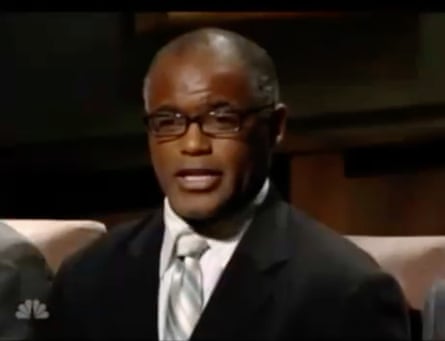
His face was red. He was visibly angry. One of the things he did when pushed back on was escalate. It was like he didn’t hear anything you said. He was animated but in a controlled way. He was playing to camera. He knew the audience was salivating for his line.
I finally said, “You know what? If you want to fire me, just fire me.” And so he did.
I did not feel anger. I felt relief. At that point you realise you’re playing in a system that’s rigged. And the person in power controls the narrative, controls the outcome. This was a game, but my real-life consequences were: what is my life going to look like after the programme, for my relationships, business dealings, opportunities?
When I watched the series, I got on the phone with NBC to say, “Holy crap, that’s where you guys want to go with that? That I was uneducated, ignorant?” There was no sense of empathy or compassion from the network or him.
Afterwards I did not want to leave the house. I could not get out of bed some mornings. I really became almost a recluse for three months. It took me years to get comfortable talking about it. I was depressed.
When I got a hold of myself, I began to do what I normally do: I started fighting. I wrote a blog where I gave my opinion on Trump considering running for the presidency. NBC asked me to take it down, which I refused to do.
I remember someone saying to me, “You’re hurting the Trump brand, you’re hurting the NBC brand and you’re hurting the Apprentice brand”, and I remember saying, “But you’re hurting the Gene Folkes brand, and I didn’t sign off for this crap.”
In the 15 years since I was on The Apprentice, media, entertainment, politics and news have started converging. Trump is the ideal politician for this moment: he’s all personality, he understands how to trigger you, he knows the power of his own mythology.
When I served in the military, there were certain leaders you would follow to death. You knew they loved and cared about you. They were able to manage their emotions. They realised that the goal of the team outweighed their individual personality. Trump is the opposite. He’s all personality; there is no team.
Good leaders want to be challenged. And what I learned from The Apprentice, and what I’m seeing now in politics, is consistent: don’t challenge him.
As told to Kate Lloyd
NBC declined to comment.
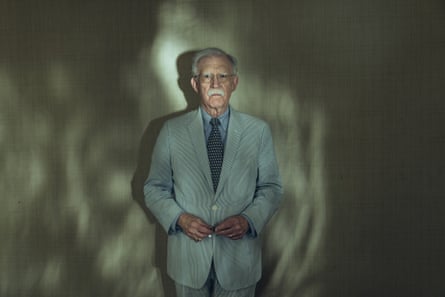
‘Trump isn’t disciplined by anything, and so most of what I did was struggle to keep the train on the track’
John Bolton, 77, based in Washington DC, is an attorney and former ambassador to the United Nations who was national security adviser from 2018 until 2019, under Trump. His exit from government was announced by the president over Twitter on 10 September 2019: “I informed John Bolton last night that his services are no longer needed at the White House. I disagreed strongly with many of his suggestions, as did others in the administration, and therefore I asked John for his resignation, which was given to me this morning.” Bolton says things played out differently.
For me, there was no one straw that broke the camel’s back, and I think that’s true in many resignation situations. It was an accumulation of factors. I had had a resignation letter drafted, and kept one copy in my desk drawer in the office and one copy at home, knowing I could print it out whenever I needed to.
It was basically a one-sentence resignation, which was the way I wanted to do it. And it finally came to that in September 2019.
The last conversation really was on 9 September. He was complaining about this and complaining about that, having heard, obviously from people inside the administration, of something I had done that they didn’t like. And I said to him, “Well, look, if you feel that way, I’ll resign.” And he was leaving the Oval Office to go and give a speech. [Trump told Bolton they would talk about his resignation offer the following morning.]
I went back to my office and I just thought, I am going to resign; I’m not going to talk to him. So I did a few other things that evening and then I went home, and came in early the next morning. There were a couple of meetings I wanted to finish up, particularly the freeing up of the security assistance to Ukraine. I got that done and I gave the letter to my secretary and said, “I’m going home. I’ll call you when I’m there.” I wanted to get out of the blast zone. So I told her to hand it to Trump’s secretary and then be prepared that she would probably be leaving soon thereafter.
The only mistake I made was that I should have tweeted right then that I had resigned, because when Trump saw it he went through the roof. I did get one tweet out saying I had resigned, and then they closed my Twitter account. I had to fight later to get it back.
I believe in pre-emptive strikes, and I had failed to follow my own advice. I should have fired first, but I was pursuing old-fashioned norms.
I tell this story in my book: before the Singapore meeting with Kim Jong-un, the first in the series on the North Korean nuclear programme, there was a chance that Trump was going to cancel, which I thought was exactly the right thing to do. I thought the whole thing was going to be a terrible waste of time. He was going off to a dinner, I think, with state governors, and as he was leaving, I said, “We can send out something saying we’re not coming if you want to do that.” And he said, “Let me think about it.” He said, “When I was dating, I always liked to be the one to break up with the girl. I never wanted the girl to break up with me.”
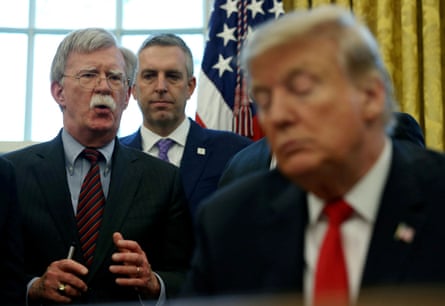
I didn’t keep that much stuff in the White House office. A lot of things – pre-government files of clippings and things – I thought my secretary would be able to walk out with because they clearly weren’t government property. But we had to fight over that, too. There were several other of my staff who were also let go within 24, 48 hours. Some of their stuff was taken as well.
I don’t think I get called naive very often. I thought I knew what I was getting into, largely because I thought that the weight of the decisions Trump would have to make in the national security area, the gravity of the responsibility, would discipline him. It turned out I was completely wrong about that. Trump isn’t disciplined by anything, and so most of what I did in my 17 months was struggle to keep the train on the track. Things like long-range planning? Forget it. By and large, there just wasn’t time to do it.
I firmly believed that Trump would be no different from his predecessors. And, to me, it just exemplifies that it really is an aberration in American politics – I’d say almost in world history – to have somebody who performs the way he does. People would just ignore the [national security council policymaking] process and go directly to Trump. It was the phenomenon of the last person in the room gets his attention.
There was this occasion when the Iranians shot down an American drone over the Persian Gulf, in what we believed was international airspace. We sized up what we were going to do, came up with retaliation, the president ordered it, then literally as planes were in the air, he changed his mind. So that leads people to say, why are we doing this? Why do we even bother?
Look, everybody’s got an ego. Politicians notoriously have bigger egos than most. But I’ve never seen a politician where the ego wasn’t subsumed to at least some extent by bigger considerations. With him, it’s not subsumed by anything. That was part of the mistake I made. I just had never seen a personality like that before.
As told to Julian Borger
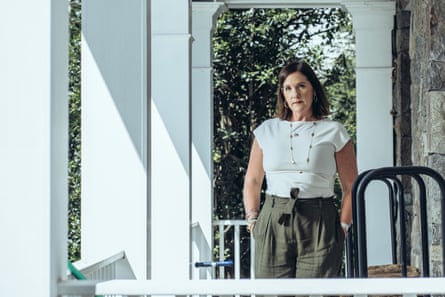
‘I was at the school drama club when I had an email from somebody I had never heard of before. “Message from the president.” I thought, well, that can’t be good’
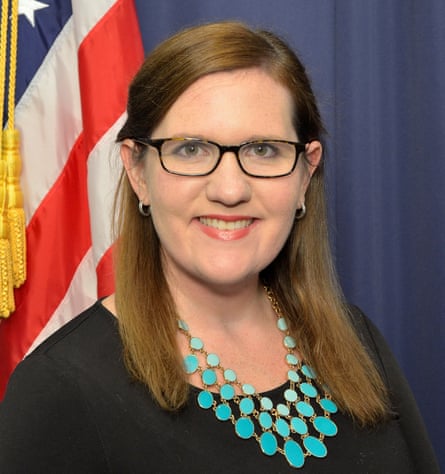
Rebecca Kelly Slaughter, 45, lives in Maryland. A Democrat, she was appointed to the Federal Trade Commission (FTC), an independent agency of the US government, by Donald Trump in 2018. The FTC’s work includes fighting illegal business practices, safeguarding online privacy and promoting competition to keep prices down for consumers. Slaughter was fired last year and fought a protracted legal battle, arguing that Trump did not have the right to remove an agency commissioner without cause. This culminated in the supreme court case Trump v Slaughter, which decided in favour of the president’s at-will removal power, overturning a 91-year-old precedent.
It was an incredible privilege and honour to work for the FTC. In the time I was there we blocked the largest grocery store merger in history, which would have raised grocery prices even further. We sued big tech platforms for violating children’s privacy, for subscription traps that charged people more money than they should have been paying. We investigated things like the price of insulin and the role of pharmacy benefit managers in keeping drug prices unnaturally high.
Right after the inauguration in January 2025, the president removed commissioners at a different independent board, the Privacy and Civil Liberties Oversight Board. But he didn’t fire me or my colleague, commissioner Alvaro Bedoya. We went through a period from mid-January through mid-March thinking, is he going to fire us today? He didn’t fire us today. Does that mean he’s not going to fire us? We don’t know.
We decided early on that we couldn’t and wouldn’t operate in a way that was inconsistent with our oaths of office or our principles in order to avoid getting fired. We were just going to do the jobs we had as well as we could, and we couldn’t control how the president was going to react.
On 18 March 2025, I worked a full day in the office then went to our local public elementary school, where I was volunteering in the evenings with the drama club production of Beauty and the Beast. I was the parent lead for this production. But, much more importantly, my second kid was playing Belle. She was in fifth grade. This was the culmination of all of her hopes and dreams in her 10-year-old life.
I was sitting outside the dusty elementary school gym, children were running around pretending to be plates and spoons, inviting my daughter to come be their guest, and I checked my work phone and I had an email from somebody I had never heard of before. I can’t remember what it was titled – “Message from the president” or something like that.
I thought, well, that can’t be good. I opened it, and it was a very long email, purportedly on behalf of the president, clearly not written by the president – many legal citations, no words in caps – the culmination of which was, your continued service on the FTC is inconsistent with my priorities, therefore you are terminated effective immediately.
I took a deep breath and said some expletives in my head. I looked at the other parent volunteers sitting next to me and said, “I think I might have just gotten fired. Is it OK if I step outside to deal with this?” They said, “No, go home, go take care of what you need to do.” I said, “Oh no, I am not leaving Beauty and the Beast.”
The rest of that evening is a blur in my mind. I talked to my husband, who was in California. I talked to my staff. I talked to a million reporters. We hastily organised a press conference that I participated in from the parking lot, holding a phone in front of my face, under the floodlights with a brick background behind me.
I didn’t want my daughter to hear about this from other parents or other kids. I pulled her aside after they got through the run-through and said, “I have to tell you something. It’s going to sound scary but we are going to be OK and I don’t want you to be worried about it.” She said, “OK, what?” I said, “I got fired this evening.”
I could see her little face well up. She said, “Are you going to have to stop working on the show?” I said, “No, I’m not going to let that happen”, and she said, “OK.” That was the key information she needed. You can try to take my job but you cannot take drama club from me.
Alvaro [who was also fired] and I knew pretty quickly that we wanted to challenge our dismissals in court, because if we failed to do so it would be like acceding to this blatant violation of the law and destruction of these institutions, but the timing and structure of doing that were all questions we had to sort through.
I was doing that until about midnight when my doorbell rang, which I thought was odd. I went to the door and there was a pizza delivery guy there. I said, “I didn’t order any pizza.” He showed me an order form with my name, my personal email address, my cellphone number, my home address. I said, “Well, I didn’t order it and I’m not gonna pay for it, so, sorry.”
I called my husband and I was, like, this weird thing happened. Isn’t that funny? He goes, “No, it is not funny. That’s a thing that online trolls do to people, especially people who the president doesn’t like, in order to scare them.” I didn’t like that I was home with my four kids in the middle of the night when this happened. I talked to Alvaro, who also got a pizza. His take was, thank God, I’m starving, I haven’t eaten all evening!
I don’t feel angry on my own behalf. It is very much not about me. I don’t feel any personal animus. I do feel a lot of anger on behalf of institutions of government, of public servants throughout the government. I have a lot of anger for those reasons.
Donald Trump doesn’t think about me at all. I don’t think he knew that he fired me; I don’t have any evidence he actually knew and was involved in it. The president cares a lot about a ballroom and gold plating the White House and building monuments to himself. I don’t think he’s thinking about conservative legal theory. I also don’t think he is thinking about the American people.
Last summer, in my interregnum period, I knew that I needed a project, so I signed up for the New York City marathon and ran it for charity. I had never run a marathon and I always thought it was impossible, and it felt like a metaphor for the professional experience I was going through. It was hard. It didn’t go as well as I had hoped or trained for, but I finished anyway. And that was also the metaphor for me: we do the hard things because they’re the right things to do, and that is the reward – even if it doesn’t turn out exactly the way you envision.
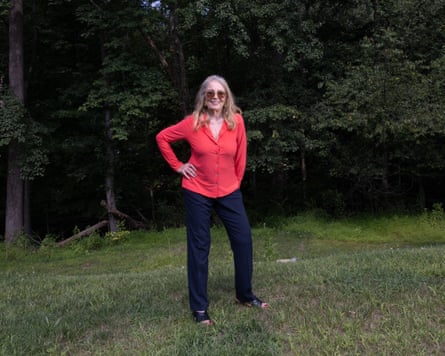
‘He didn’t have the courage to be the one to fire people. He didn’t want to face people’
Barbara Res, 76, based in New Jersey, met Donald Trump in 1978, when she was working as an assistant superintendent for the contractor HRH, building the Grand Hyatt hotel in New York. Two years later, he hired her to lead construction on Trump Tower. She eventually became senior vice-president and executive vice-president of the Trump Organization. She quit after a final stint as a consultant, when the redevelopment of the Ambassador hotel site in Los Angeles fell apart amid a prolonged condemnation battle with the Los Angeles school district and a collapsing real-estate market. Res says a last‑minute change in leadership, made by Trump against her advice, undermined negotiations that she believed could have allowed the project to finish with a small profit. She has written two books about her experiences over those years. She retrained as a lawyer and is now semi-retired.
I worked for Donald for close to 18 years. I left on friendly terms. If I saw him at a function, we’d nod to each other. But in 2016 I wrote an op-ed in the New York Daily News about my experiences with him. He came out blazing guns against me at rallies and on Twitter. He released emails I had written to him five years earlier when I was looking for a job. A tabloid newspaper wrote that he had “got rid” of me and that I had begged him for a job. Both lies. His supporters tweeted things about me like “glad Trump fired her”. I wasn’t fired.
I’d impressed him when I was working for HRH. In meetings the project managers and superintendents would talk about different problems on the job, and the architect would often blame the contractor or the subcontractors. I’d say, “That’s bullshit.” He loved that.
At a meeting at his apartment, Donald asked me to be in charge of the construction of Trump Tower. I remember it was in a nice building on Fifth Avenue. Everything inside was white: the carpet, the upholstery, the walls, the ceiling. Donald went through a spiel about what he was building. I was to be the last word on site, he said. “You’ll be like a Donna Trump.” He offered me almost twice the salary I was getting.
I liked being there. Trump Tower was a big deal and I had the best crew in the world. There were times when Donald was actually like a human being. We used to go into his office and sit and talk. He’d tell jokes. He was pretty funny. Now, I’m not saying he was a nice guy. Not at all. Any time anyone really disagreed with him, he would yell at them. He always needed someone to blame. If he screamed at me in front of the team it didn’t matter, because they were all getting screamed at. If he’d screamed at me in front of an architect or an investor, I would have walked out the door.
When he wanted to do something that we thought was wrong or illegal, you couldn’t just say that. He couldn’t handle it. So we found ways of working around it – making him think that a substitute idea we’d come up with was his. I used to put him in a good mood by saying, “Hey Donald, did you see Ivana this morning? What an incredible outfit she’s wearing. She’s so gorgeous.” We were able to keep him somewhat under control. Nobody does that now.
I was offered a partnership elsewhere and left. Donald threw a massive party for me. He got me a Cartier bracelet, signed, “Towers of thanks, love Donald.” A few years later, I got back in touch with him for some advice and he hired me again, this time to be in charge of all construction, then construction and development, for the Trump Organization.
When I went back in 1987, he was surrounded by yes‑sayers. His book Trump: The Art of the Deal absolutely changed him in terms of his picture of himself. Even though he always said he was the smartest, now he thought he was a real big-time player. Everybody knew everything about him: how great he was, how brilliant he was.
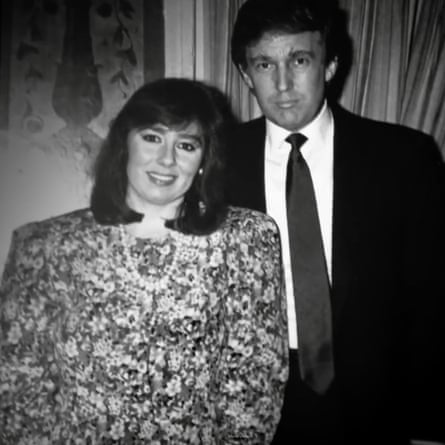
The second time I left was around 1990, when I was running Trump’s big West Side project on the riverfront. Neighbourhood groups and some big-name opponents – including Christopher Reeve – were fighting it hard. And a friend of Donald’s came to him and said, “You’ve got to meet with these people, and you’ve got to make a deal with them.” He wanted to build 14m sq ft. He made a deal to build just 7.5m. In that deal, the opposition group put their person in charge of the project. They wanted a semi‑famous lawyer who worked in development and didn’t have construction experience. I quit primarily because they brought in this other person.
I told Donald I had to leave. My son has to have surgery, I said. The surgery was a big deal, but I wouldn’t quit over that. I told him it to soften the blow.
I stayed on as a consultant on two other projects. One of those was the Ambassador hotel. One of our partners was going under. He wanted to be in charge of everything. My assistant and I told Donald this would blow up the project, which it eventually did. Donald allowed him to take over against our advice. Afterwards, at a big meeting with the realtor and the partners, Donald came down on me. I told him, “I told you not to let this guy get involved.”
He started screaming. His face was contorting. That was the only time he’d ever done that in front of external people. I was enraged. I looked at him and I said, “You know, Donald, there are medicines that can help you control that.”
He got crazy about that.
After the people left, I went back up to Donald’s office and said, “Look, I can’t do this, I’m leaving.” And he said, “Why?” I didn’t say, “Because you made a fool out of me in front of the partners.” I said, “I’m looking after my son, I’m still having problems” – which was not true. “They’re just going to start school now, and I think I really should find something that won’t take me to California every week.”
Donald talked about running for president when I was at the Trump Organization. I thought at the time that he was a very good manager, given the right people, and that he could be a decent president. I didn’t know then that he had zero knowledge of government.
The Apprentice thing I’ve always thought of as a big joke. In my experience, he didn’t have the courage to be the one to fire people. He didn’t want to face people. He didn’t want to look bad. If someone was going to get fired, he wasn’t doing it.
In my case, we had a woman who was working on some lobbying efforts we were doing. She had gotten pregnant. He found out and said, “Fire her.” I said, “You can’t, that’s against the law.” He got angry at me. “Fire her now!” I did it. It was terrible. I told her I would support her if she wanted to go after him because I knew that it was illegal to fire her.
Here’s another story I remember: when we needed an apartment manager at Trump Tower, he found a guy and hired him to work under me. He was terrible. We didn’t like him; he had a bad attitude. I told Donald, “We’re going to fire him.” He said, “Go ahead.” We fired him, and he went across the street to where Donald’s office was at the time. Donald was convinced by him. He told us, “Give him another chance.” And that happened twice. It took three times to fire this guy.
I think all the firing he has done in government shows a big shift in his attitude. But he has to blame someone. And how do you prove someone is at fault better than firing them? Even if they didn’t do anything wrong.
As told to Kate Lloyd
Tower of Lies: What My Eighteen Years of Working With Donald Trump Reveals About Him by Barbara Res (Graymalkin Media, £14.99) is available now.