 7 hours ago
22
7 hours ago
22
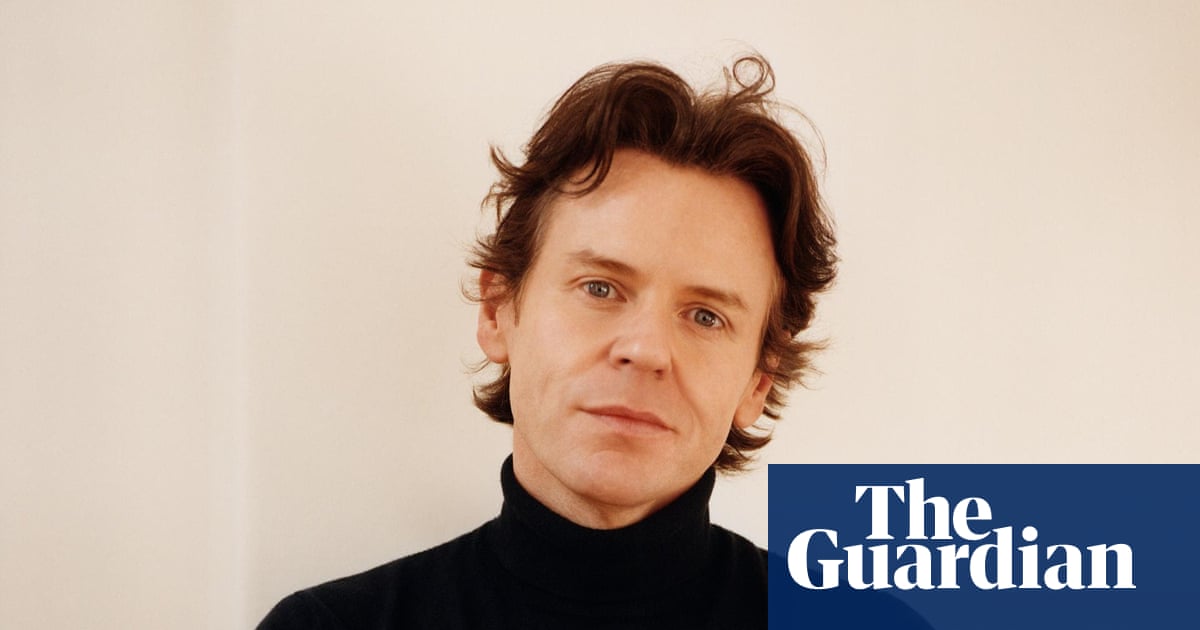
The Scottish baritone Henry Herford, who has died aged 79, was notable for the breadth of his repertoire – offering sterling performances of often neglected works – and his warm, appealing tonal quality.
He began his career in the Glyndebourne Opera Chorus (1977-78). In those years he also impressed in small solo roles, as a well-projected, spontaneous Forester in Cunning Little Vixen and the Speaker in Magic Flute. He returned to Glyndebourne in 1981 as a fiery Demetrius in A Midsummer Night’s Dream, and with a powerfully delivered Boris Pasternak (a key figure who narrates the action) in Nigel Osborne’s Electrification of the Soviet Union (1987-88).
He subsequently appeared at Scottish Opera in a variety of roles and made a couple of brief appearances at Covent Garden, as a Flemish Deputy in Don Carlos (1983 and 1985), but his most notable contribution to British operatic life lay in the more esoteric or otherwise neglected repertory he helped bring to life, consistently in charged, affecting performances.
These included a well-sprung Hercules in Gluck’s Alceste with the Chelsea Opera Group (1983), an authoritative Artaxerxes in Cesti’s underrated La Dori by Musica nel Chiostro at Christ Church, Spitalfields (1983), and Orpheus in Milhaud’s Les Malheurs d’Orphée (St John’s, Smith Square, 1984).
He was also an eloquently tormented Roderick in the reconstruction by Francisco Negrin and Peter Ash of Debussy’s unfinished La Chute de la Maison Usher (Queen Elizabeth Hall, 1989), Creon in Haydn’s L’Anima del Filosofo in a concert performance with the Downshire Players of London (1989), and a dignified Duke in Stephen Storace’s Gli Equivoci (Bampton Opera, 2000). In all, he undertook more than 70 operatic roles in performances throughout Britain and Europe.
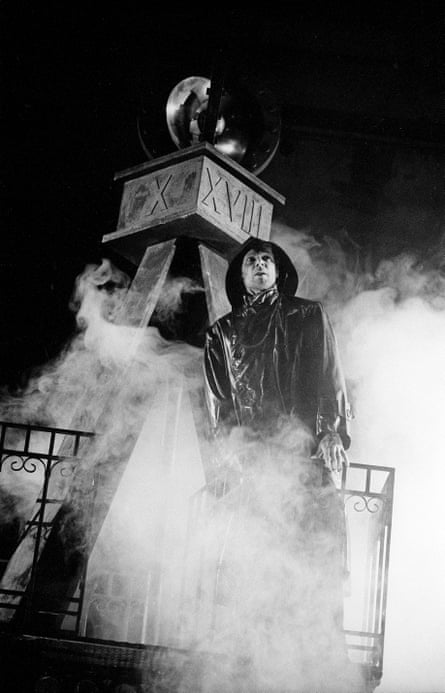
Herford’s commitment to investigating less frequented corners of the song repertory was equally thoroughgoing. An impressive recorded legacy includes two volumes of songs by Charles Ives, a disc of songs by the 20th-century American composers John Corigliano, Arthur Shepherd, Ben Weber and Conrad Susa, a disc of delectable Dylan Thomas settings by Peter Dickinson, and a two-CD set featuring the most comprehensive compilation to date of the songs of Arthur Bliss (with many first recordings). The latter, released in 2000, was received by the BBC Music Magazine as “a revelatory document and a source of ever unpredictable delight”.
More conventional repertory also featured in his discography, including a fervent reading of Vaughan Williams’ Five Mystical Songs with the Philharmonia Orchestra under Hilary Davan Wetton (1988), Demetrius in the Richard Hickox recording of A Midsummer Night’s Dream (1993), as well as Handel’s Dixit Dominus (1995) and Israel in Egypt (2000) with the King’s College Choir under Stephen Cleobury.
He had a large oratorio repertory extending from Monteverdi to the present day and sang with many major orchestras in Britain under such conductors as Simon Rattle, Yehudi Menuhin, Andrew Davis, John Eliot Gardiner, David Willcocks, Hickox and Michael Tilson Thomas, as well as in Europe, the Americas and Hong Kong. He appeared on three occasions at the BBC Proms, twice at the Last Night (1984 and 1985).
As a recitalist he made frequent broadcasts and recordings with the Nash Ensemble, the Songmakers’ Almanac, the Endymion and Koenig ensembles, Lontano, the Lindsay Quartet and Ensemble Modern. His voice had an attractively open quality, his diction was exemplary, and he delivered his lines with infectious vigour and enthusiasm.
Born in Edinburgh Henry grew up in a close-knit English family in Glasgow, the son of Jean (nee Hawkins) and Philip, a railway engineer; his mother was profoundly deaf from the age of three until her death at 104. Early musical experiences were offered by the local church choir and his elder brother, John, a fine pianist.
After schooling at Glenalmond college in Perth, he went to King’s College, Cambridge, for a degree in classics and English, and then studied singing from 1971 to 1976 at the Royal Northern College of Music in Manchester, where he won the Curtis gold medal.
Alongside his singing career Herford held appointments at the RNCM, the Birmingham Conservatoire and the Royal College of Music in London, where he was held in high regard as a rigorous, perceptive teacher.
He met his future wife, Lindsay John, when they were both in the Glydenbourne Opera Chorus; they married in 1982. With the administrative assistance of Lindsay, he later founded the Abingdon Summer School for Solo Singers, a popular seasonal destination for aspiring vocalists. Tutors beside Herford included Andrew Shore, Toby Spence, Catherine Wyn-Rogers, Joan Rodgers and James Gilchrist. The course was inaugurated in 1999 and ran until its disruption by the Covid pandemic.
In 1986 the Herfords, together with their two sons, Thomas and Johnny, who were both to become successful professional singers in their own right, had moved from London, where they had initially settled, to a derelict Elizabethan farmhouse in west Oxfordshire, which they restored the building over a period of time, undertaking much of the work themselves. Their daughter, Alice, was born soon afterwards.
It was a welcoming domestic environment and Herford forged strong links with the local community. For 20 years he was a churchwarden at St Denys church, Northmoor. He also compiled a history of the building and was instrumental in restoring the chancel roof. In person he was expansive, generous and vigorous, qualities that also informed his vocalism.
He is survived by Lindsay and by Thomas, Johnny and Alice.