 5 hours ago
19
5 hours ago
19
With spicy leather mini-dresses and shoes with miniature axes for heels, two beloved British names made a swaggering joint comeback at London fashion week.
Fifteen years ago, Christopher Kane and Mulberry were two of the biggest shows on the line-up. Kane was the brilliant young designer who could find fashion in the most unlikely places: rubberised lace minis were inspired by “Princess Margaret on acid”; while illustrations from the 1972 classic The Joy of Sex appeared on slinky slip dresses. Mulberry was London’s home-grown It-bag brand: anyone who was anyone had a Bayswater or an Alexa.
The pandemic hit independent designers hard, and Kane placed his brand in administration in 2023. Mulberry hit the ropes after price hikes misfired, fighting off a takeover bid as profits plunged. But a new chief executive and a renewed focus on Britishness and craft is fuelling a revival at Mulberry, with sales up 23% in the first quarter of this year. The appointment of Kane as creative director signals the return of serious style ambition at Mulberry, and gives a new platform for Kane’s talent.
On paper, it is an unlikely match. Mulberry is rooted in its Somerset factories and makes understated practical bags; Kane has a flair for bad-girl party dresses learned on the streets of Glasgow where he grew up.
Where they meet is leather. There were leather sheath dresses and elegantly spare leather car coats, as well as heeled loafers featuring Mulberry’s signature postman’s lock. Kane builds each collection around one visual motif – Frankenstein, gorillas, the reproductive organs of plants – and for this collection, took the castellated leather flaps of Mulberry’s Bayswater bags and turned them into notched hems and necklines. This was punchy, full-throttle fashion, accessorised with money-making bags and shoes.
“Town, city, country” was Kane’s name for the show. Colours were inspired by “the bleak, post-industrial Scotland where I grew up – grey concrete, and coalminer orange”. Soft plaid checks added a rustic touch. “I want Mulberry to be about a Britishness that’s not London-centric,” he said backstage.
after newsletter promotion
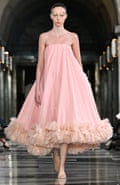
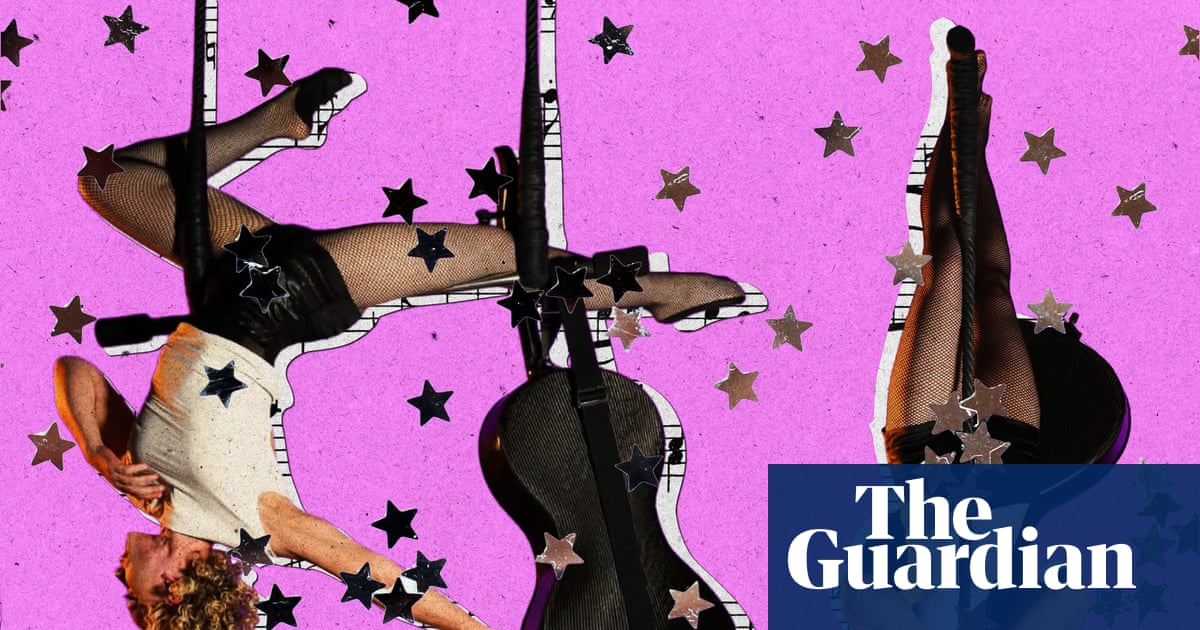
This London fashion week has renewed confidence and a packed schedule of shows. Simone Rocha said that a story about an unknown Caravaggio discovered in a Dublin drawing room set her thinking about “beautiful things in unobvious places”, which in turn led to her knockout dresses, intricate silk roses trailing from hems or half-hidden under tulle. Erdem found a muse in Barbette, an avant-garde trapeze artist in 1920s Paris whose act ended with the revelation that “she” was a Texas-born man. Leotard-tight dresses were veiled in spiders’ webs of crystals, or worn with high-collared circus master coats.
Edeline Lee dressed artists from the Royal Ballet in her dance-inspired pieces – neatly waisted, full-skirted dresses and practice-studio slouchy knits – for a catwalk in a north London school sports hall. Emilia Wickstead describes herself as “an old-school girl. I love classic shapes, vintage references. I have jazz music playing. But I’m always trying to make things a little foreign, a little forbidden, too.” She is “outgrowing the space” at the London boutique that usually doubles as a tiny catwalk, so this season she filmed a show and held screenings, enabling a set design of interwoven pastel rooms “that we couldn’t have done here physically, and don’t have the budget for”. American artist Lee Krasner inspired silk dresses, painted with daisies and overlaid with an apron of fine tweed sprouting colourful threads like flecks of paint, and striped artists’ shirts.