 5 hours ago
5
5 hours ago
5
Rowynn Dumont, a curator, painter, photographer and writer, lived in about 25 places around the world before settling in New York in 2017.
“It’s where my community and the art world infrastructure already were,” said Dumont.
Exhibits in Union Square, the Flatiron District, Long Island City and the Lower East Side featured her work. She also co-founded a popular monthly new wave dance party, Black Rainbow, on the Lower East Side that would go until 10am.
But after the Covid-19 pandemic, people stopped coming to dance, Dumont said. Meanwhile, from 2020 to 2025, her rent in the Bushwick neighborhood of Brooklyn increased from $2,300 to $3,800. When some of her apartment’s windows fell out, her landlord replaced them with plastic.
In summer 2025, she had enough and moved to Philadelphia. She must commute 90 minutes twice weekly to attend the New School in Manhattan, where she is pursuing a doctorate in psychology and design.
But the trip is worth it because she now pays $1,600 for a nicer apartment than the one she had in Brooklyn. She also found a community of artists in Philadelphia, many of whom had left New York too, she said.
“Bushwick is not nice,” Dumont said. “I know people say they love it, but it’s not worth the price.”
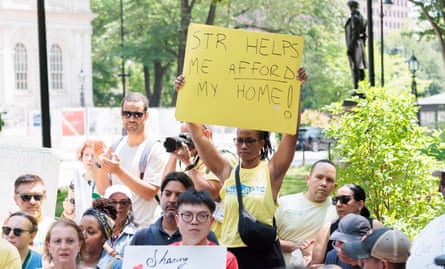
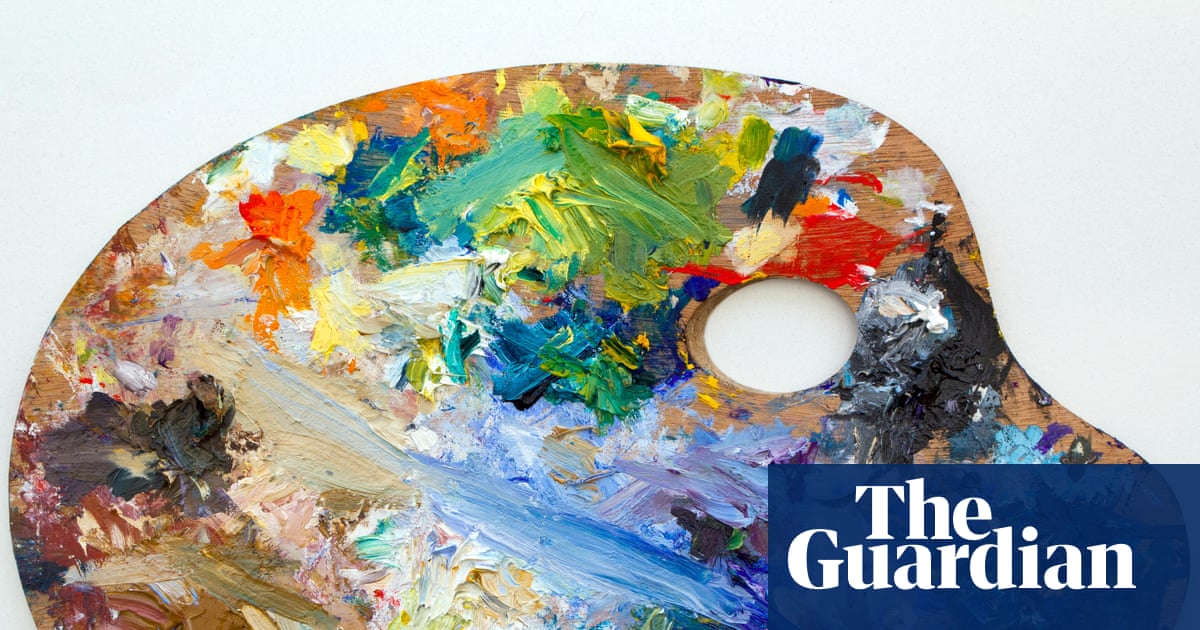
Creatives like Dumont are increasingly leaving New York. Since 2019, the city’s artist population has decreased by more than 4%, “the first sustained decline in decades”, according to a new report from the Center for an Urban Future, a non-profit aimed at reducing inequality and increasing economic mobility. Data for the report was gathered from the US census and a survey of New York artists.
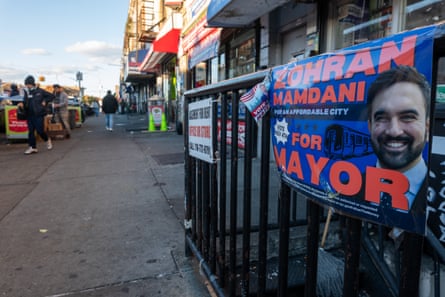
The group argues that the primary reason for the exodus is a lack of affordable housing, and the organization is calling for the new mayor, Zohran Mamdani, who pledged to dramatically increase the city’s affordable housing, to commit to creating 5,000 units for artists by 2030.
Otherwise, if the downward trend continues, it will not only hurt galleries, music venues and theaters, but will also have ripple effects for the entire city, according to the organization and artists.
“There’s nothing that gives New York its magnetism, its appeal, its boundless sense of innovation and inspiration, quite like the cultural sector,” which is “facing serious new threats today, in large part due to an affordability crisis”, said Eli Dvorkin, co-author of the report.
Certain neighborhoods have been particularly depleted of artists. Over the last decade, the Upper West Side artist population has decreased by almost 32%, and in the Lower East Side and Chinatown, it’s dropped by more than 55%, according to the report.
Meanwhile, data from other cities supports what Dumont found. The artist population in Philadelphia has increased by 8% since 2019. In Nashville, it’s increased by about 19%.
Other US cities have built more than 2,800 affordable artist housing units over the last decade and another 1,200 are under construction or have been approved, the report states.
In Philadelphia, the government funded much of a $7.5m, 20-apartment low-income housing development that opened in 2017, according to WHYY. In 2025, a community development organization in Fitchburg, Massachusetts, broke ground on a $45m, 68-unit affordable housing project designated for artists, according to the CommonWealth Beacon.
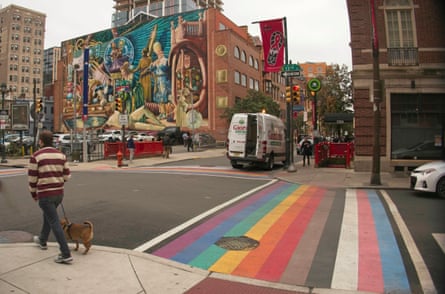
But New York City has not built any artists-preferred units since 2015, the Center for an Urban Future reports.
“Housing officials worry an artist preference could violate fair-housing laws, and policymakers have raised concerns about the optics of creating housing specifically for artists,” the report states.
Danny Darress, a 26-year-old pianist, spent a year in West Harlem, paying $1,000 for an apartment he shared with two people. He played gigs around the city that typically paid between $150 and $300.
He mostly enjoyed it but struggled to turn a profit because he often needed to haul his equipment and didn’t have a car, which meant taking an Uber that could cost at least $100 round trip, he said.
He also bartended.
Juggling jobs meant he “couldn’t really go out and make the necessary connections with actual musicians”, he said.
After the apartment above him flooded, causing bugs and mold, he moved back in with his parents on Long Island. In October 2025, he migrated to Los Angeles, where he and his girlfriend split a $2,400 apartment that is much larger than the Harlem unit and has two parking spaces, so they each have a car, which makes gigging easier.
If there had been an affordable parking garage near his apartment, he probably would have stayed in New York, he said.
“I do love the city,” Darress said.
The high cost of living has affected gallery owners too. Daniel Aycock moved to New York in 1994 to study photography and about five years later opened Front Room Gallery in Williamsburg. In 2017, he relocated the gallery to the Lower East Side, and in 2022 he moved it out of the city, to the Hudson valley.
When he opened the gallery in Williamsburg, “there were just so many artists around, I felt a camaraderie with everybody”, Aycock, who now lives in upstate New York, said. “By the time we moved out of Williamsburg … it had changed so much that there were hardly any artists living there.”
His gallery features mostly artists he met in Brooklyn, many of whom now also live upstate, where they could find cheaper housing and more studio space.
“You can do sculpture or welding in your space, which you used to be able to do in Williamsburg or Bushwick,” Aycock said.
He is skeptical that the plan to create 5,000 units for artists – even if Mamdani were to sign on to the proposal – will again make the city a hub for aspiring young creatives.
“Five thousand is really just a drop in the bucket,” Aycock said. “Are they going to give them studios too?”
He also wonders how the city will answer the question: who is an artist?
The Center for an Urban Future report recommended that the city develop its criteria in partnership with an arts organization. The Hollywood Arts Collective, an affordable housing project in Los Angeles, requires applicants to have made $6,500 annually for eligible disciplines for three out of the last five years, or the decision will be “based on engagement in and professional commitment to artistic practice which will be evaluated and determined” from a portfolio review, the city of Los Angeles states.
“We have lots of workable models to base an artist preference policy on,” Dvorkin said.
Asked about whether Mamdani would support building affordable housing specifically for artists, a spokesperson only reiterated that he was committed to building 200,000 units.
While Aycock does not think the mayor can revive a scene like that of Williamsburg in the 90s, he would love to see it happen.
“I just don’t see how [Mamdani] can get enough funding to do it,” Aycock said. “But if he can do it in a big, meaningful way, it would be amazing.”