 4 hours ago
4
4 hours ago
4
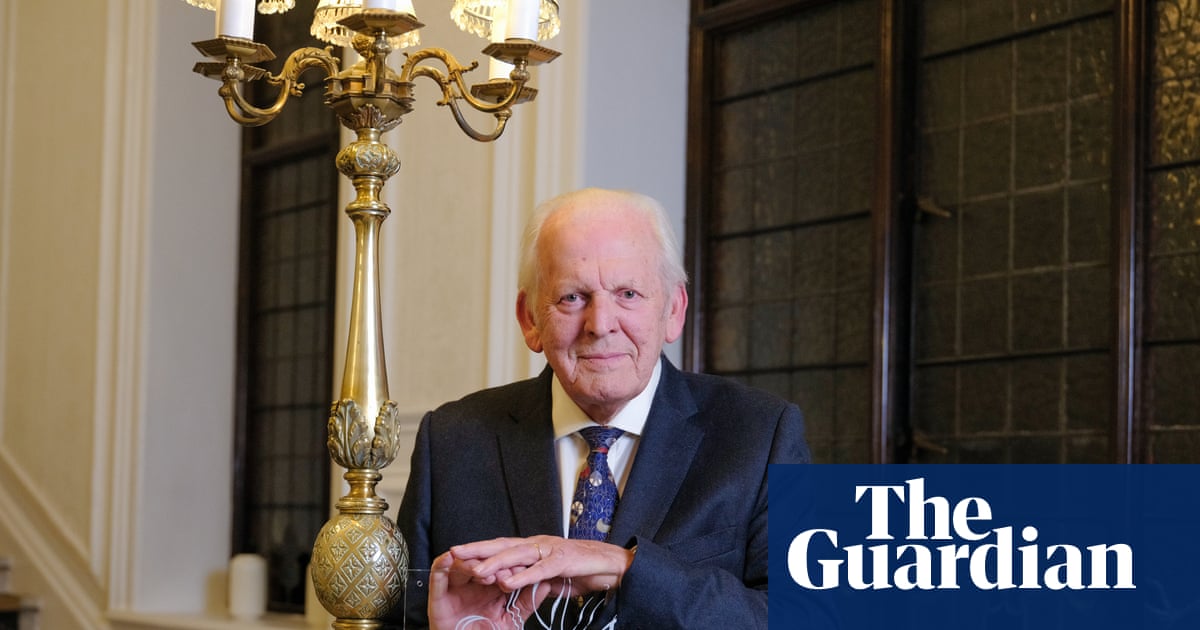
Norway’s army chief has said Oslo cannot exclude the possibility of a future Russian invasion of the country, suggesting Moscow could move on Norway to protect its nuclear assets stationed in the far north.
“We don’t exclude a land grab from Russia as part of their plan to protect their own nuclear capabilities, which is the only thing they have left that actually threatens the United States,” said Gen Eirik Kristoffersen, Norway’s chief of defence.
He conceded that Russia does not have conquest goals in Norway in the same way as it has in Ukraine or other former Soviet territories, but said much of Russia’s nuclear arsenal is located on the Kola peninsula, a short distance from the Norwegian border, including nuclear submarines, land-based missiles and nuclear-capable aircraft. These would be crucial if Russia came into conflict with Nato elsewhere.
“We don’t take that off the table, because it’s still an option for Russia to do that in order to make sure that their nuclear capabilities, their second strike capabilities are protected. That’s sort of the scenario in the high north that we plan for,” he said.
In a wide-ranging interview with the Guardian, Kristoffersen was also sharply critical of recent comments by Donald Trump on Greenland, as well as of the US president’s “unacceptable” claims that allied countries had not served in frontline positions in Afghanistan, while US troops had done the bulk of the fighting.
“It didn’t make sense what he said and I know that all my American friends from Afghanistan know that,” said Kristoffersen, 56, a career army officer who served several tours in Afghanistan.
“We were definitely in the frontline. We did all the full spectrum of missions, from arresting Taliban leaders to training Afghans to doing surveillance. We lost 10 Norwegians. I lost friends there. So we all felt it doesn’t make sense,” he said.
“At the same time, I felt that this is President Trump. I never saw him in Afghanistan. He doesn’t know what he’s talking about when he says these things.
“A president should not say these things, but it didn’t really affect me. But my concern was for the Norwegian veterans, the relatives of the people we lost, soldiers we lost.”
Kristoffersen has been Norway’s chief of defence since 2020, responsible for the country’s armed forces as well as its intelligence service.
It has been a period of intense change, as Russia’s invasion of Ukraine forced a rethink of European security architecture, with neighbouring Sweden and Finland joining Norway in the Nato alliance, and the country reinforcing its border areas with Russia in the far north.
Kristoffersen said that while Norway is keeping the threat of a traditional Russian invasion in mind, the current Russian tactics are more diffuse. “If you prepare for the worst, there is nothing that prevents you from also being able to counter sabotage and more hybrid threats,” he said.
He added, however, that Norway and Russia still maintain some direct contact over search and rescue missions in the Barents Sea, and that there are regular meetings at the border between representatives of the two militaries.
He has also recommended setting up a military hotline between the two capitals to have a channel of communication to avoid escalation based on misunderstanding. He said that Russian actions in the far north have generally been less aggressive than those in the Baltic Sea.
“So far, what we have seen of airspace violation in our area has been misunderstandings. Russia is conducting a lot of [GPS] jamming, and we think that the jamming also affects their aircraft,” he said.
“They haven’t said that, but we see that when something like violating the airspace happens it’s usually because of a lack of experience from the pilots. When we talk with the Russians, they actually respond in a very professional and predictable way.”
On Norway’s northern territory of Svalbard, which contains a Russian settlement and is not allowed to be militarised under the provisions of a 1920 treaty, Kristoffersen said Russia is “respecting the treaty” and that Norway has no plans to militarise the area.
Moscow has accused Oslo of performing stealth militarisation of Svalbard, but Kristoffersen said this was just a propaganda claim which Moscow does not really believe.
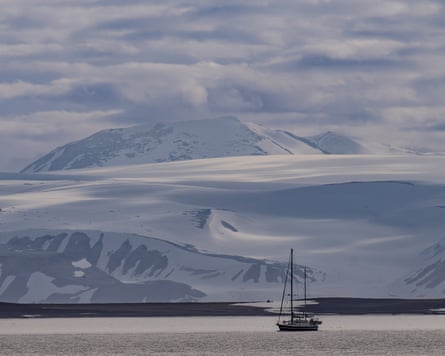
When it comes to Trump’s assertion that both China and Russia have military designs on Greenland, Krisoffersen said it was “very strange” to hear the claims.
“We have a very good overview of what is happening in the Arctic from our intelligence service and we don’t see anything like that in Greenland … we see Russian activity with their submarines and also their underwater programme in the traditional part of the Arctic … but it’s not about Greenland, it’s about reaching the Atlantic,” he said.
Asked whether Denmark and its allies would have any chance of repelling a US military takeover of Greenland if Trump went through with it, Kristoffersen said: “They won’t do it, so it’s a hypothetical question.”
But he added a word of warning for Trump and the US military: “If Russia is learning something from the war in Ukraine, I think it’s that it’s never a good idea to occupy a country.
“If the people don’t want it, it’s going to cost you a lot of money and a lot of effort and in the end you will actually lose. To occupy in the first place is often very easy, but to keep the occupation going is very, very hard. And I think all expansionist powers have experienced that.”