4 hours ago
3
4 hours ago
3
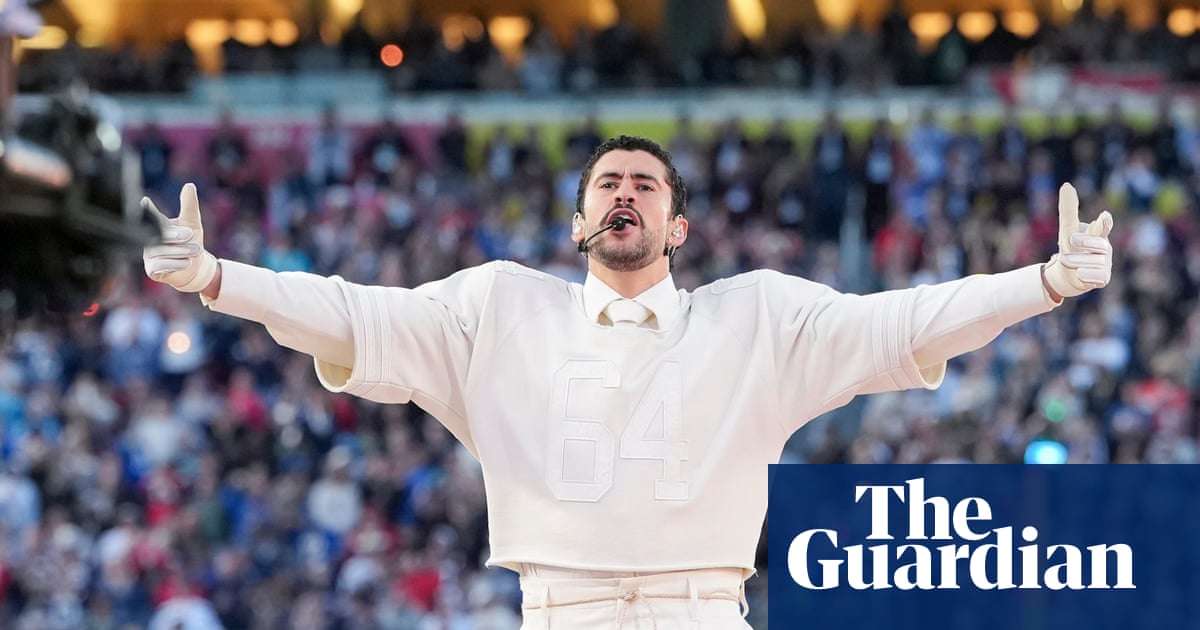
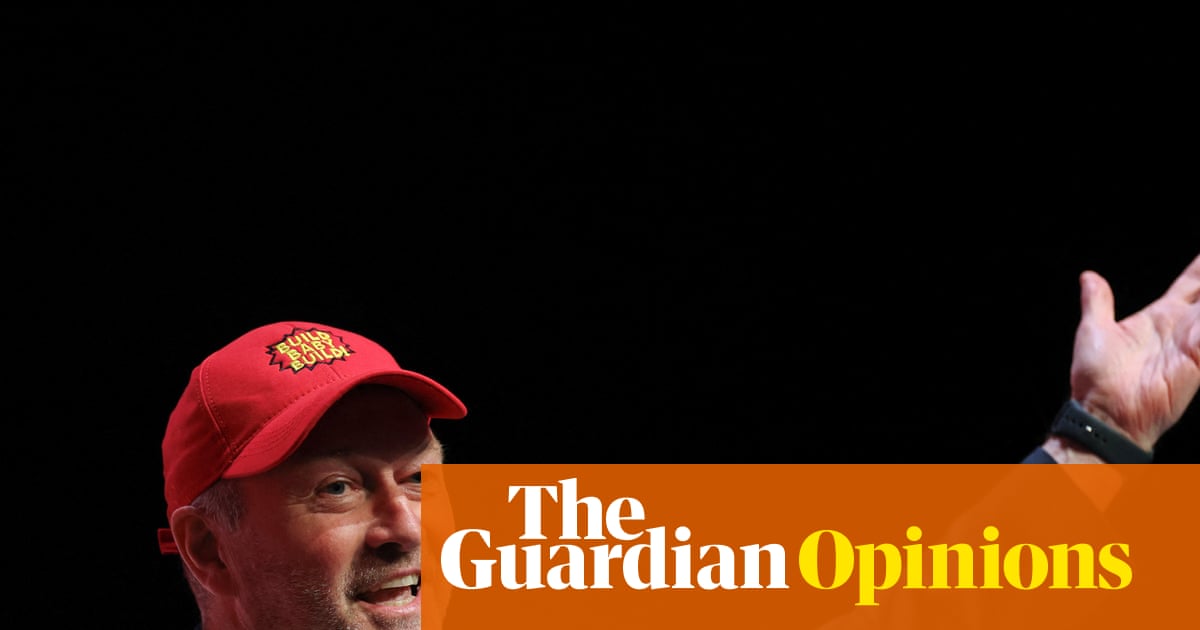
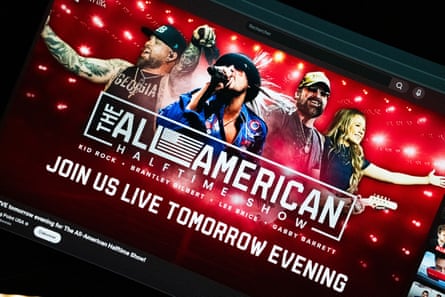
It’s not fair, what they did to rightwing folks on Super Bowl Sunday. Regular viewers could either take in an elaborate and joyful halftime performance from Puerto Rican recording artist Bad Bunny, one of the most popular music stars in the world, or, if they weren’t interested in football or in Bad Bunny’s music, they could quietly find something else to watch or listen to. There are a lot of options out there. Those who wanted to prove their Maga bona fides or loyalties, however, may have felt obligated to watch a parade of similar-sounding country singers lead into a performance from a shorts-wearing Kid Rock, jumping around and seemingly lip-syncing to a novelty hit from 1999.
For rightwingers who couldn’t stomach the Spanish lyrics to Bad Bunny songs, they could take comfort in the clear English of the man also known as Robert Ritchie: “Bawitdaba, da-bang, da-bang, diggy-diggy-diggy.” (These lyrics are actually just what a certain segment of white listeners prefer: something ripped off from Black culture, in this case rapper Busy Bee.) This sad spectacle was provided by Turning Point USA, which is not actually a charity organization for faded turn-of-the-century rap-rockers, but a rightwing advocacy group co-founded by the late Charlie Kirk. When Kid Rock pivoted back to Ritchie and covered the country tune Til You Can’t (with a pious and half-assed new verse added by Ritchie himself), the music was chased with a tribute to Kirk. This means that viewers were treated to all the artistry of a Kid Rock show plus all the cheerfulness of a funeral.
Movie theaters have their own rightwing cause célèbre this winter with the documentary Melania – a critically reviled less-than-puff piece about the current first lady, Melania Trump, from the director of the worst X-Men movie and the worst Hannibal Lecter movie. Seemingly unable to figure out how to make art of its own out of such a vacuous subject, the Melania documentary resorts to borrowing heavily and nonsensically from others: music cues closely associated with Goodfellas, or actual score from Phantom Thread, which composer Jonny Greenwood and director Paul Thomas Anderson have demanded be removed. (Greenwood’s contract stipulates that he be consulted in third-party uses.) With Melania filed on the bottom shelf alongside various ham-fisted faith-based movies, Dinesh D’Souza hack jobs, and projects that threaten to include Ben Shapiro cameos, it’s enough to make you wonder: are there any remaining rightwingers who can make seriously great or even good art?
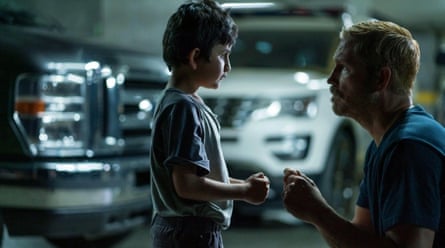
Angel Studios has been making some kind of good-faith effort to release movies for a Maga-skewing audience, though that company would argue correctly that some of its movie aren’t conservative or even faith-based at all. But while they’ve distributed the inventive family film Sketch and the new Kevin James romcom Solo Mio, Angel’s biggest successes have been the QAnon-adjacent trafficking thriller Sound of Freedom and a couple of low-rent (though in the case of The King of Kings, quite star-studded) animated Bible stories. There’s clearly an audience for overtly Christian-themed entertainment, as evidenced by the success of evangelical film-maker Dallas Jenkins, the creator of the life-of-Jesus series The Chosen.
These may have some overlap with the audience for Melania, which treats its subject with a near-religious faith in her inherent goodness and grace. But plenty of evangelical movies and shows are more small-c conservative than fully right wing – and for that matter, so is plenty of secular mainstream entertainment in overall sensibility. Moreover, obviously not every great pop-culture artist has been left-leaning. There’s plenty of great stuff attributed to genuine rightwingers, too. Wildly talented representatives of Americana such as director Frank Capra and actor James Stewart were conservative Republicans. Director Sam Raimi, whose new movie Send Help is a current hit, donated to George W Bush in the 2000s, and there are strains of conservatism through some of his work. A film-maker as iconoclastic as David Lynch voted for Ronald Reagan – though overall, his political leanings are harder to pin down in both his real life and his art.
That’s really the sticking point in the lack of Maga art. (Well, that and the fascism.) Prominent film-makers such as Clint Eastwood and S Craig Zahler (writer-director of the cop thriller Dragged Across Concrete) have some obvious right-leaning sensibilities, but they don’t always parrot prescribed talking points, favoring complex, sometimes thought-provoking narratives. Eastwood has directed some thoughtful films about prejudice, the failures of US institutions, and moral ambiguities. Zahler’s crime pictures are more genre-y, mixing tight-spot thrills with generally sympathetic rightwing characters (and provoking further when, say, casting Mel Gibson in a leading role).
That’s supposed to be more vexing to “woke” leftwingers; the stereotype about leftists engaging with art is their supposed inability to avoid sanctimonious purity tests. It’s not entirely unfounded, and certainly evident in some of the online discourse around a movie such as Paul Thomas Anderson’s One Battle After Another, which inspired some beside-the-point arguments about whether it was properly instructional about (or reverential to) genuine revolutionaries. Yet the truly unyielding perspective ultimately has been snatched up by rightwingers. Relatively anodyne matters such as diverse casting or casual inclusivity seems to set off ultra-conservative alarm bells. For this crowd, arguing about whether One Battle After Another is good leftism or mocking centrism is laughable. It has Black women depicted more sympathetically than not. Bzzt, it’s woke!
But it’s also hard to picture the Trump faithful really claiming the work of David Mamet; even a more overtly Trump-friendly Mamet probably requires some degree of work rather than reading the broadest possible signifiers (or outright loyalty pledges). Because while conservatism isn’t inherently at odds with art, Trumpism may be. It was forged (or at least enabled) in the depths of reality television, which can be art, but generally prefers not to, recasting narrative as an endless gameshow with non-union writers. Even when he was a Democrat, Trump evinced little patience for movies, and he gives the impression of a man who has never read a book or listened to a record for pleasure. When he pokes back into the entertainment world and demands that a newly Trump-friendly Paramount get going on making Rush Hour 4, it’s hard to believe it’s because Trump himself has actually watched a Rush Hour movie straight through. No, it’s because Rush Hour impresario Brett Ratner made Melania (and maybe a subsequent docuseries?), and helped the Trump family receive a payday, his own sympathies probably increased by being a “victim” of the #MeToo movement (meaning he was accused of sexual misconduct by multiple women). Naturally, Trump will respond in kind and help Ratner revive his most famous and lucrative film series.
Trump, and therefore the Maga movement, demand submission and fealty. A surprising number of people are willing to provide it, even while crowing about their freedoms. But real artists, even conservative ones, tend not to be so easily constrained. Even if conservatism creeps back into Hollywood, Maga art will be subject to a hilariously on-the-nose deal with the devils: if you want fully approved art or entertainment, it’s gotta be Brett Ratner at the helm. Maybe Kid Rock can do the score.