 3 hours ago
12
3 hours ago
12
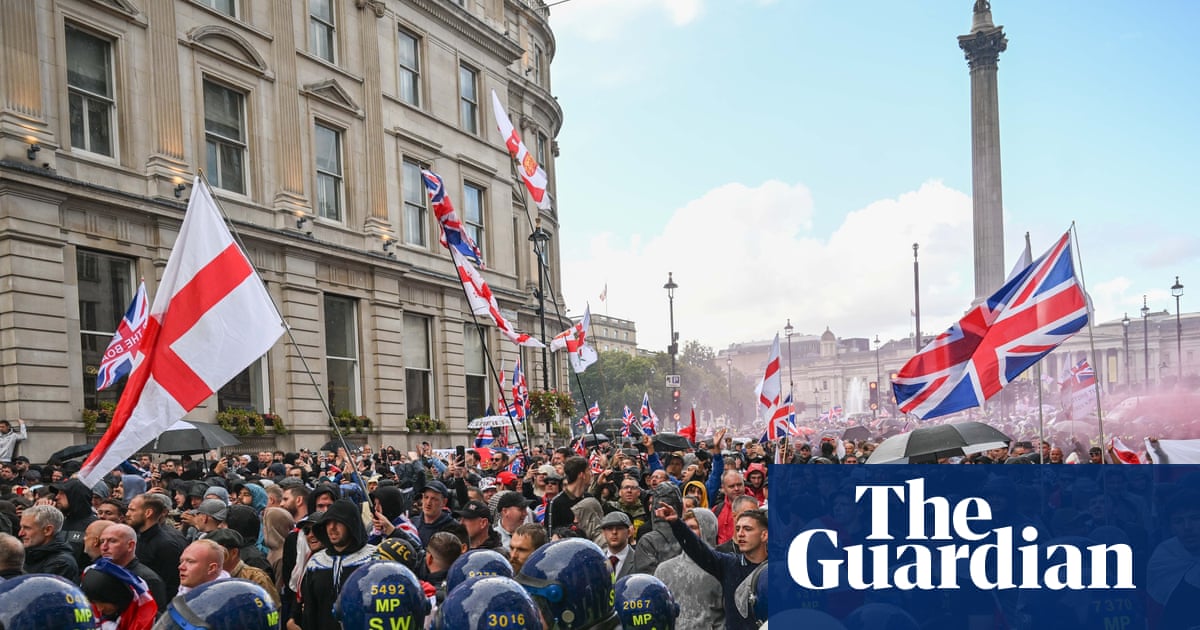
Eleven foreign far-right activists have been blocked from the UK before a rally by Tommy Robinson supporters as Keir Starmer accused him of “peddling hatred and division”.
The archbishop of Canterbury urged people to “choose hope”, and faith leaders spoke out before the rally on Saturday, the second of its kind after more than 100,000 attended one last year.
Live facial recognition will be used for the first time as part of a protest policing operation, while Public Order Act conditions are being imposed on a big pro-Palestinian march and the self-styled Unite the Kingdom event promoted by Robinson, whose real name is Stephen Yaxley-Lennon.
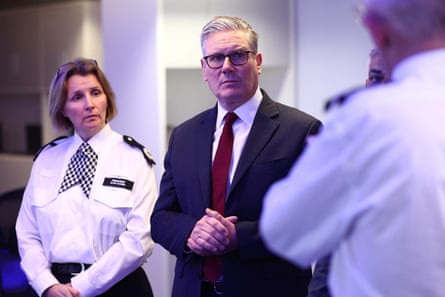
Starmer, who met senior police figures and officers involved in Saturday’s operation, said: “We are in a fight for the soul of this country, and the Unite the Kingdom march this weekend is a stark reminder of exactly what we are up against. Its organisers are peddling hatred and division, plain and simple.
“We will block those coming into the UK who seek to incite hatred and violence. For anyone who sets out to wreak havoc on our streets, to intimidate or threaten anyone, you can expect to face the full force of the law.”
However, Downing Street said in a statement that Starmer had “made clear he recognises that the majority expected to attend are law-abiding citizens, who want to protest peacefully, and urged everyone attending a protest to act with decency and respect”.
The prime minister later appeared in a video, published on social media, in which he described the rally’s organisers as “convicted thugs and racists” and said it was “a reminder of what we’re up against in the battle of our values”.
A range of groups and figures from the British far right and Christian nationalism are expected to attend the event, which will call for a general election, and marks a pivot by Robinson towards encouraging his supporters to get involved in political campaigning and voting.
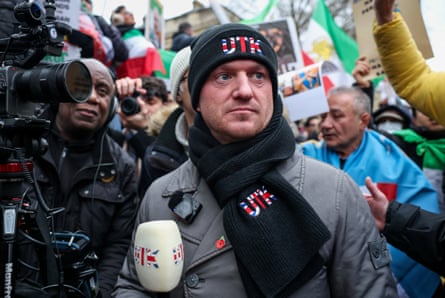
Speakers who have been announced include Siobhan Whyte, the mother of Rhiannon Whyte, a woman who was stabbed to death by an asylum seeker staying at the hotel where she worked.
Those banned from entering the UK include Valentina Gomez, a US-based anti-Islam influencer, and Eva Vlaardingerbroek, a Dutch influencer, and Dominik Tarczyński, a Polish politician and MEP.
Those taking part in the march, which coincides with large pro-Palestine events to mark Nakba Day, the 78th anniversary of the mass displacement of Palestinians in 1948 during the founding of Israel, will walk up the Strand, through Trafalgar Square before finishing in Parliament Square. Anti-racist counter-demonstrations are also taking place, while tens of thousands of football fans will be in London for the FA Cup final.
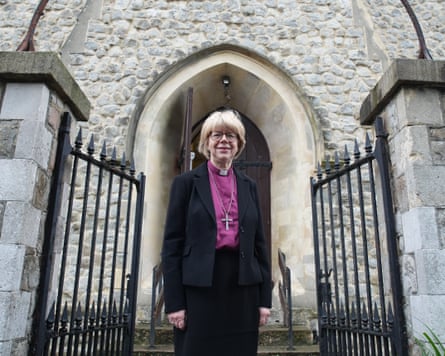
The archbishop of Canterbury, Sarah Mullally, spoke out as communities across the UK engaged in A Million Acts of Hope Week – a counter-event to “rising hate and division” in the UK and a celebration of unity and diversity.
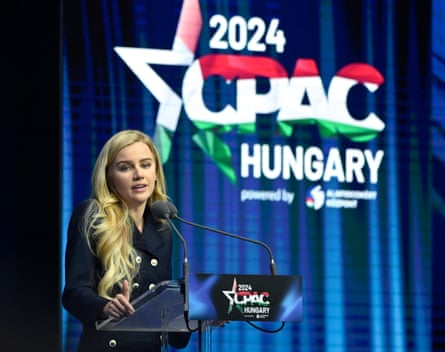
This year’s Million Acts of Hope has promoted interfaith work and is backed by Mullally – who in March became the first woman to lead the Anglican church – the Muslim Council of Britain, UK Muslim Network and Rabbi Jonathan Wittenberg, the senior rabbi of Masorti Judaism UK.
Mullally said: “When we watch the news or scroll through our phones it can feel as though our country is more divided than ever. But this is not the whole story. When I visit churches and communities, I see people serving one another and looking out for those in need. This gives me hope.
“These acts of hope happen all the time yet so often they go unseen. There is far more that connects us than divides us. And when we choose hope we help build the kind of country we all long to live in.”
Wittenberg, a leading voice in interfaith dialogue, also said he took hope from the solidarity he had received from Muslims and Christians during the period following a spate of attacks last month on Jewish people and sites in London.
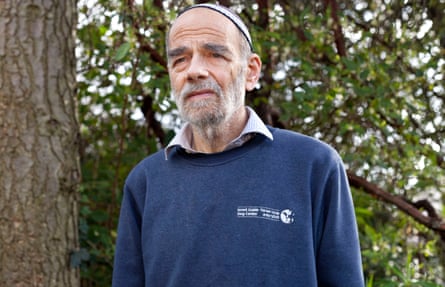
He added: “Every day we remember in our prayers that ‘acts of kindness are immeasurable’. I witness them constantly within my community, like taking food to families in mourning. I experience them between communities, like the solidarity of many Muslim and Christian colleagues during this spate of antisemitism.
“I see them in sustained support for refugees, despite the ugly slogans. I’m conscious of them across the community of all life, like the woman who travels 50 miles to fill the bird feeders on the hillside she loves. These acts of kindness express the true heart of our country.”
Downing Street said Starmer was taking action to “protect British communities from vile hate” amid the bans on foreign activists. Visiting the Metropolitan police’s command and control special operations room, the prime minister said: “We’re in a fight for the soul of this country, and the Unite the Kingdom march this weekend is a stark reminder of exactly what we are up against. Its organisers are peddling hatred and division, plain and simple.
“We will block those coming into the UK who seek to incite hatred and violence. For anyone who sets out to wreak havoc on our streets, to intimidate or threaten anyone, you can expect to face the full force of the law. My government will always champion peaceful protest but will act decisively against hatred. We all have a responsibility to speak out against those spouting vile divisive views wherever we see it. We are a country built on decency, fairness and respect, at our best when people from different backgrounds come together in common purpose. That is what we must fight for.”
Tomorrow is expected to be one of the busiest days of the year for policing in London. Many are expected to attend the pro-Palestine protest, while there will also be a presence by anti-fascist protesters organised by Stand Up to Racism.