 1 month ago
41
1 month ago
41
As well as extending “the light of consciousness to the stars”, as Musk described it, the transaction creates a business worth $1.25tn (£920bn) by combining Musk’s rocket company with his artificial intelligence startup. It values SpaceX at $1tn and xAI at $250bn, with a stock market flotation expected in June to time with Musk’s birthday and a planetary alignment.
However, there are questions over the deal, such as whether it is good for SpaceX’s non-Musk shareholders and whether the technological premise behind it can succeed.
Why is Musk linking up rockets and AI?
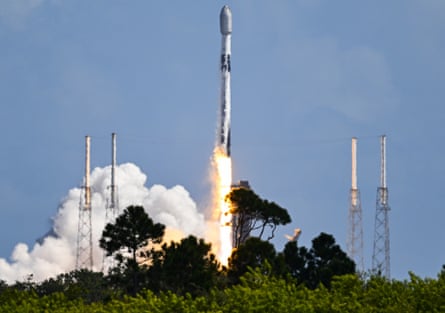
For Musk, a key part of the deal’s rationale is to move datacentres – the central nervous system of AI tools – into space.
AI companies are too dependent on earth-bound datacentres that carry immense energy demands, Musk argued this week. The solution, he says, is to put as many as a million satellites into orbit to form vast, solar-powered datacentres.
Prof Julie McCann and Prof Matthew Santer, the co-directors of the school of convergence science in space, security and telecoms at Imperial College London, say solar-powered datacentres could be a future option for AI companies. However, there are limits to how much compute power can be mustered by current satellites, they say, so it would need a “planet-wide distributed computer composed of many satellites” – as envisioned by Musk.
But even executing the concept might be affected by the quality of connection between the orbiting devices, which will need to operate in tandem in order to replicate terrestrial datacentres as they beam their outputs down to Earth.
There are other problems to be ironed out, they add, including solar radiation and maintenance. “Datacentres on earth are constantly maintained – component failure is normal. Shipping components to space is complex and expensive, and you would have to be innovative regarding how components are fitted.”
Musk talks of these datacentres adding 100 gigawatts of AI capacity annually – current global datacentre capacity is about 59GW – so his vision is ambitious. The world’s richest person believes a merger of rocket hardware and AI software is a winning combination and, in a message to employees, said it would create the “most ambitious, vertically integrated innovation engine on (and off) Earth”.
“This merger is aimed at creating a new path to generate a low cost of generating AI compute within the next two to three years by bringing together the top internet/space exploration company with top datacentre builders,” says Dan Ives, an analyst at the US financial services company Wedbush Securities.
Does xAi need SpaceX’s financial help?
Musk’s artificial intelligence company, xAi, is competing with rivals who are spending, and raising, huge sums on the infrastructure – datacentres, computer chips – needed for their products. The company, which has developed the Grok AI tool and also owns the social media network X, reportedly burned through $13bn last year and, unlike Meta, Amazon, Microsoft and Google, does not have a cash-generating legacy business to fund its efforts.
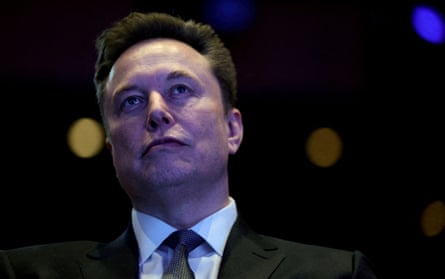
Combining with SpaceX will give xAI better access to cash and investors, according to Ross Gerber, an investor in Tesla and SpaceX.
“Musk is already running low on capital for xAI and it is competing with companies putting hundreds of billions of dollars into their AI investments. If you merge SpaceX and xAI you can support xAi because SpaceX is an extremely attractive prospect to a lot of investors,” he says.
SpaceX’s technology is complex but it is a straightforward business. It generates revenues from deploying reusable rockets for missions such as launching satellites and restocking the International Space Station. It also operates the Starlink satellite high-speed internet service. SpaceX made about $8bn in profit on $15bn to $16bn of revenue last year, according to Reuters.
The addition of xAI adds narrative complexity to the SpaceX story, says Michael Sobel, the president and co-founder of Scenic Management, which buys secondary stakes in privately held companies and has invested in the AI company Anthropic.
Sobel, who speaks to SpaceX investors regularly, says: “By folding in xAI, which carries a significant monthly cash burn, you change the financial profile of the company overnight. In the secondary market, ‘simple’ is usually rewarded. This merger requires investors to do a lot more homework on how xAI’s cash burn impacts SpaceX’s overall valuation and IPO timeline.”
There is also the added burden of X, a social media platform that is a regular subject of regulatory scrutiny and political ire.
Nonetheless, Sobel adds, the argument in favour of the deal is compelling.
“For a long-term investor, this secures the most advanced AI ‘brain’ for the most advanced hardware ‘body’ in existence. The upside is a $1.25tn entity that controls the entire stack, from the launchpad to the neural network.”
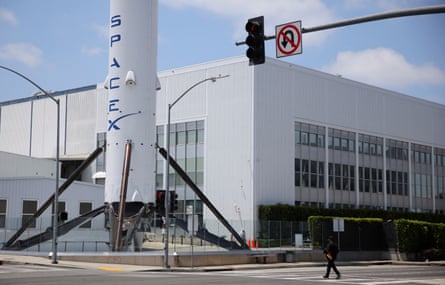
Gerber, who invested in Musk’s original buyout of X in 2022 when the platform was better known as Twitter, says he welcomes the deal but is less sure about SpaceX investors.
“For me as a Twitter shareholder, I could not be happier. I pretty much figured I had lost my money but that has now been parlayed into owning SpaceX shares. It’s awesome for me but if I was a SpaceX shareholder I would be pissed.”
What next? A Tesla-SpaceX merger?
Musk owns about 44% of the newly enlarged SpaceX business and 17% of Tesla, where he is the chief executive. Is the next step a combination of the two?
Ives believes there is a “growing chance” that a one-stop shop for investing in Musk businesses will be created. “Musk wants to own and control more of the AI ecosystem and step by step the holy grail could be combining SpaceX and Tesla,” he says.
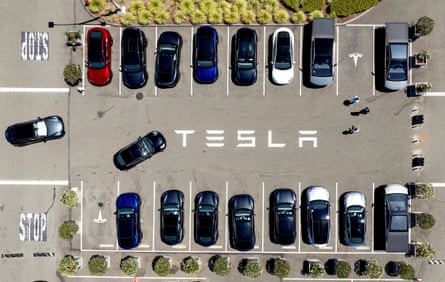
Gerber believes the timing is right, with both companies currently worth $1.25tn. “This is the time to create a multitrillion-dollar company. I know Elon. It’s going to happen,” he says.