 3 months ago
85
3 months ago
85
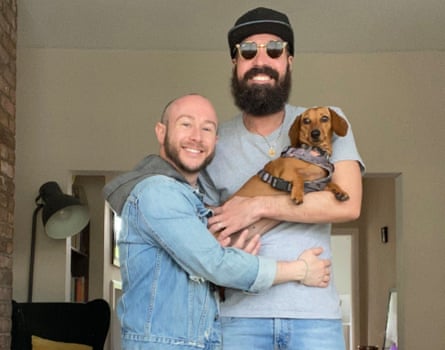
Bryan Bell was at home when his one-year-old Patti collapsed, shaking like a leaf in a gale-force tornado. She was having a fit. Bell’s husband, John, was out of the house and he didn’t know what to do. “It was quite a traumatic experience because I didn’t know what was happening,” the 40-year-old PR recalls. Eventually, Patti’s fit subsided and the couple soon found a diagnosis from her doctor: their miniature dachshund had epilepsy. “She’s all medicated now, so it’s under control. But when it happens, you feel like: ‘Is this going to be the fit that’s too much for her little head?’”
Medical scares, behaviour issues and a tendency to eat you out of house and home – many dog owners will tell you that getting a four-legged friend bears more than a few similarities to having a young child. But as birthrates plummet across the world, a curious inverse trend has emerged: couples are getting dogs. Lots and lots of couples, in fact. They’re called Dinkwads (dual income, no kids, with a dog) and their numbers are growing. With one in three postcodes in England home to more dogs than children, you are now more likely to hear the howl of a basset hound than the sound of kids playing. If you counted up all the estimated 13 million dogs in the UK, from pint-sized chihuahuas to lolloping great danes, you’d only be two million short of the total number of children. And unlike the human birthrate – which in Britain hit a record low in 2024 – the number of dogs only looks set to increase.
“With rising living costs alongside changing lifestyles and expectations, some people feel that welcoming a dog into their home is a more achievable way to build companionship and routine,” says Dr Bethan Greenwood, a research officer at the Dogs Trust, “though it’s important to remember that dogs still require time, money and commitment to ongoing care.”
Edinburgh-based content creator Mary Skinner and her husband got Fergus, a golden retriever, a year after they married. “We are deeply obsessed with him,” she laughs over Zoom. “He turned two last year and we had a little birthday party for him – we had party hats and got him a dog-safe cake and a little outfit: a little vest with a bow tie.” Growing up in Virginia, US, as one of six children, Skinner saw how much energy and resilience it took to raise a family. Still, “I grew up assuming that having a baby was the only path to take,” the 27-year-old says. “It wasn’t until I got older and started meeting people who weren’t having children and realised, ‘Oh, I don’t have to have kids if I don’t want to.’”
Skinner is one of thousands of owners going online to extol the virtues of a child-free lifestyle with a dog attached. The #dinkwad hashtag has picked up almost 135m views on TikTok alone, according to the pet insurers Everypaw. The term Dink (dual income, no kids) itself derives from a phenomenon first observed among high-flying, child-free couples in the yuppie 1980s. But the choice to eschew kids has never been more visible, thanks in part to viral videos praising Dink and Dinkwad lifestyles. As one pomeranian-wielding couple put it: “We’re Dinkwads – our fun money goes towards soy lattes and puppuccinos.”
When our hunter-gatherer ancestors first domesticated early canids somewhere between 32,000 and 18,000 years ago, they probably never imagined that the fearsome wolf would eventually morph into a fluffy pet who gets to enjoy dog-safe whipped cream. But the affection between humans and dogs goes back millennia. In one ancient burial site in the village of Ain Mallaha, Israel, dating back to 10,000 BC, a human skeleton was found curled around the remains of a puppy, its hand on top as if they wanted to give it one final back rub. In their evolution from wolf to man’s best friend, dogs have also evolved into something more pleasing to the human eye. That heart-melting “puppy eye” expression, for instance, is due to dogs having developed a specific muscle that allows them to raise their eyebrows – a trait noticeably absent in wolves.
“How we selected dogs and how we bred them in the past was mainly for the social behaviours that they can exhibit,” says Laura Gillet, a researcher in ethology (animal behaviour) at Eötvös Loránd University in Budapest, Hungary. “They’re really good at reading body language and communicative signals that no other species can read. If I was pointing, they can understand that it means, ‘Look at what I’m pointing at, not look at my hand.’” Thousands of years of selective breeding have resulted in a species that is highly attuned to our body language and facial expressions, as anyone who’s shouted at their pet for ruining their carpet will know.
What is changing is our attitude towards our four-legged companions. According to recent Dogs Trust data, younger owners are now more likely to see their relationship to their dog as one of parent-child. Two-thirds of dog owners aged 25 to 34 see themselves as their pooch’s parent – a higher proportion than any other age group in the UK.
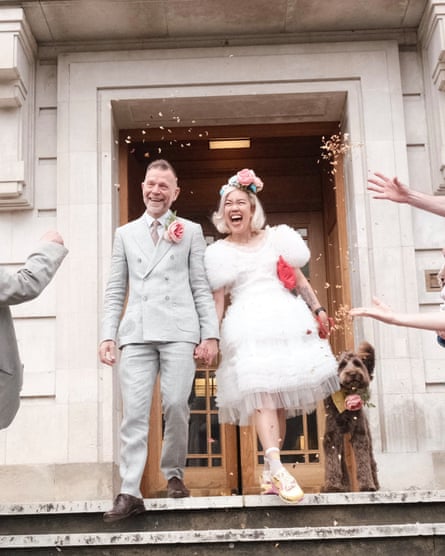
“I’m quite an Asian parent,” laughs actor Vera Chok. She and her husband, Dominic, got Ubi, their Australian labradoodle, six years ago. “We’re strict about things – he has to be calm when he leaves the house and he’s not allowed to pull on his lead.” Chok and her partner had a conversation about children early on in their relationship, “but he wasn’t sure and I wasn’t sure.” Now in her 40s, she is satisfied with the family they’ve built together.
You might not know it from the lavish range of dog prams and babyish-scented dog shampoo on the market, but most owners are able to distinguish between their fur child and an actual child. In a recent review in the journal European Psychologist, Gillet found even those who identify as “dog parents” understand there is a difference between having a dog and a baby. In fact, part of the appeal of getting a pooch is precisely because they are so different from a human child, demanding much less time and money. Take Patti, the epileptic miniature dachshund: her medication costs £180 a month on top of the £60 for high-quality dog food. “If we didn’t have insurance, it could be a massive cost that would actually impact our cashflow,” Bell says. “But our friends with kids talk about monthly nursery bills of £800.”
Gillet argues that we are a highly social species hamstrung by the cost of modern existence, which is where dogs trot into the picture. “We used to have small communities with tight bonds with each other,” she says. “But we are now more isolated – even caring for another adult is rarer in our daily lives. The theory is that we redirected these feelings towards pets because they are easily accessible.” Dinkwads such as Bell and Skinner say getting a dog helped cement their decision to swerve kids: “If anything,” Skinner says, “my husband and I have talked about how having a dog has made us more convinced we don’t want a kid, because a dog is the level of responsibility that we feel comfortable with.”
At this point, I should admit to having a bone in this fight. I was once a Dinkwad, having acquired my own fur baby in a former relationship. (These days I’d be classed as a Sinkwad – single income, no kids, with a dog.) For those like me, Dinkwad might best be described as a potentially transitory phase. In fact, more than a few self-proclaimed Dinkwads who previously posted about their child-free lives online replied to my interview request with an admission: they actually now had a dog and a child – or were, to their own surprise, considering kids afresh.
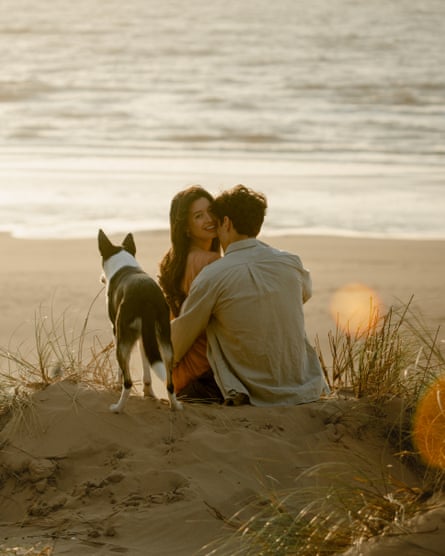
Moira Davies, a model who lives in Rawtenstall, Lancashire, was one. She says that getting a dog with her fiance, Tighe, initially put her off children completely. “He used to cry all night and wake us up,” the 28-year-old says on a video call from her car, her handsome border collie Finn sitting next to her. “I thought, ‘Imagine this going on for years!’” But now Finn is fully grown, the couple are feeling the pull towards parenthood: “I never thought we’d end up feeling like this, it just happened naturally. We both developed a relationship with Finn and realised, ‘Oh, he’s our baby!’ Maybe it changed things for us.”
The rise of Dinkwads makes sense in a world where parenting is more expensive than ever, and dogs offer a more affordable way to channel a deeply human instinct towards nurture and care. For some couples, that may be a stepping stone towards eventual parenthood. Others are content with their furry friend for life. Whatever the outcome, it’s clear that more and more people will be stopping by that doggie in the window in the future.
As Gillet says: “International trends show a clear rise in pet ownership, even in African and South American countries. The phenomenon will not stop.”
Tim Dowling’s guide to the best dogs for Dinkwads
There are many breeds and mixes out there to suit Dinkwad households – just be on the lookout for a demanding, behaviourally challenged dog that can take up as much of your time and income as possible.
Labradoodle
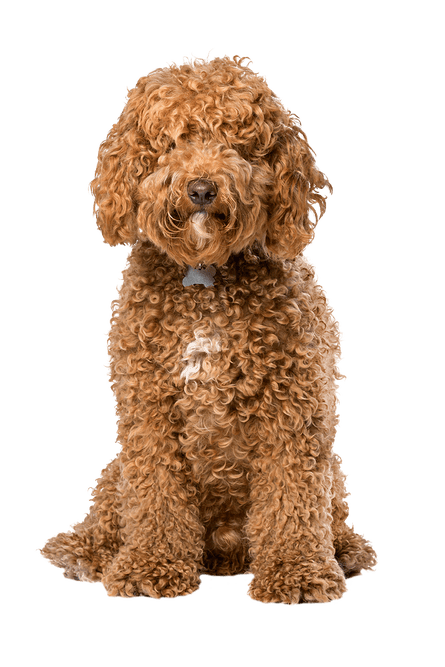
One of the most popular of the designer hybrids: a lively blend of labrador and poodle resulting in an intelligent and hypoallergenic dog that is nonetheless extremely high-maintenance. Your labradoodle will probably need to go the hairdresser more often than you do, and will hate you for it.
Dachshund
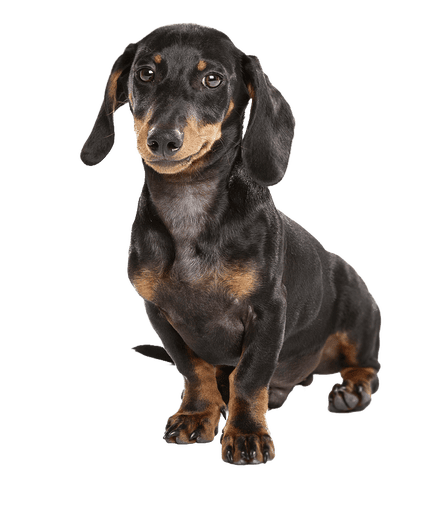
A breed guaranteed to help you make the most of mealtimes – they’re notoriously fussy eaters, prone to going on food strike for no reason. You may have to try dozens of different dog food brands before your dog finally discovers the most expensive one. On the plus side, they tend to be quite patient about wearing outfits, even hats.
Whippet
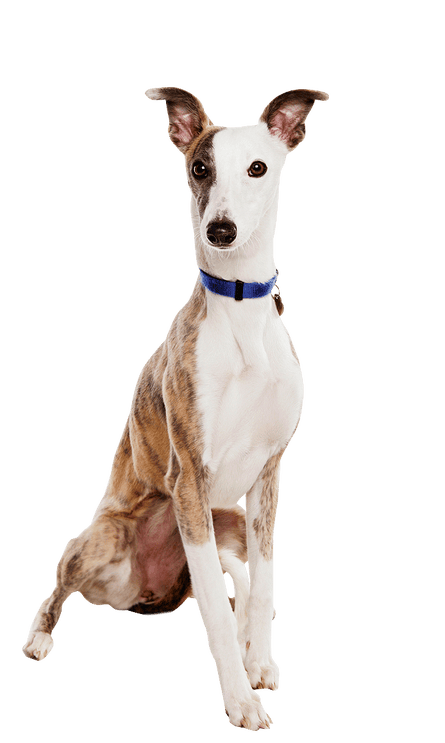
Whippets have just two modes: running at full pelt after some other dog’s ball, and unconscious. Eventually, you will also be reduced to two modes: apologising to strangers in the park, and unconscious. Additionally, many whippets suffer from a paradoxical combination of separation anxiety and not really wanting to go anywhere with you.
Cavalier King Charles spaniel

Quiet, small and generally retiring, this dog may as well have been bred for dog-friendly cinema screenings. They’re also very good at getting stolen, so be sure to keep plenty of reward money set aside.
Pitador
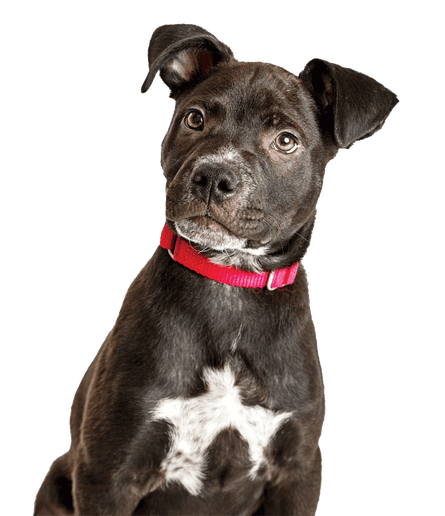
A charming mix between a lab and a pitbull, combining the former’s prodigious appetite with the latter’s unwavering tenacity – perfect if you’re looking for something to eat your skirting boards while you’re at work. May also need to be privately educated.