 2 months ago
46
2 months ago
46
The rightwing Reform UK party has said it would stop issuing visas to people from any country that seeks reparations for the transatlantic trafficking and enslavement of Africans, at a time when the global battle for reparative justice is intensifying.
Reform’s home affairs spokesperson, Zia Yusuf, this week claimed the UK was being “ridiculed on the world stage” and said the “bank is closed” to anyone who wanted to “use history as a weapon to drain our Treasury”.
This is a characterisation that Caricom – the political bloc of Caribbean nations – has long argued is wrong, stressing that nations seeking reparative justice want a mutually beneficial partnership.
Last month a resolution spearheaded by Ghana passed at the UN general assembly. It described the slave trade as “the gravest crime against humanity” and called for reparations as “a concrete step towards remedying historical wrongs”. While 123 nations voted in favour, the US voted against it and the UK abstained.
Here, the Guardian looks at what reparations campaigners are asking for – and why.
Why do colonialism and slavery still matter?
More than 100 countries were colonised by European nations, in a process dating back to the 15th century. Britain’s empire was biggest – peaking at about a quarter of the world by the 1920s.
Colonialism gave European nations the overseas workforces, raw materials, captive export markets and soldiers to fuel their economic and social development. Defenders of empire argue there were positive impacts as well as harms to colonised peoples.
The transatlantic trade in enslaved people was central to European colonialism. Millions of Africans were trafficked to the Americas to grow cash crops, and subjected to violence, torture, sexual abuse and the denial of basic human rights. This lasted for about 300 years, including illegally.
Colonised nations in Africa, Asia, the Caribbean and Oceania suffered harms including genocide, loss of ancestral lands, cultural destruction, the impoverishment and dispossession of populations, and ongoing racial, economic and ecological disparities within and between nations, including the neocolonial order that followed postwar independence movements.
What are reparations?
Reparations are an acknowledgment of harm and a commitment to repair. Victims of crimes under international law have a right to reparation, which can include an apology, guarantees of non-repetition, compensation, rehabilitation, full disclosure of the facts, and restitution.
Caricom has joined forces with the African Union to seek reparations. They stress their intent is not to break Britain by demanding trillions, but to create a mutually beneficial restorative justice programme.
Caricom’s 10-point plan for reparatory justice includes:
-
A full formal apology.
-
An Indigenous peoples development programme.
-
Repatriation to Africa for those who wish.
-
Establishment of cultural institutions and the return of cultural heritage items.
-
Remedying public health crises linked to historical trauma.
-
Education programmes.
-
Historical and cultural knowledge exchanges.
-
Psychological rehabilitation to address intergenerational trauma.
-
Technology transfer.
-
Debt cancellation.
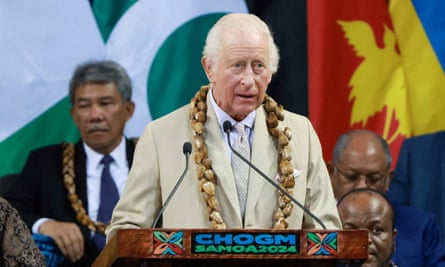
At November’s Commonwealth heads of government meeting in Antigua and Barbuda, it is expected that King Charles will face calls for an apology. Meanwhile, Jamaica, and lawyers in the UK, are pursuing legal routes to redress.
Has any nation ever paid or received reparations for slavery?
The UK compensated plantation owners the modern equivalent of £17bn after slavery’s abolition in 1833, but enslaved people and their descendants were not compensated.
After enslaved people rose up in the Haitian revolution, ending French colonial rule at the turn of the 19th century, France demanded 150m francs in reparations, with payments only ending in 1947.
What does the British public think about reparations?
In 2024, a poll found six in 10 people believed Caribbean nations and descendants of enslaved people should receive a formal apology. However, a YouGov poll in March found 60% of the public as a whole were opposed to reparations, while 71% of Black adults were in favour.
Have any non-government organisations committed to reparations?
The Scott Trust, owner of the Guardian, committed in 2023 to a programme of restorative justice for its founders’ 19th-century connections to transatlantic enslavement in Jamaica and the US. This includes building partnerships with descendant communities, and an investment of more than £10m.
The Church of England is launching a £100m project to address its historical connections. The Joseph Rowntree Charitable Trust this month appointed a head of reparations, after admitting Rowntree’s – the confectioner who endowed it – benefited from slavery, indenture and apartheid.
Lloyd’s of London said it was committing £52m towards a “programme of initiatives” in 2023, having apologised for its significant historical involvement, but stopped short of reparations.
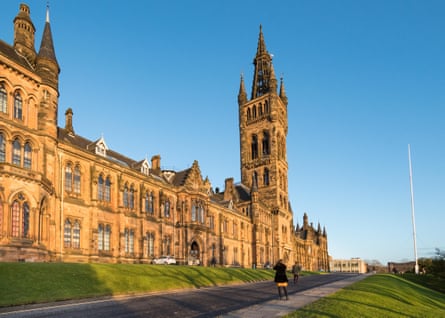
The University of Glasgow agreed to spend £20m in 2019, while the University of Cambridge established a £1.5m Legacies of Enslavement Fund in 2020, after research found it had benefited significantly from slavery.
What does the UK government say?
The UK has never formally apologised for slavery or colonialism, and says it will not pay reparations.
In a statement after the UN resolution, the Foreign Office said that, while slavery had “inflicted untold harm and misery on millions” and left “deep scars”, there was “no duty to provide reparation” because it had not been illegal at the time.
What do experts say?
The Jamaican jurist Patrick Robinson, a former judge of the international court of justice, has said the UK will “not be able to resist” the movement for reparations, which are “required by history and law”, adding: “reparations have been paid for other wrongs and obviously far more quickly.”
Cristina Duarte, a Cape Verdean politician and special adviser on Africa to the UN secretary general, has said: “The structures that enabled colonialism, enslavement, and racial domination have morphed into new forms.
“Africa remains trapped in a global economic system characterised by the permanent extraction of value … Ghana exported $9.58bn in gold in 2024, yet it only retained 14% of the value due to the nature of multinational agreements … Reparations are not about charity; they are about fairness.”
The Green party of England and Wales says there will be “no true peace and justice” until Britain and other European countries “atone for the crimes they are still benefiting from … and the ongoing impact”.