 3 months ago
97
3 months ago
97
For weeks he hovered near Turkey’s border with Syria hoping for good news. In early February, Xhetan Ndregjoni got word of what he was waiting for – his niece Eva was on her way after escaping the squalid desert camp in Syria where she had been held without charge since she was a child.
“I don’t have the words to describe that moment,” Ndregjoni said of their reunion.
The family’s ordeal had stretched back more than a decade, when Eva Dumani, then nine, and her younger brother, seven, were kidnapped from their home in Albania and taken to Syria by her father, who was later killed fighting for Islamic State.
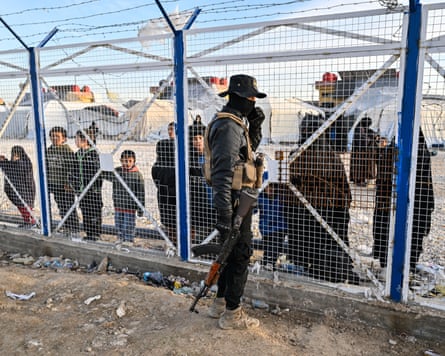
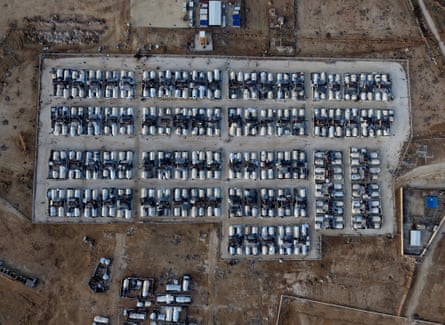
Dumani’s release was a rare moment of joy amid what has been described as an unfolding catastrophe in northern Syria. The gradual emptying of al-Hawl camp – where thousands of women and children from more than 40 countries with alleged ties to IS have been arbitrarily detained for years – has left many abandoned in a post-conflict zone, vulnerable to exploitation and raising fresh security fears.
The camp’s collapse, along with the uncertainty over the future of the smaller al-Roj facility, where many western European and Australian citizens are being kept – including Shamima Begum, who travelled to Syria from the UK aged 15 – has led to renewed calls for governments to repatriate citizens held for years without charge or trial.
“People are going to come back whether you want them to or not, specifically if they’ve escaped,” said Devorah Margolin, a senior fellow at the Washington Institute for Near East Policy.
About 6,000 foreign nationals from countries including Serbia, Bosnia and Albania were detained at al-Hawl after the fall of IS in 2019, many of them women and children. Most have languished for years in what Human Rights Watch described as “inhuman, degrading, and life-threatening” conditions, marked by chronic shortages of food and medicine as well as violence by women still loyal to the IS.
Margolin said the camp’s emptying exposed how governments that had hesitated or refused to repatriate citizens could no longer turn a blind eye. “People will get back into Europe. And so to have a proactive plan in which you can focus on trauma-informed care, reintegration, disengagement as well as security monitoring is a much better security practice than allowing people to sneak in and not addressing it at all,” she said. “That’s asking for something bad to happen.”
Alongside Dumani, Belgian authorities said a woman charged in absentia for IS membership had also returned in February and was arrested on arrival.
A source also told the Guardian of another woman from western Europe who had managed to smuggle herself from al-Hawl to Lebanon, where she turned up at her country’s embassy and requested assistance with repatriation. At al-Roj more than 30 Australians recently attempted to leave the camp on their own and return home, only to be turned back at the last minute.
In a recent interview in al-Roj, Elona Shuli – the eldest of three sisters brought to Syria as children and married to an IS fighter at 13 – said she hoped to be repatriated by Albania. Clutching her two children, she spoke while glancing at an Albanian woman standing nearby. A relative later said more extremist Albanian women act as “enforcers” towards Shuli and her two younger sisters, attempting to keep them aligned with IS ideology.
The Albanian government have told Shuli’s family that it cannot repatriate her as it cannot locate her exact location in al Roj camp. The Guardian located Shuli within minutes, after giving the camp administration her name and being led to her tent.
Across Europe there has been little public acknowledgment of the shifting situation in Syria, despite long-running concerns about IS-linked individuals returning.
The collapse of al-Hawl, and uncertainty over al-Roj, means women and children risk being left to navigate a conflict zone alone, said Beatrice Eriksson of the rights organisation Repatriate the Children. She said many women had contacted their governments for help, often without response.
Eriksson said these children and their mothers were facing an “immediate threat”. “Responsible countries need to step in now and assist their citizens to get home, there’s no more time to waste. There are non-state groups in Syria who have an interest in recruiting, coercing and exploiting these children and their mothers,” she added.
Research by Human Rights Watch found many repatriated children were able to reintegrate successfully, despite being held in conditions so dire the organisation warned their cumulative psychological impact may “amount to torture”.
While Eriksson welcomed Dumani’s return to Albania, she said it was “disturbing” that it had been left to her family to bring her to safety. “Eva’s uncle is a true hero,” she said.
Dumani’s grandmother had previously travelled to Syria to bring her grandchildren home but was detained and died after six years without charge. Dumani was left alone after her brother was repatriated in 2020.
After escaping al-Hawl earlier this year, Dumani walked for four hours to reach a main road, where she had arranged for smugglers to meet her and take her to Turkey, her uncle told the Guardian. Albanian officials said they helped her to travel from Turkey to Albania.
Once home, she could finally hug her family. “We had been waiting for this moment for 12 years,” Ndregjoni said. “It was incredibly emotional when she saw her brother and mother.”
He said Dumani, now 20, was adjusting well to life at home. She has started high school, eager to make up for the education she had missed while detained.
Now his concern has shifted to the 25 or so Albanians still trapped in northern Syria. “We ask the government to bring back home the other children who are in this situation, it’s really important for them to have their kids at home too,” he said.