 1 hour ago
6
1 hour ago
6
Key events
Harvey Nichols warns of collapse as bidders including Mike Ashley circle

Jasper Jolly
Harvey Nichols has warned that it will not be able to survive another year without new investment, as bidders for the Knightsbridge-headquartered department store chain circle.
The retailer’s Hong Kong-based owner, Dickson Poon, put it up for sale in June, with Frasers Group chair Mike Ashley aiming to buy it for about £40m.
Harvey Nichols used to attract a high-profile clientele, including the late Princess Diana, and its place in popular culture was confirmed in its 1990s heyday by the TV sitcom Absolutely Fabulous, which used the store as a symbol for luxury retail. Yet “Harvey Nicks” has struggled to adjust to increased competition from other shopping destinations, as well as the unstoppable march of internet commerce.
The company has not made a profit since the coronavirus pandemic locked out big-spending tourists, and it reported a loss after tax of £105m after writing off inter-company loans for the year to 29 March 2025, according to accounts published over the weekend.

The directors warned that the company was not a going concern, because it would run out of money within the next year and that it had no agreements for new funding.
The accounts said that the company had received “a number of bids” to buy it, and that it was hoping to complete a deal within the next year.
FTSE 100 retailer Next had been interested in taking over the business, although it has withdrawn its interest, according to more recent reports.
That has left Ashley, the founder of the Sports Direct retail empire, as one of the frontrunners. Ashley on Friday told the Financial Times that Harvey Nichols was in a “death spiral” and that it would be a “huge challenge” to turn it around.
Ashley has bought a series of struggling premium brands in recent years after starting out with a single sports shop. He said he would keep the Knightsbridge and Edinburgh stores, but rebrand other stores as House of Fraser or Flannels under his Fraser group.
Harvey Nichols was founded in 1831, as a linen shop. Its department store headquarters in Knightsbridge opened in 1889. In the last century it has been owned by Debenhams and the Burton Group, before Poon bought it in 1991 for £53m.
Poon oversaw an expansion outside London, with a Leeds opening in 1996. The chain now has shops in Birmingham, Bristol, Dublin, Edinburgh and Manchester, as well as a series of restaurants including the one in London’s riverside Oxo Tower. Outside of the UK it has a store in Riyadh, one in Dubai, two in Hong Kong and one in Kuwait.
Thames Water faces row over £1m payment to finance chief
Jasper Jolly
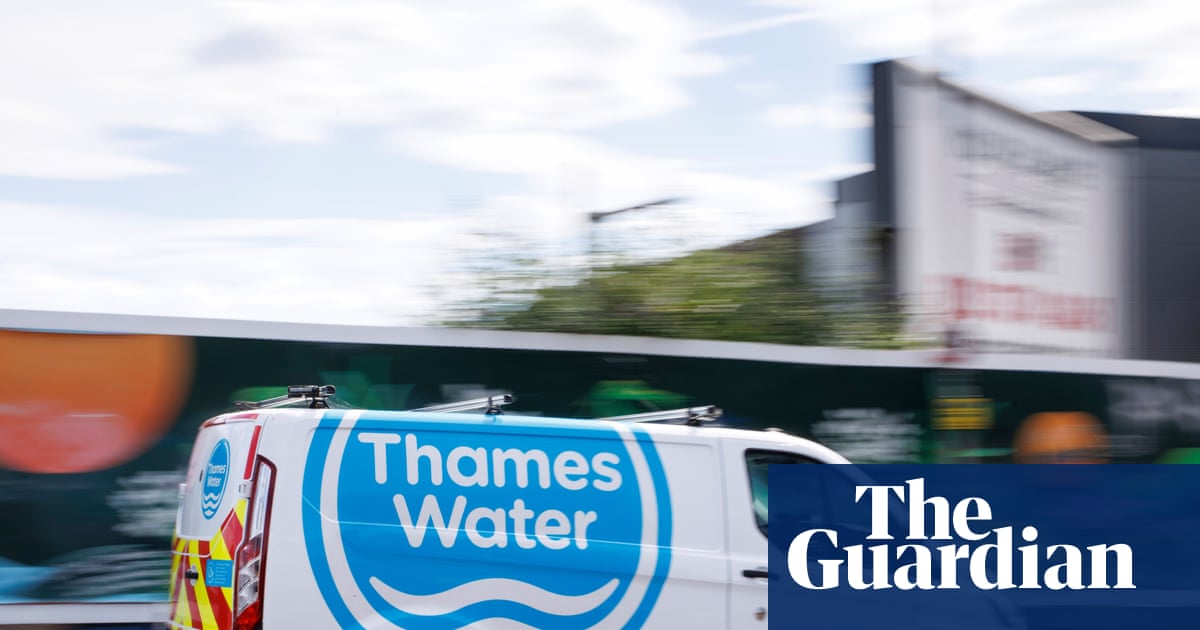
Thames Water has paid its chief financial officer, Steve Buck, a £1m signing fee despite intense scrutiny of Britain’s biggest water company’s finances as it tries to avoid being taken into public control.
The utility revealed that it made the payment last month, in a letter sent last week by Sir Adrian Montague, its chair, to MPs on the environment, food and rural affairs select committee, Sky News first reported.
Thames is one of at least eight water companies banned from paying performance-related bonuses because of continued environmental failings from its creaking infrastructure. The company, which provides water and sewage services to 16 million customers in London and the Thames valley, has been on the verge of collapse for more than two years.
Andy Burnham has previously indicated that the government should take control of Thames in order to write off debts worth billions of pounds. However, the creditors who effectively control Thames have spent months negotiating to take formal ownership, if regulators will give leniency on future fines. The creditors have offered the government a “golden share” in the business in a last-ditch bid to avoid having their debts written down.

Yet the continued payments of millions of pounds to executives will probably strengthen calls for the government to step in and take formal control via a special administration regime.
The payment to Buck was made at the end of last month, after Thames took legal advice over its obligations.
The payment was drawn from a £3bn emergency debt package agreed last year with creditors. That money is designed to keep Thames running while it tries to negotiate a longer-term takeover by its creditors, more than two years after its shareholders effectively walked away from the business.
Cat Hobbs, director of We Own It, a campaign group calling for nationalisation of the water industry, said:
The Thames Water saga is beyond a joke a this point - they are completely taking the mickey. Andy Burnham must step in immediately and take back the company … the shareholders have walked away, and the debt can be drastically cut and refinanced more cheaply in public hands. It’s criminal to let this rip off continue with 16m households paying the price.
Vistry shares plunge after report that credit insurer has cut cover for its suppliers
The UK housebuilder Vistry’s shares plunged as much as 9%, after a report that the credit insurer Allianz Trade is reducing cover it provides to Vistry suppliers – which was swiftly denied by the housebuilder.
This could worsen the struggling company’s cashflow and financial position, and Vistry shares are the top faller on the FTSE 250 index after the Financial Times report.
In recent weeks, the insurer warned suppliers it is adjusting its credit limits for Vistry, which could result in cover being reduced by up to 70%, the FT said, citing one person as saying that final level of cover provided will depend on Vistry’s financial performance in the weeks ahead.
Suppliers buy credit insurance to protect themselves in case their customers fail to pay for goods and services, and when coverage is withdrawn, suppliers may ask for payment upfront. Credit insurance is often provided by several insurers.
A Vistry spokesperson said:
Credit insurers continue to provide substantial cover for our supply chain which more than meets the group’s requirements on an ongoing basis. We are not aware of any supplier withdrawing trade from Vistry due to credit insurance changes and we have seen no interruptions to our supply chain.
We maintain positive relationships with our suppliers as we continue to build at scale and pace, delivering the high-quality homes this country needs.

Last month, Vistry warned that it will make a loss of around £30m in the first half of the year, after it resorted to heavy discounting to attract buyers for unsold homes.
The company has shifted towards building social homes in partnership with housing associations, local authorities and build-to-rent investors in recent years.
Robert Walters boss says legal, technology and accounting recruitment is picking up
Toby Fowlston, chief executive the recruitment company Robert Walters, talked of “shards of light in certain parts of the world,” including the UK.
The company has just reported a 9% rise in net fee income in the first half of the year.
Fowlston said the jobs report from KPMG and REC was encouraging.
He explained that the company, which focuses on mid to senior professional services (not the lower end of the market) has seen an upturn in legal, technology and accounting recruitment, while the consumer-led industries like retail and hospitality are still struggling to recruit people.
But technology in particular, the job flow hasn’t really been the challenge. The challenge has been the confidence levels, particularly of candidates to move. And I was really encouraged to see that starting salaries for permanent roles from the recent data are now at the fastest rate for six months. And we know temporary wage growth is continuing to increase as well.
People are impacted by the cost of living. People are impacted, particularly those with fixed rate mortgages, with interest rates having obviously shifted over the last three to five years. So our view is that you’ve got candidates now who are now actively starting to consider the move.
He noted that 18% of workers are in the public sector while the rest work in the private sector, and of those, about 60% work for small and medium-sized businesses of less than 250 employees.
Thinking back to 2008/9 and the global financial crisis, as well as the Covid pandemic of 2020/21, there was a “very big global snapback,” Fowlston said.
That’s not what we’re seeing at the moment. We’re seeing shards of light in certain parts of the world. The UK is most certainly one of them. So I’m actually quite encouraged by what we’re seeing in the UK.
We’ve got the budget coming up, in the autumn [on 28 October]. I think there is a great opportunity there to bring some real confidence back into the employment sector and remove some of the red tape that I think is prohibited. Some of the employers are making hiring decisions.
Rob Wood, chief economist at Pantheon Macroeconomics, said rising employment and wage gains suggest the Bank of Engand’s monetary policy committee needs to be cautious.
There may be an element of a “Burnham Bounce” in the survey, as the drop in temporary hiring and rise in permanent in July—usually a sign of falling uncertainty—sits oddly with the resumption of hostilities in the Middle East in July. So Sentiment could easily drop back somewhat.
Wage growth accelerated to the strongest since January, and the permanent salaries index lies above the 52.3 average seen in 2025, suggesting there has been no slowdown in pay growth over the past 18 months. Vacancy growth recovering and staff availability high but easing slightly also point to a labour market beginning to steady.
Most surveys, with the exception of the PMI, are now consistent with rising employment and wage growth plateauing at an above-inflation target-consistent rate.
Introduction: UK employment market shows ‘rays of light’ for jobseekers with upturn in pay, study shows
Good morning, and welcome to our rolling coverage of business, the financial markets and the world economy.
There are signs of improvement in the UK jobs market, with an upturn in pay and the first rise in temporary vacancies in two years as employers sought more flexibility.
Employers have stopped shedding permanent jobs, with placements stabilising in July and temporary billings rose further, at the fastest pace since early 2023, according to a monthly survey from KPMG and the Recruitment and Employment Federation.
Recruiters said demand for permanent staff remained subdued amid political and economic uncertainty and higher labour costs, though some employers continued to hire for new projects.
Callum Licence, head of advisory at KPMG UK and Switzerland, said:
Despite ongoing uncertainty it’s encouraging that businesses are starting to press ahead with investment, which means across the board we are starting to see the data moving in the right direction. This is most pronounced in the continued rise of temporary work, where employers have been looking at flexible approaches and hiring has been growing for several months, and permanent hiring is starting to turn a corner.
Temporary workers are in demand across the UK and though modest, the rate of growth was the fastest seen since August 2023. At the same time, permanent vacancies fell at a slower, but still solid rate. As a result, overall demand for workers fell at the softest pace in 22 months.
Pay continued to improve in July, with recruiters often talking of a lack of suitably skilled or experienced candidates for roles. The rate of starting salary inflation was solid, reaching the highest level in six months, while temp wage growth hit a 26-month high. However, the upturn in starting salaries remained much slower than the long-run trend.
Appointments to permanent positions stabilised ending a 45-month period of decline. London and the Midlands recorded renewed upturns in permanent staff hiring in July, with growth hitting a near four-year high in the capital, but there were further declines in the south and north of England.
Growth in temporary roles slowed from June’s 38-month record, but was among the best recorded since early 2023. The north of England recorded the steepest upturn in temp billings, followed by London. A softer increase was seen in the south of England, while billings fell slightly across the Midlands.
Maxine Bligh, REC’s chief membership and innovation officer, said:
Rays of light are beginning to break through for the job market as employers revive hiring plans. Temporary vacancies are up for the first time in two years, while recruiters’ revenue from supplying temporary workers has risen for a fourth consecutive month.
Remarkably, this is the first month without a decline in permanent placements since Liz Truss resigned as prime minister in 2022, underlining just how prolonged the downturn in permanent hiring has been. That makes it all the more important that the government takes decisions now that build business confidence and momentum in hiring.