 1 hour ago
7
1 hour ago
7
Erika Castellanos has outlived what she describes as one of the cruellest statistics in Latin America. The life expectancy of a transgender woman in the region is estimated to be 35 years. “I am 50 years old. A lot of trans women are killed very early in life, either because of HIV or because of transphobia, so reaching 50 is a success story,” she says.
When Castellanos was diagnosed with HIV in 1995, doctors gave her six months to live. She had already spent years watching Aids devastate her community, with effective treatment beyond the reach of most people in low-income countries.
Looking back over the past 30 years, Castellanos, born and raised in Belize, says the medical breakthrough has been extraordinary. She began treatment in 2000 using whatever medicines arrived as donations to hospitals.
“When I was diagnosed, we were taking whatever came our way. Most of it came as donations from Europe and the United States. Science has come such a long way. Every time we’re getting closer to a cure, closer to a vaccine,” she says.
After moving from Belize to neighbouring Mexico in the early 1990s to live more openly as a trans woman, she survived through sex work and volunteered at an HIV hospice in southern Mexico.
“We barely had anything [at the hospice]. My mother paid for the snacks at our meetings. It was a time when treatment options were extremely limited. We were caring for people who were dying. We were giving comfort because there wasn’t much else we could do,” she says.
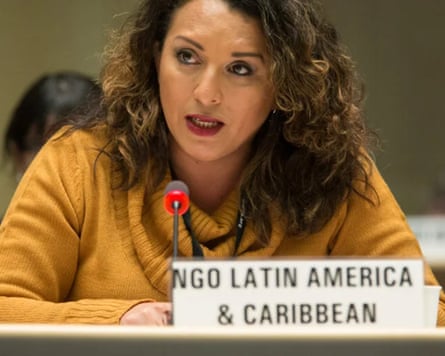
When it came to her own health, Castellanos feared hospitals almost as much as she feared HIV, never knowing whether healthcare workers would treat her with dignity or humiliation.
“There was a lot of stigma at the time. [Hospital staff] would tell me, ‘You have HIV because you chose this life,’ but I don’t have HIV because I chose anything; I have HIV because there was no system that allowed me to protect myself. I was forced into situations that carried risks. Nobody would ever choose this,” she says.
“I have lived through more than 30 years of promises, breakthroughs and funerals. I have watched medicine transform HIV from a death sentence into a manageable health condition but I have also watched people including my friends die while those medicines existed. Science did not fail my friends. Politics did.”
Today, Castellanos lives in the Netherlands and leads Global Action for Trans Equality (Gate), an organisation advocating for the rights of trans and gender-diverse people where her work focuses on improving access to healthcare, advancing human rights and supporting community organisations fighting discrimination.
“My experience motivated me to fight for treatment and to create spaces where people living with HIV could have a voice,” she said at the Aids 2026 conference in Rio de Janeiro last month.
Growing up in Belize, she says, laws criminalising people like her created constant fear.
“When I was young, there was a law that could send me to prison for 10 years simply because of who I was. You wanted to tell your doctor the truth because you wanted the best care, but you were also afraid that being truthful could put you at risk,” she says.
after newsletter promotion
She says those fears remain for many trans people today, especially in Africa, where criminalisation is on the rise.
Her concerns are echoed by Winnie Byanyima, executive director of UNAids, in the UNAids Global Aids Update, which documents a global rollback in human rights including the sexual and reproductive rights of women and girls and marginalised populations. In 2026, 168 countries criminalised sex work, 66 countries criminalised same sex sexual relations and 14 countries criminalised trans people.
“You cannot end Aids while criminalising people living with and most at risk of HIV,” says Byanyima. “When people fear arrest, violence or discrimination, they stay away from HIV services. Human rights are not separate from the HIV response – they are essential to its success.”
Castellanos warns that the recent international funding cuts, including the scaling back of support provided through USAID and Pepfar, risk reversing decades of progress against HIV, forcing communities back to a time when treatment options were limited, clinics were overwhelmed and community organisations were left to fill gaps in care.
Efforts to end Aids as a public health threat by 2030 are at risk unless global solidarity is restored and inequalities are addressed, the report says.
As governments debate budgets and policies, Castellanos hopes leaders remember that HIV responses are ultimately about people, not politics. “It’s OK if someone doesn’t understand my life. They don’t have to agree with me, they just have to respect my humanity,” she says.