
 7 hours ago
15
7 hours ago
15
The Odyssey has stormed cinemas, but while its take on the Homeric epic has created ripples among western classicists, it is an actor’s earrings that have made waves further afield.
Zendaya, who portrays the goddess Athena in the movie, provoked outrage when she appeared at a London photocall wearing earrings that were allegedly made from Iranian artefacts dating back to the 1st millennium BC.
According to Barron London, a Mayfair-based gallery and dealer that owns the earrings, the gold medallion plaques are “attributed to the Ziwiye hoard, discovered in north-west Iran in the late 1940s”. They were bought from another London jeweller, Glenn Spiro, who mounted them with diamonds in yellow gold.
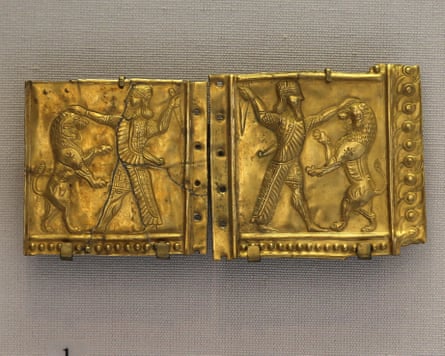
But while the Mayfair retailer claims the jewellery celebrates “the remarkable artistry of ancient Persian goldsmiths” and encourages “wider appreciation of one of the world’s great artistic traditions”, academics take a different view.
A petition has been launched calling for Barron London to publish the complete known provenance of the gold plaques, reveal the checks they undertook on the legality of the items, permit examination of the objects, and even suspend sale.
Zendaya is used to the glare of camera lenses, but being the focus of academically qualified antiquarians is something else altogether.
Dr Christos Tsirogiannis, an antiquities expert at the Swiss Federal Office of Culture, said: “Personally, after all these two and a half decades of continued scandals emerging everywhere about all sorts of illicit antiquities … I’m extremely surprised, negatively surprised, that no one among all these people that escort these celebrities said something to protect her.”
Romina Frohar, the founder of the Forensic Archive of Iran, an independent investigative archive documenting threats to Iran’s cultural heritage that set up the petition, said her concern was broader than Zendaya’s decision to wear the items.
“Barron London has described the loan as a celebration of ancient Persian artistry, but cultural appreciation cannot substitute for provenance transparency,” she said. “If these objects are being publicly presented as Iranian cultural heritage, the evidence concerning their origin, export, ownership history and acquisition should be open to scrutiny.”
Even if antiquities were authentic and lawfully possessed, ethical issues may still arise, said Frohar, a PhD researcher at the Glasgow School of Art. “Private custody can be responsible when it is transparent, conservation-led and attentive to public and scholarly access. But legal possession alone does not extinguish the cultural claims of the people whose history the object embodies.”
The earrings’ odyssey from BC Iran to A-list actor involved a trip into the shadowy world of rare treasure trading – an industry in which priceless archeological finds are transformed into high-end luxury trinkets.
Many of the collections of Mayfair dealers, auction houses and private homes would be at home in the glass cases of museums.
Among items currently available to purchase from dealers online is an Egyptian mummy mask made of beads that dates from somewhere between 664BC to 332BC; Hellenistic gold earrings with garnet and agate dating back to the 3rd century BC, and a bronze dress pin with an end resembling an ibex that apparently comes from Iran and could be up to 3,000 years old. Their prices start at about £450.
In parallel, auction houses have put astonishing antiquities under the hammer. In 2018, Christie’s sold a 3,000-year-old relief from the palace of Ashurnasirpal II, a neo-Assyrian king who ruled 800 years before the establishment of the Roman empire, for nearly $31m.
Tsirogiannis is no stranger to such sales. His work has turned up evidence casting doubt on the provenance of numerous antiquities on the market. “About 90% of antiquities in the market one way or another, sooner or later, are proved to be illicit or lacking provenance, lacking documentation,” he said.
If Zendaya’s earrings were authentic, they might also pose another moral conundrum: “Possibly they are coming from a burial. How does she feel that she is wearing an ancient dead woman’s earrings [that may have been] looted?” he said.
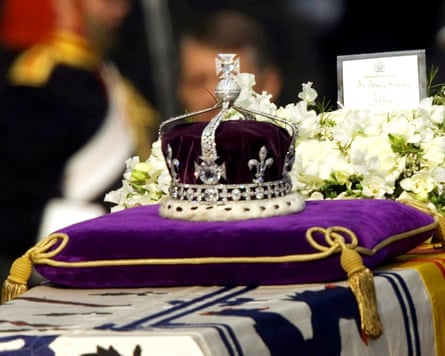
Provenance and ownership of antiquities is an issue that has long passed beyond academia. Among the most notorious examples is the Koh-i-Noor diamond, which was surrendered to Queen Victoria by the 10-year-old maharajah Duleep Singh in 1849 as part of the Treaty of Lahore, becoming part of the British crown jewels.
The legalities around establishing who owns ancient items can be complex.
“Most so-called source countries for antiquities now have state ownership laws in place to say that ancient objects discovered belong to the state,” said Simon Mackenzie, a professor of criminology at Victoria University of Wellington (Te Herenga Waka) in New Zealand. “So the act of discovery and looting is essentially a form of theft [from the government].”
“In many countries, including Iran, these laws had been built up over time andwere not retroactive, so legal arguments could be made about what date exactly the theft rule applied from, he said.
Despite the outrage, sprinkling some modern celebrity stardust on the treasures of millennia gone by is not always a bad thing. When bling attracts academic attention, a conversation about provenance can begin.
When Kim Kardashian was snapped posing in a gold dress next to a gilded Egyptian coffin at the Met Gala in 2018, for example, experts in antiquities trafficking took notice.
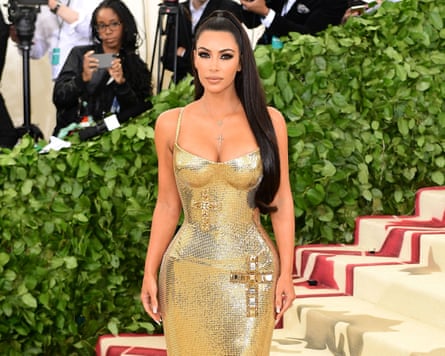
The Met museum had acquired the 2,100-year-old coffin of a priest called Nedjemankh for $4m and made it the star of an exhibition. However, experts soon revealed it had been excavated by thieves in 2011 and smuggled out of Egypt to Dubai and then Europe, where it was restored and given false documents.
The legal and ethical problems which came with Zendaya’s earrings may never be resolved, but there remains one conundrum that does not require a PhD to spot.
As Tsirogiannis pointed out, the film star’s jewellery put the spotlight on Iran while promoting a film that had nothing to do with ancient Persia.