3 months ago
72
3 months ago
72
I cover Canada for the Guardian, a country spanning six time zones and more than 40 million people, whose stories I get to tell for a living.
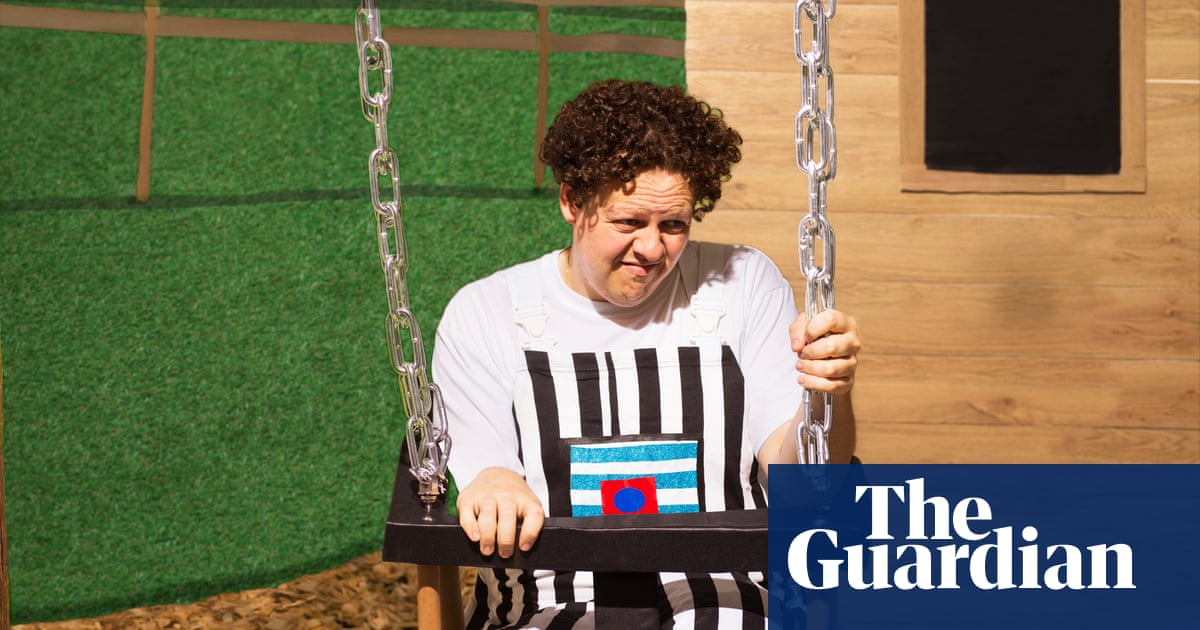
I’ve had a successful career but at times, I worry that my work suffers because I have Tourette syndrome (TS).
I almost always suggest phone interviews instead of in-person. I worry my twitching eyes and head shakes distract the very people I need to open up to me. I’ve tried hard to convince myself that the effects of TS are something mostly just I notice, that most people don’t care.
But during the Bafta awards last weekend, John Davidson, who has dedicated much of his life to expanding society’s understanding of TS, made several racist outbursts, including yelling the N-word as actors Delroy Lindo and Michael B Jordan presented a prize on stage. Davidson lives with a rare and particularly cruel form of the disorder called coprolalia – one that forces him to involuntarily shout the most obscene and offensive things imaginable.
In the days since, the bulk of the outrage has shifted to the organizers of the award show and the BBC for not editing the outburst. The scandal has deepened after reports producers cut one actor’s “Free Palestine” reference from the show and left in the racial slur. But the incident has also revived a debate over the nature of a neurological disorder, the extent to which it should be accommodated, and the right to feel comfortable in public spaces.
I was in my early 30s when I learned the fits of tics – head shakes, eye blinks, shoulder squeezes, sniffles and throat clearing – were Tourette syndrome. In my life prior to that, my tics had mostly caused frustration and embarrassment. I knew something felt wrong in my brain and while I didn’t have a name for it, I could at least point to a figure like Davidson and stereotypes of TS and think to myself: at least I don’t have that.
Because, despite the tireless public campaigning by figures like Davidson to expand society’s understanding of the disorder, the public imagination of the disorder is largely a one-dimensional caricature: uncontrollable swearing and insults.
I don’t have coprolalia, which only afflicts about 10% of those with TS. But much of the disorder’s more common symptoms still feels unsparing and merciless. The motor and vocal tics peak between the ages of 10 and 12, making it an affliction that is most outwardly visible at the cusp of adolescence, when children are hyperconscious of their awkward bodies.
In my teens, I wanted to be alone so I could shake and twitch freely. If I don’t give in to the urges, my head feels like the rattling lid on a stockpot of boiling water. Resisting is both emotionally draining and hurts physically. Days of straining and tensing my neck to suppress tics often leave me sore and frustrated. Even though I would later learn the tics are involuntary, the way I caved when the urges welled up felt like a failure of willpower.
As an act of self-preservation, I have declined most invitations to join conference panels or TV appearances to speak about my reporting work over concerns my tics will be the most noticeable part.
“Whom the gods would destroy, they first make mad,” the old line goes. It often feels those they would most sadistically punish, they bestow Tourette syndrome.
Georges Gilles de la Tourette, the French physician for whom the syndrome was named after, believed that a disorder of the mind reflected a weakness of virtue. The tics were a moral punishment handed down from parent to child. Which is why, as a father of two, I struggle with how to make sense of my own condition.
The debate in the days since the Baftas is only a reminder of that.
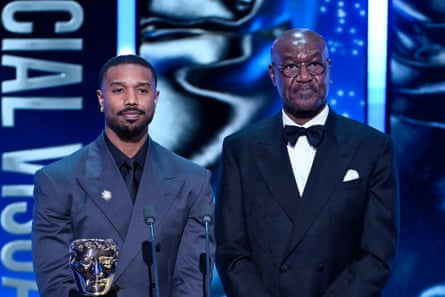
Oscar winner Jamie Foxx, who has worked alongside Jordan, was blunt in his assessment of Davidson’s involuntary tics: “Nah he meant that shit.”
Others laid out the way in which Black attenders – as well as anyone who watched it – was forced to have their wellbeing circumscribed by a decision to invite Davidson.
“I get that John Davidson has Tourette’s, but [the host] apologizing to the audience and not [Jordan] and Delroy Lindo is problematic. Per usual, Black folks just have to take being embarrassed and disrespected so that everyone else can feel comfortable,” wrote journalist Jemele Hill. “And sorry, Davidson shouldn’t be invited to these spaces because he’s had these outbursts before and it puts everyone in an awkward position. His inclusion shouldn’t be prioritized over the well-being of the other guests.”
Some people with TS share this view – one Canadian told the Guardian that Davidson “shouldn’t have stayed there and done this thing and caused the terrible offence, because it really is unacceptable”.
Others, including Black women with coprolalia and the actor who plays Davidson’s lawyer in the biopic I Swear, have offered support to him, but these sentiments capture what is already the reality for so many with the syndrome: those with more overtly visible forms already choose to not show up over fear of not just embarrassing others, but also themselves.
Actors and artists having to experience racist slurs and insubstantial apologies is gut-wrenching and unacceptable. At these awards, the movement to accept disability reached its limitations. The organisers faced a situation that resists an easy answer if society’s aim is towards inclusion. The anger at those who felt Davidson meant the racist insults is understandable. But to confront both the disgust of the slurs and the involuntary way in which they are shouted is to face the impossible choices the disorder forces us to consider.
The simple answer is to ask people like Davidson not to attend events where his condition will inflict pain and hurt.
And in a way, that is an extension of how the disorder has always been treated. People have been kicked out of gyms and suspended from schools for their inability to control fits of tics.
The temptation when living with the condition is to retreat inward as much as is possible. It is an approach that I also took for years. I avoid in-person interviewers as a reporter because, despite trying to appear empathetic, my head shaking back and forth makes me seem skeptical.
“Are you OK? Is something wrong?” are the questions I’m most often asked.
I learned I had Tourette syndrome around the time I became a father. And as I watch my two sons grow, two small humans pulsing with life, the embarrassment and frustration I felt as a young man with tics has been replaced by a fear that I won’t have done enough for them. I worry that my years spent trying to appear “normal” will have left a society hostile to those who aren’t. I don’t want to risk a world in which they feel unwelcome for something beyond their control.
The neurological disorder only appears around age seven, but my kids are two and four, and so I exist in a liminal state of not knowing whether they will inherit the condition.
The debate around the Baftas incident, and years of trying to hide the disorder, has forced me to confront questions about what I owe to those with Tourette’s.
Unlike Davidson and others with coprolalia, I don’t shout words. I don’t offend people. But with the neurological disorder comes a desire to hide.
There are no easy fixes, but I hope I can resist that urge. I am trying to make more public appearances that reveal my tics. And I hope that I can show my children, if they end up with a version of the syndrome, that the world is bigger than just yourself. All you can do is be kind and forgiving to others, and hope that you can do the same towards yourself.