 4 hours ago
10
4 hours ago
10
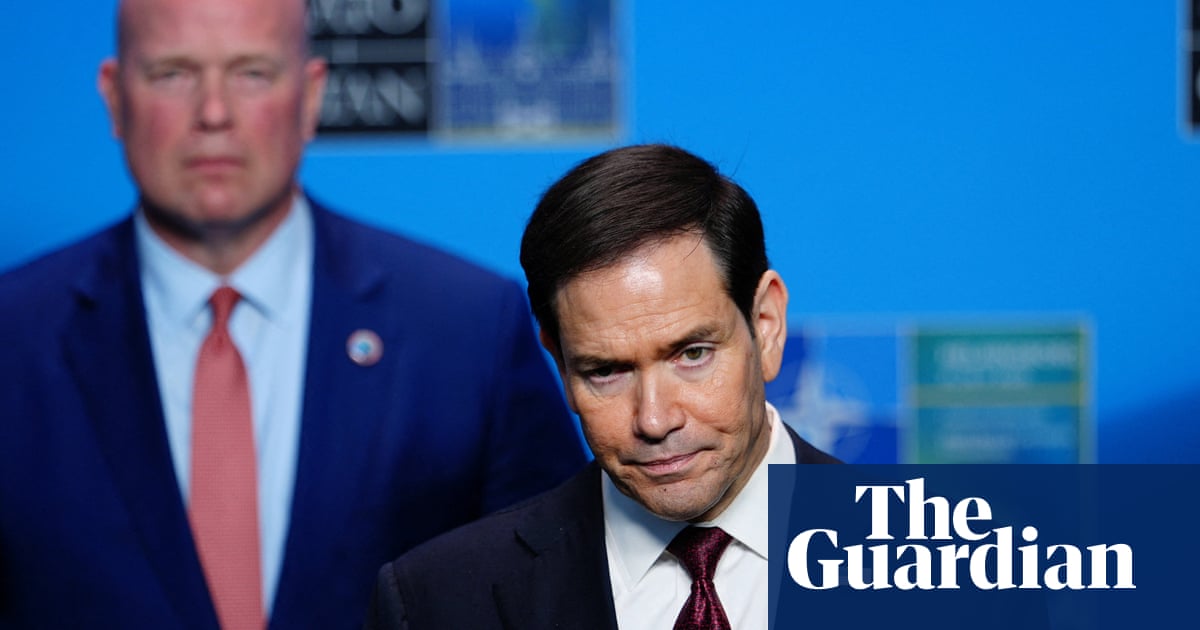
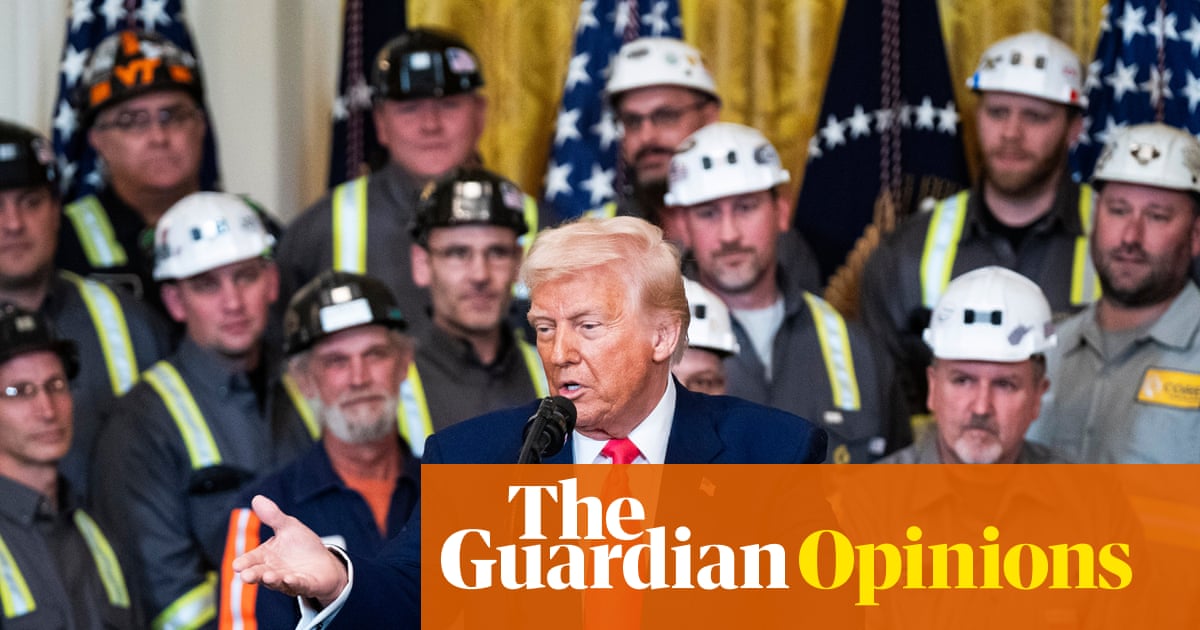
Marco Rubio’s moment has finally arrived. The outcome of the Trump administration’s efforts to exert “maximum pressure” on Cuba may topple the 67-year-old communist government in Havana and direct the future of the US’s sway over the western hemisphere.
For Rubio, the son of Cuban immigrants who serves as both secretary of state and national security adviser, the US campaign marks his ascendancy in an administration where he has established himself as a trusted aide to Donald Trump and manoeuvred that position to advance a key goal: Washington’s right to assert its authority across Latin America.
The campaign against Cuba’s government is the culmination of a personal pursuit spanning decades. In a video released on Cuban independence day this week, Rubio said in Spanish that a US embargo was not the reason for the country’s privations, telling Cubans that “currently, the only thing standing in the way of a better future are those who control your country”.
“All roads have been leading to Cuba for [Rubio],” said a person who has known Rubio since his time as a local politician in south Florida. “He has wanted this for a long time and now he finally has the authority [to reach that goal].”
The Trump administration has indicated that it is laying the groundwork to unseat Cuba’s government. “Other presidents have looked at this for 50, 60 years, doing something [about Cuba],” Trump told reporters in the Oval Office on Thursday. “And it looks like I’ll be the one that does it. So I would be happy to do it.”
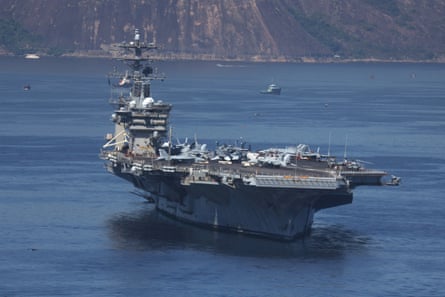
The US aircraft carrier Nimitz and its strike group arrived in the southern Caribbean Sea on Thursday as part of a military buildup meant as a show of force against the Cuban government. And the Trump administration has been building a case that Cuba represents a national security threat to the US. Axios, citing administration officials, reported that Cuba had acquired more than 300 military drones and was considering using them to attack a US base at Guantánamo Bay, US ships, or even targets in Florida.
Rubio has played centre-stage in that effort, telling reporters on Thursday that Cuba posed an imminent national security threat to the US. “[Havana] not only has weapons they’ve acquired from Russia and China, but they also host Russian and Chinese intelligence presence in their country,” he said on Thursday.
Democrats already angered by Trump’s use of force in Iran have questioned the leaked intelligence as a potential pretext for the US to launch yet another military intervention pushed by hawks in his administration.
Senator Chris Murphy, who serves on the foreign relations committee, said: “I do think that as Trump gets older and he spends his days sleeping and worrying only about his ballroom, he’s increasingly susceptible to dangerous people around him with dangerous agendas, and there is a crowd of Cuba hawks who have always wanted us to invade, who may think that they can take advantage of an increasingly checked out old man, and I just think we have to be prepared for that.”
Rubio’s rise comes as Trump shows increasing willingness to support military interventions abroad. The Trump administration initially promised an America First foreign policy opposed to the wars in the Middle East that had haunted previous administrations. But the operation in Venezuela to unseat Nicolás Maduro in January marked a turning point in that policy, and observers have argued that it has fuelled subsequent efforts to win quick victories abroad through the use of overwhelming force.
Rubio, meanwhile, has proved a savvy political operator – a neoconservative who tempered his outspoken views on issues including US support for Ukraine while steadily expanding his influence within the administration to shape foreign policy.
Matthew Kroenig, a vice-president of the Atlantic Council and a former foreign policy adviser to the Rubio 2016 presidential campaign, said: “The kind of foreign policy Trump is carrying out right now is not that different from what I would have expected from a Rubio 2016 [presidency]: tough on dictatorships, use of force in Iran to stop them from getting nuclear weapons.”
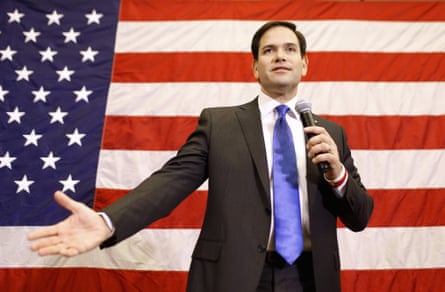
Rubio’s hardline views on Cuba coupled with the Trump administration’s readiness to use pressure and force abroad has provided a unique opportunity, allies argue.
“He is in a position of influence that no other Cuban-American has ever held,” said Adolfo Franco, a Republican political strategist who headed the US foreign assistance program to Cuba during the Bush administration and was a Trump surrogate during his campaign.
“If Cuba survives this period again, and the system continues, I think Secretary Rubio would see that as a colossal failure of his tenure secretary of state, because this is an opportunity, and an opportunity that no other Cuban-American in public service has had.”
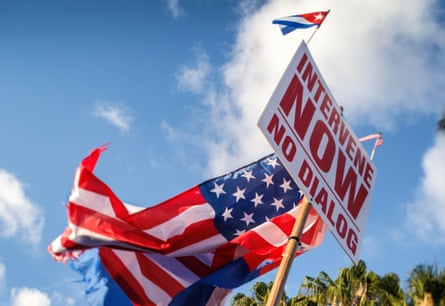
Rubio has allied with others in the administration including Stephen Miller, who has justified a muscular foreign policy in Latin America by claiming it will prevent migration and the flow of drugs into the US.
But Rubio is the driver of that policy on Cuba, refocusing US policy towards Latin America at a time when the administration is eager to divert attention from stalled negotiations with Iran over its nuclear programme and the strait of Hormuz.
“Fundamentally, Rubio is the believer [in the administration], and for a secretary of state and a national security adviser who has been basically cut out of every major foreign policy portfolio except for the Americas, this is his legacy,” said Juan Sebastián González, the national security council’s senior director for the Western Hemisphere under the Biden administration.
Pressure is mounting on the Cuban government as fuel reserves have run dry due primarily to the US embargo, leading to disruption to basic services and blackouts of up to 20 hours per day in parts of Havana. A US indictment of former Cuban leader Raul Castro has been compared to the case against Maduro that led to a surprise US raid on Venezuela. But even absent a military operation, the embargo and sanctions crippling the island may be enough to force Cuba’s communist government to cut a deal. “I think the risk right now is not really that the pressure fails, it is that the pressure succeeds, and there’s nothing to catch the fall here,” González added. “There’s no plan on what comes next.”
Joseph Gedeon contributed to reporting