 1 month ago
38
1 month ago
38
On 24 November 2021, at least 27 people died in the worst mass migrant Channel drowning on record. Two years later, the Cranston inquiry was set up to investigate the catastrophic event.
Many of those who lost their lives were young people. Four others missing since the mass drowning have never been found. Their bereaved parents and other immediate family members provided statements to the inquiry about their loved ones.
After the pen portraits were heard by the inquiry, Sir Ross Cranston, its chair, said: “It is important that we gave voice to those who are so deeply affected by the tragedy.”
Here is what the inquiry heard about the victims.
Kazhal Ahmed Khidir al-Jammoor, 46, and her children Hadiya Rizghar Hussein, 22, Mubin Rizghar Hussein, 16, and Hasti Rizghar Hussein, seven
Kazhal with her children Hadiya, Mubin and Hasti.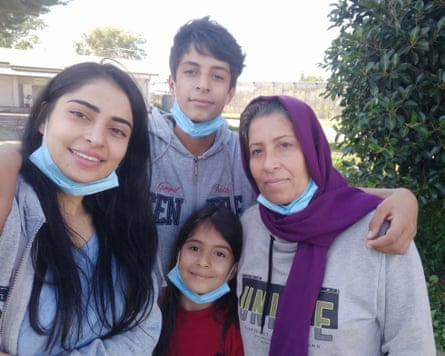
Hadiya and Mubin spoke “perfect English” and “wanted to follow their dreams in another country”, Kazhal’s husband, Rizghar Hussein, said in a statement to the inquiry. Hadiya dreamed of becoming a doctor. The family left Kurdistan, Iraq, in August 2021 and Rizghar’s last conversation was with Hadiya at 8pm GMT on 23 November 2021. “Sadness has overtaken my life,” he said. “I cannot see any happiness any more and I am just learning to accept that I will probably feel like this until I die.”
Rezhwan Yassin Hassan, 19
Rezhwan was a top student at his school, his father told the inquiry.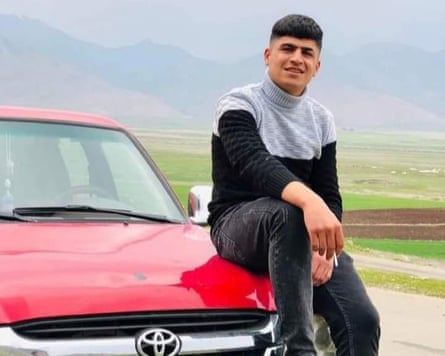
Rezhwan Yassin Hassan died just over a month after he left Kurdistan. In a statement, his father, Yassin Hassan Hamad, said: “Rezhwan was a kind and clever young man. He loved spending time with people and was always respectful. He was one of the top students at his school. His last contact with his son was at 6pm on 23 November, just hours before he died. “The pain will never go away because nothing can resolve the pain of losing a child.”
Mohammed Qader Awla, 18
Mohammed left a voicemail message for his father just before he died, the inquiry heard.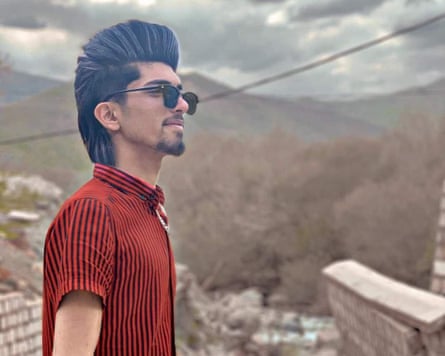
He left Kurdistan about two months before he died. In a statement to the inquiry, his father, Qader Awla, said: “He called me when he was on the boat. He left a voice message that he was OK and that he was almost there. He said he would hopefully call me later. The sorrow in my heart will be with me for the rest of my life until my dying day.”
Shakar Ali Pirot, 30
Shakar had a degree in geology but was unable to forge a career in Kurdistan, Iraq.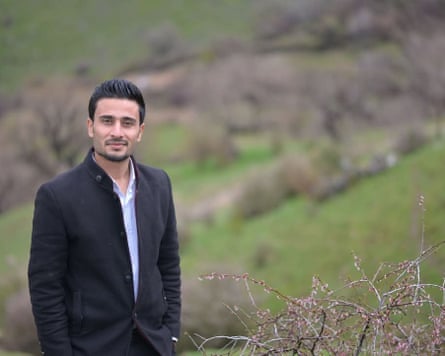
Shakar was “very calm” and a “good listener and a good person”, his brother, Shamal Ali Pirot, said in a statement. Shakar had graduated from the University of Sulaimani in Iraq with a degree in geology in 2014, but his attempts to get a job as a geologist in the oil industry failed. He left the Kurdistan region of Iraq in September 2021. He left a voice note for his family on the night of the mass drowning, saying: “If you do not hear from us, we have arrived in the UK.”
His brother added: “We are sad because if Shakar saw a future here in Kurdistan he would not have left.”
Serkawt Pirot Mohammed, 29
Serkawt, who liked playing football, was buried next to his friend Shakar.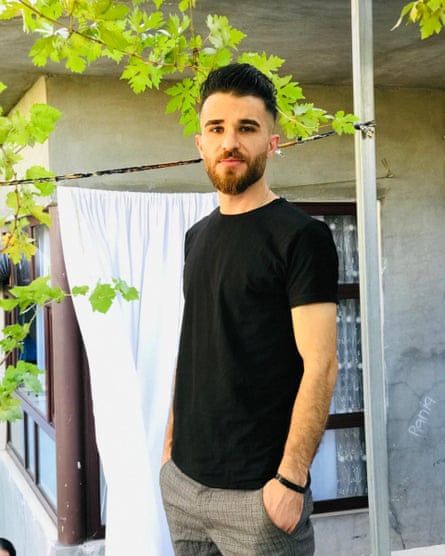
Serkawt was known by his nickname, Harem. In a statement to the inquiry, his brother, Sarhad Pirot Mohammed, said Serkawt was “like a friend to us all”. He said his brother was sporty and played a lot of football. He left Kurdistan on 17 September 2021. “My brother’s death is a loss we will never forget. It is the saddest thing that has ever happened to me. It breaks our hearts that Harem was not able to achieve his dream and be happy.”
He is buried next to his friend, Shakar.
Bryar Hamad Abdulrahman, 22
Bryar came from a life of poverty, his brother told the inquiry.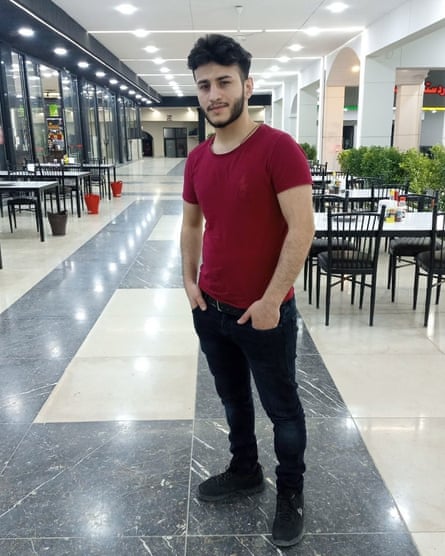
In a statement, his brother, Karim Hamad Abdulrahman, said the family was poor and, while at school, Bryar had to walk an hour to and from classes because he was unable to pay the bus fare. He left Kurdistan on 12 July 2021. “The whole family has been destroyed by this as we have lost an enormous part of our lives.”
Muslim Ismael Hamad, 19
Muslim’s father, Ismael Hamad Khudhur, said in a statement that his son was “a beautiful boy” who was sporty and a good swimmer. He said Muslim, who loved school and dreamed of becoming a doctor or an engineer, “touched many hearts in his short life”.Muslim’s bedroom has remained untouched since the day he left home, with his things exactly as he left them. “Muslim’s dreams, as well as mine, died with him that night in the Channel,” his father said.
Afrasia Ahmed Mohamed Akoi, 27
Afrasia was very smart, his father said.
He left Kurdistan on 26 October 2021. His father, Ahmed Mohammed Ahmed, said his son was “very smart”, adding: “For one month after my son’s body was returned to us, all I could do was cry.”
Hasan Mohamed Ali, 37
Hasan had served in the military before leaving Kurdistan, Iraq, his father said.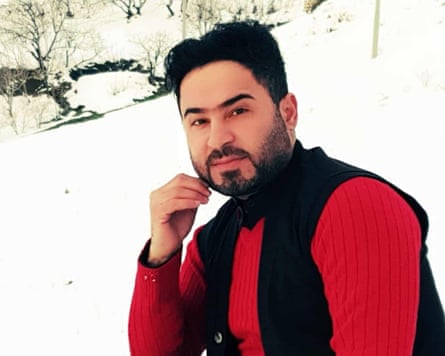
His father, Mohammed Ali Ismail Ali, said his son had been in the military for 20 years before leaving Kurdistan. “Hasan was a lovely man,” he said. “He was very gentle and kind spirited.
“I do not think we will ever recover from this loss. I am so devastated that this was able to happen, and no one came to rescue my son and the others who were on the boat with him.”
Maryam Noori Mohammedameen, 24
Maryam, pictured with her father, planned to travel to the UK to live with her fiance.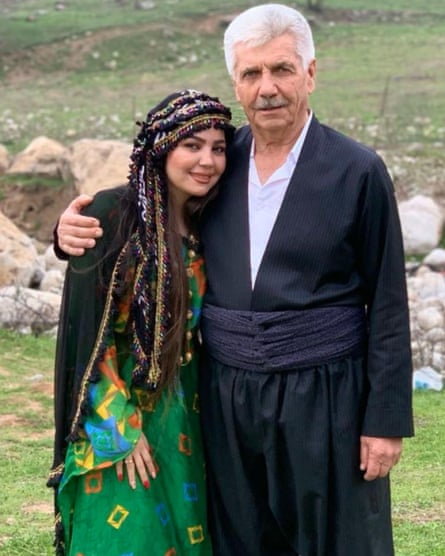
Her father, Noori Mohammedameen Hassan, said Maryam was “such a lovable person”.
In 2021, she met and then got engaged to her fiance. Maryam planned to travel to the UK so that she could live with him. Her phone was switched off a couple of days before she attempted to cross the Channel, so her family were unable to speak to her beforehand.
Mhabad Ali Ahmed, 32
Mhabad’s mother told the inquiry she was consumed by thoughts of her daughter waiting for help.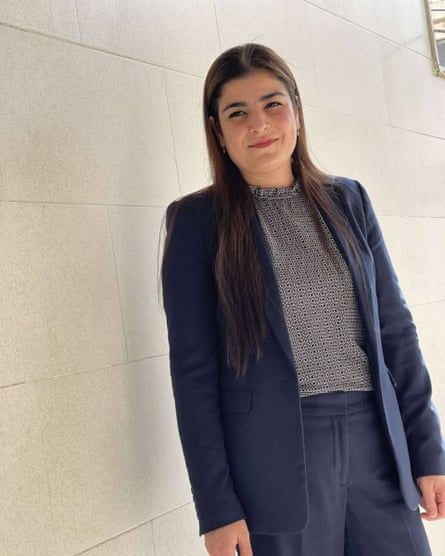
Mhabad’s mother, Bayan Hemedemin Saleh Ahmed, said in a statement to the inquiry: “She was warm and open-hearted and cared deeply about everyone around her. As an adult, Mhabad was a wonderful person; kind, patient, loving and extremely beautiful. People who met her would always comment on her calm, serene presence.” She added that Mhabad was a wonderful mother to her children.
“During the night of 23 to 24 November 2021, Mhabad sent me a photograph of herself on the boat. I did not see this photograph until later on in the day on 24 November. This was the first time I became aware that Mhabad had left France for the UK.
“I now understand that by the time I saw the photograph, Mhabad was likely already dead.
“In the weeks that followed, I would listen to old voice notes Mhabad sent in September over and over again, just so I could hear her voice. It breaks my heart to think of her alone and frightened waiting in ice-cold water for help which would never come.
“I am consumed by the thought that my precious daughter waited for help for so long that her organs stopped working because of the cold. I think about how her life could have been saved and how her children could have grown up with their mother.”
Mohammed Hussein Mohammedie, 19
In a statement to the inquiry, Mohammed’s father, Hussein Mohammedie, said his son’s body was returned to him on what would have been his 20th birthday. He described him as a “special child”, and said he always did what he was asked to do. He said he spoke to one of the two survivors of the mass drowning, a Kurdish man, shortly after it happened.
“The survivor said that people in the water started taking their lifejackets off. Because of the cold and the pain, they wanted to sink and die. But not my son, he wanted to live. I was told by the survivor that my son was the last one alive before they rescued the survivor. He told me that if they had rescued him half an hour sooner then my son would be alive. If that’s right, what the survivor told me, this I cannot bear and can never forgive.”
Sirwan Alipour, 23
Sirwan was a mechanic who was very funny and had a lot of friends, his brother said.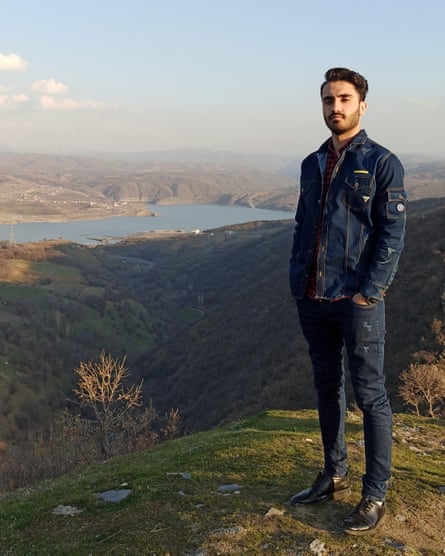
Sirwan left Sardasht, Iran, on 11 September 2021. His brother Saman Alipour said in a statement that he loved football and had a job as a mechanic.
“He was very funny, always making jokes and he had a lot of friends,” he said. “Nothing we can do will bring my brother back. But what I can do now is ask people to look at migrants seeking a better life as humans.”
Fikiru Shiferaw Tekalegn, 43
Fikiru’s wife, Emebet Kefyalew, said in her statement: “He said he had to leave in October 2021 because his life was at risk. I missed a call from him later that night and then received a voice note at 12.12am Ethiopian time, saying: ‘We have already boarded the boat. We are on the way. I will turn off my phone now. Goodnight, I will call you tomorrow morning.’
“My daughter and Fikiru were best friends. She was a real daddy’s girl. They would go everywhere together. She still remembers so much about him and is always telling stories about the things that they used to do together.
“Fikiru was such a humble and kind person. He was a people pleaser and he had a kind heart. He loved his family so much and he would never have left us if he had not felt threatened in Ethiopia.
“I hope those who are responsible will understand how serious this is and understand that the people on that boat were humans as much as anyone else.”
Niyat Ferede Yeshiwendim, 22
Niyat grew up with her family in the Tigray region of Ethiopia. Her mother, Freweyni Hayiemariam Gitet, said she studied to be a pharmacist at Sheba University College in Mekelle and hoped to establish her own pharmacy after graduating. Two years into her studies, war started between the Ethiopian federal government and Tigray People’s Liberation Front. Due to the cutting off of internet and other communications during the conflict, her family were not immediately aware that Niyat had travelled to France. Niyat was buried in Lille, but her family want to bring her body back to Tigray.
“We were not able to repatriate her body at the time because of the war in Tigray and we decided to have her laid to rest in France. It is too much to bear that we lost our daughter because she was trying to find somewhere safe. We lost her because of this war. She tried to escape so she could survive.”
Meron Hailu Gebrehiwet, 25
Meron launched a successful juice bar with her sister before war broke out in the region.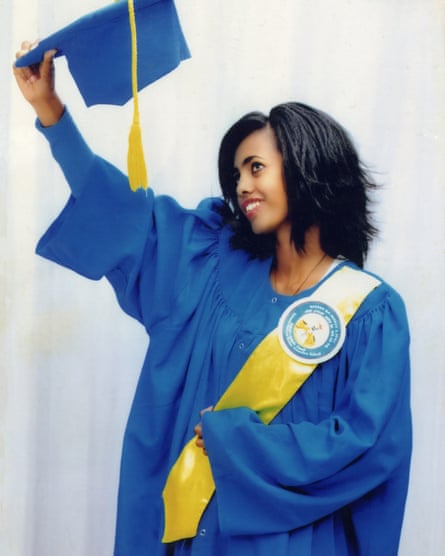
Her brother Tesfahun Hailu Gebrehiwet said that before the Tigray conflict started, Meron was living a happy life. “She was a beautiful woman,” he said.
She studied computer science at Addis Ababa University, but left in her third year without graduating because she wanted to set up a business.
She and her sister opened a juice bar, serving fresh fruit juice and milkshakes. The business was successful until the Tigray conflict started in 2020.
“We saw total destruction of buildings, homes and lives completely destroyed. The whole region was a battlefield with constant gunfire, overturned cars, crying and bullets,” said Tesfahun. Meron left Ethiopia in October 2021.
She is buried next to Niyat in Lille. “It is our wish that her body is returned to Ethiopia,” said Tesfahun.
Halima Mohammed Shikh, 33
Halima left Somalia in 2019 due to political instability and violence, her brother said.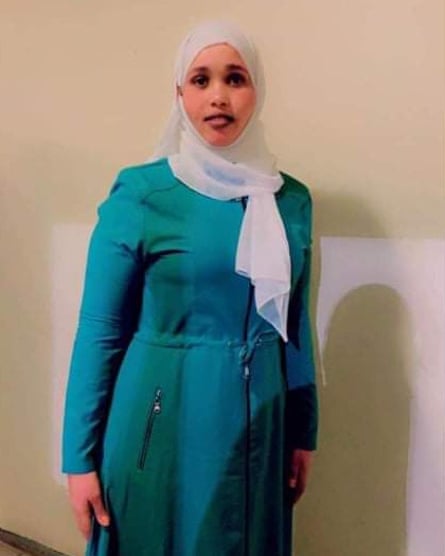
In a statement to the inquiry, her brother Abdullahi Mohamud Hassan said that Halima, who had three children, left the Somali capital, Mogadishu, in 2019 due to political instability and violence. He said that his cousin, Ali Areef, spoke to the Somali survivor Issa Mohamed Omar, who told him that he was with Halima in the water until she died and that he heard her shouting: “Help me, I don’t want to die.” She was not able to swim.
He said: “Halima was a good person with a good character. She was loved by those around her and was kind to everyone.” He added that although he can legally take a ferry across the Channel from France to UK, he will never do so again. “It makes me feel sick to think about crossing the Channel in a ferry where others, including a member of my family, lost their lives because there was no other way to cross.”
Relatives for these people did not provide statements to the inquiry
Husain Tanha, 24
Mohammed Naeem Mayar, 46
Shahwali Kochy, 26
Didar Ahmad, 27
Mohamed Ali Mohamed Hassan Elsaey, 20
Le Van Hau, 29, who is believed to have been one of the passengers
Pshtiwan Rasul Farkha Hussein, 18
Pshtiwan owned small business selling vegetables by the age of 15, his father said.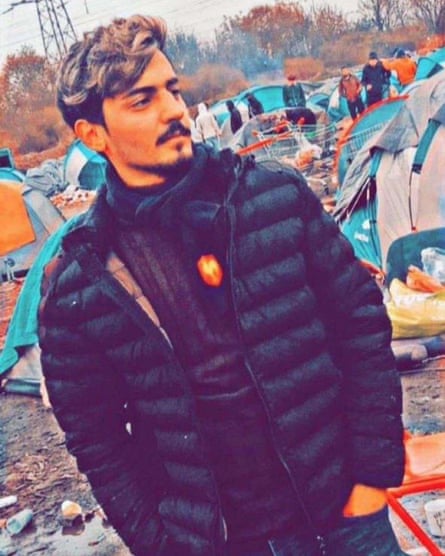
Pshtiwan’s father, Rasul Farkha Hussein, made a statement to the inquiry explaining that his son left school aged nine to try to earn money to support the family and in particular to pay for the surgery his sister needed due to a heart defect. By the age of 15, he owned small business selling vegetables.
“If a young family was struggling, he would bring them milk and fruit to help them. It brought him peace to help others.” He added: “Sometimes I wish we had all died from hunger rather than let Pshtiwan leave.”
He believes that his son is still alive.
“He was in cold water surrounded by dead people for so long it may be the case that he has lost his mind and doesn’t know that he should call his parents. If someone finds him and he contacts us, our lives would be saved and filled with joy. I am hoping the Cranston inquiry will find Pshtiwan because I know he is alive somewhere. Only when we hear his voice again will we find peace.”
Twana Mamand Mohammed, 18
Twana’s body was never recovered.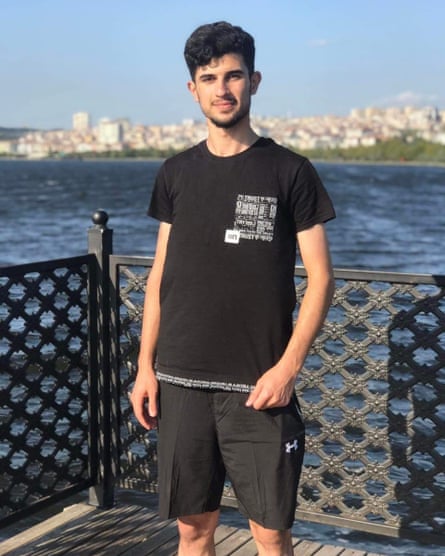
His older brother Zana Mamand Mohammed said Twana was slim, tall and energetic and spent most of his time exercising, going to the gym, playing football and practising Taekwondo. He was a black belt and “the best performer in Hajiawa”, his town in Kurdistan, Iraq.
He spoke to Twana when he was on the boat: “Twana told me there were no problems, that I should go to sleep because it was late in Kurdistan. Neither the British nor the French authorities ever contacted me about finding Twana’s body. I desperately wish there was a way to find Twana’s body. This would at least bring some peace to my mother, my father my siblings and myself after this tragedy.”
Zanyar Mustafa Mina, 20
Zanyar’s father, Mustafa Mina Nabi, said in a statement to the inquiry that his son was a kind person who always wanted to help people and that he loved football and swimming.
“Zanyar sent me a message at 8.34pm Iraqi time saying: ‘I am leaving now.’ I never heard from him again.”
He said he would like to come to France or England to search for Zanyar. “Sometimes I still believe he could be in a hospital or a prison somewhere.”
“I believe the pain for us is greater than for those who have had the bodies of their loved ones returned, as at least they have been able to provide their loved ones with a resting place and are able to have some sort of closure.”
Gomaa Gaber Mohamed Ahmed Nada, 42
Gomaa’s relatives did not provide a statement to the inquiry.