1 month ago
51
1 month ago
51
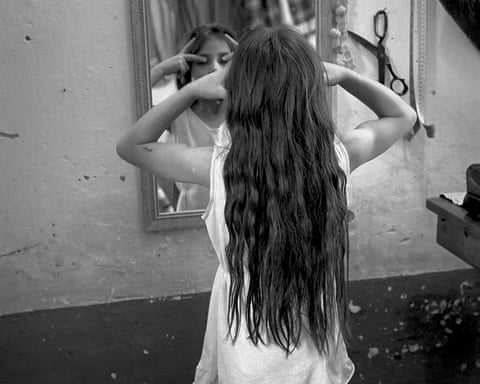
Wendy Ewald’s novel Magic Eyes is interspersed with photographs of the children she taught in a village outside Bogotá – and the stunning pictures she taught them to take
El espejo (The mirror) by Wendy Ewald. Photograph: Wendy Ewald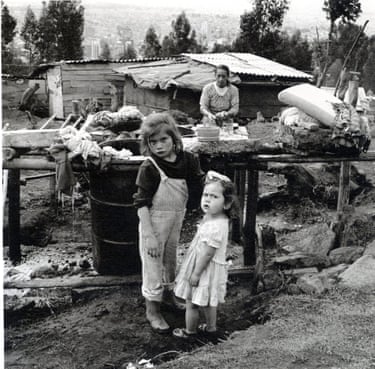
El Lavadero Comunal (The Communal Wash Area) by Wendy Ewald
Magic Eyes is a true-life novel about magic, violence and the powers of seeing. Told through the voices of Alicia Vásquez and her family, it is a vivid memoir of love and revenge, survival and responsibility. Interweaving the story are remarkable photographs by Wendy Ewald and the children she taught in the Colombian village where she lived between 1982 and 1984. Magic Eyes: Scenes from an Andean Girlhood by Wendy Ewald, from stories told by Alicia and Maria Vásquez, is published by Mack books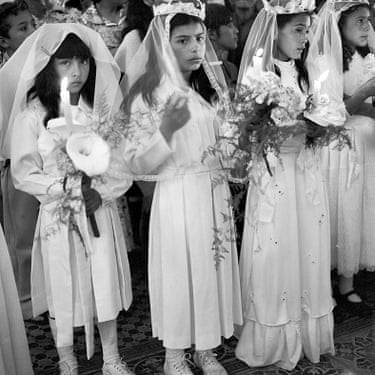
Primera Comunión (First Communion) by Wendy Ewald
Through these compelling images we witness the passage of childhood as both unique and universal. Magic Eyes is richly evocative – a personal and social history of Bogotá and rural Colombia, infused with a reverence for the truth and power of storytelling. ‘This ceremony took place in Iglesia Catedral, a gothic-style church constructed in Ráquira in 1600,’ says Ewald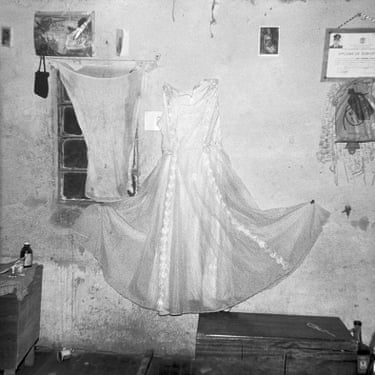
Mi Vestido de Primera Comunión Colgado de la Pared (My First Communion Dress Hanging on the Wall) by Dalida Reyes
The photographs here were taken by Wendy Ewald throughout Colombia with a two-and-a-quarter format camera between 1982 and 1988 and by her fifth grade students in Ráquira, Colombia, with #126 Kodak Instamatic cameras, between 1982 and 1983. This image was taken by a student. The corners of the dress were stuck to the wall with chewing gum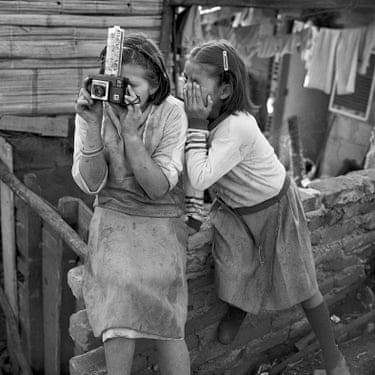
Dos Niñas Aprendiendo a Usar Una Cámara (Two Girls Learning to Use a Camera) by Wendy Ewald
Wendy Ewald: ‘A girl I befriended called Luz Marina Bautista tried to confront the impossible situations she was in and break out of poverty. As an adult, she understood that she must use it to fight against the powers that she saw lined up against her – the Catholic church and the government, which kept her family and one million people in Bogota homeless. The child on the right side of the image covered her eye to look through the camera’s viewfinder’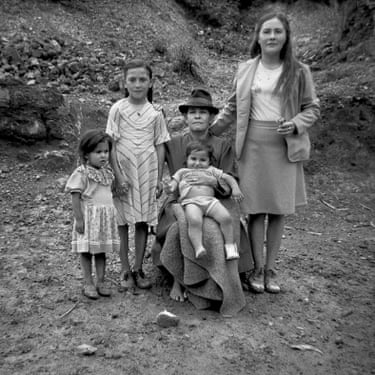
La Familia Reunida en Ráquira (The Family Reunited in Ráquira) by Juan Arturo Villanueva
‘This [book] is a collaboration of voices. The children of Ráquira taught me about their own history. They brought their exposed film to school and developed it in the little darkroom I built in a room of a colonial house in the village. During all these months they had never damaged a roll of film; few experienced photographers could say the same. Being careful came naturally to the children. They had been making pots since they were five years old’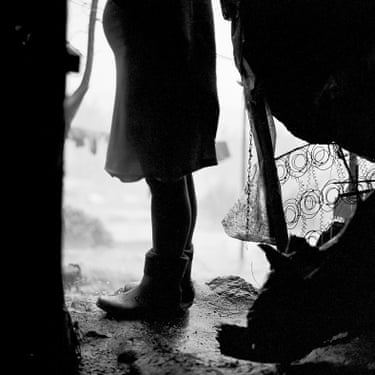
Mujer Embarazada Bajo la Lluvia Afuera de Su Casa (Pregnant Woman Standing in the Rain Outside Her Home) by Wendy Ewald
Wendy Ewald, speaking in 1992, wrote: ‘In 1982 I settled in Ráquira, a small village of potters in a cool desert valley on the western spine of the Colombian Andes. For nearly two years I photographed there and in other parts of Colombia while teaching in a tiny village classroom’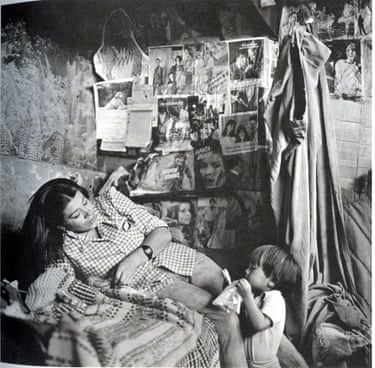
Una Madre y Su Hijo en Su Casa de Tela Asfáltica (A Mother and Her Son in Their Tar Paper House) by Wendy Ewald
‘In Ráquira I had become fascinated with the rugged world of the Colombian countryside, deeply rooted in magic’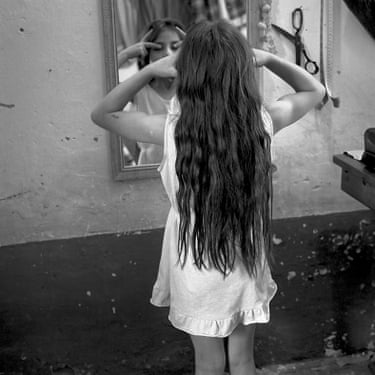
El Espejo (The Mirror) by Wendy Ewald
‘La Mirada de Miriam is a film that I made with the collective Cine Mujer. It’s a mixture of dramatised and documentary sequences. This girl was acting when I photographed her. She played the role of Luz Marina. When I returned to Colombia in late 2025, I reunited with Miriam, whose story is told in Magic Eyes’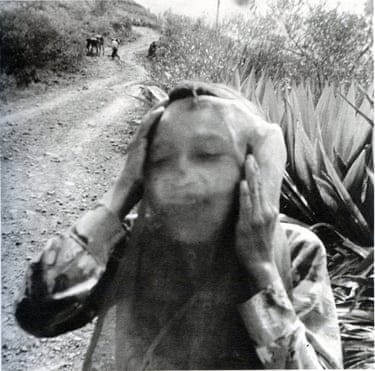
El Dormilón (The Sleepyhead) by Luis Arturo González
‘My fifth graders were the oldest students in the primary school and were in their final year of education. Most of them lived in mountains above the town and rose before dawn to tend the crops and cattle that would occupy them for the rest of their lives. I shared what might be called the last year of their childhood’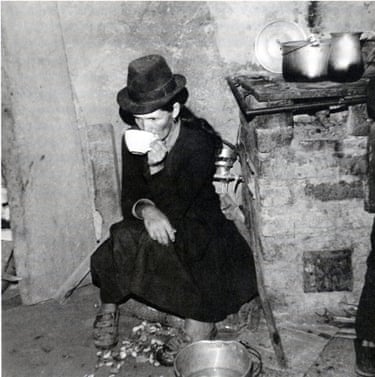
Mi Mamá Tomando Café en la Cocina Después Deshacer la Comida (My Mother Drinking Coffee in the Kitchen After She Made Dinner) by Alirio Casas
‘The children learned to shoot, develop and print their own photographs. I lent them Polaroid and Instamatic cameras and gave them assignments to photograph and write about themselves, their families, their animals and their fantasies’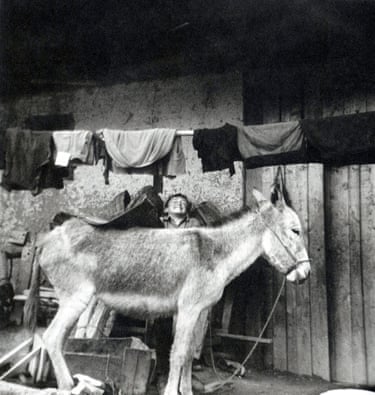
Uriel Ensillando el Burro (Uriel Saddling the Donkey) by Fanny Valero
‘At first they had difficulties with the camera. Instead of framing someone’s face, they often photographed his knees or feet. There were no windows in the mountain huts where they slept. And they had rarely seen television, so the idea of “framing” was utterly foreign to them: they had never seen their surroundings through anything’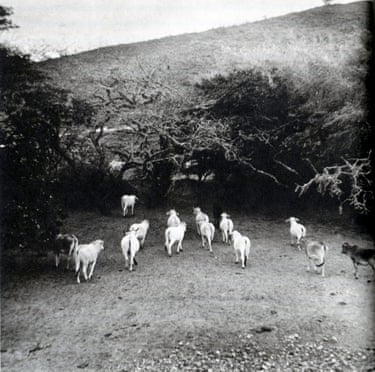
El Ganado Yendo a Beber al Río (The Cattle Going to Drink from the River) by Estella Rosa
‘To fix the problem I asked them to carry a piece of paper with a hole in it and look through it at everything they came upon. Within a couple of weeks the problem of using the viewfinder was solved’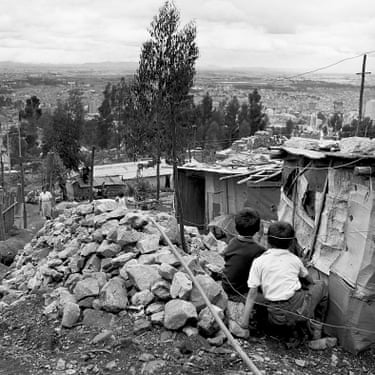
Construcción De una Nueva Casa (Building a New House) by Wendy Ewald
‘A family looking out over the barrio Luis Alberto Vega towards Bogotá. The barrio was named after a man killed by police in a shooting on Easter Sunday, 1966’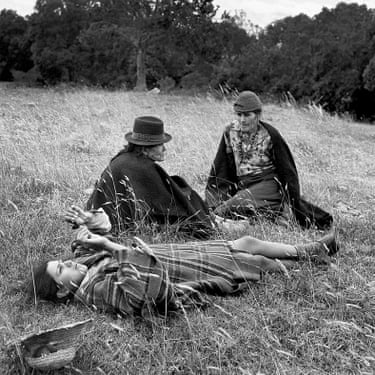
Luz Marina Con Su Mamá y Una Vecina (Luz Marina With Her Mother and a Neighbour) by Wendy Ewald
‘When I visited Colombia in November 2025, I reunited with Luz Marina. She is now in her fifties and has become a champion runner’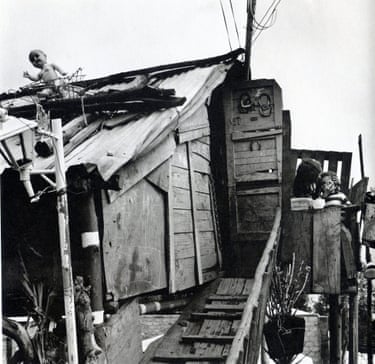
Jovencita Cuidando un Niño Afuera de Su Casa (Young Girl Caring for a Child Outside Her House) by Wendy Ewald
‘Luz Marina still lives in Bogotá with her husband and three children, one of whom is an experimental musician’Explore more on these topics