3 months ago
81
3 months ago
81
I interviewed Jemele Hill for my podcast The Rematch and asked for her reaction to the WNBA’s landmark new collective bargaining agreement, a seven-year deal that includes a salary cap increase to $7m (up from $1.5m in 2025), maximum salaries approaching $1.4m, 20% revenue sharing, expanded rosters, charter flights and more.
Hill didn’t mince words.
“Unfortunately, there’s still a very prevalent attitude when it comes to women’s sports that, ‘Hey sweetie, you should just be happy that somebody is letting you put on a uniform and bounce a ball,’” she said.
I’m a Girl Dad. My daughters, Imani and Sierra, both play volleyball at Bishop McNamara High School in Prince George’s County, Maryland, and for Maryland Juniors. They followed these negotiations closely – for reasons that extend well beyond the game.
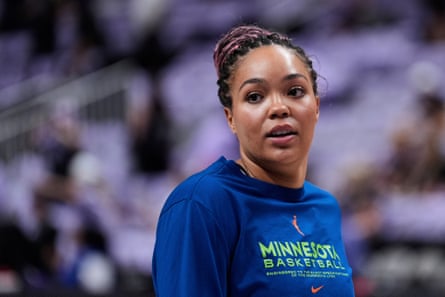
One morning on the school run a few months ago, we had SiriusXM on, as we often do. The topic was Minnesota Lynx star and WNBPA vice-president Napheesa Collier, who had publicly criticized what she called a “dangerous and dismissive culture at the top of the WNBA”.
She accused the league of negligence – ignoring injuries, brushing off officiating concerns and failing to treat players with basic respect. She also described a meeting with commissioner Cathy Engelbert in which she raised issues including poor officiating and rookie salaries for players like Caitlin Clark, Angel Reese and Paige Bueckers, who are generating enormous revenue for the league.
Collier said Engelbert told players they should be “on their knees thanking their lucky stars” for the media rights deal and that Clark should be “grateful” for the WNBA platform when it comes to off-court earnings. (Engelbert later disputed that account.)
Collier then said that the WNBA has the worst leadership in the world. Needless to say, those statements got the entire carpool’s attention.
Then came the reaction. A clip of right-wing sports pundit Dan Dakich ripping Collier to shreds for having the “audacity” to say what she said. Frank Isola agreeing with everything Dakich said. The tone was familiar: Who does she think she is? That was a private conversation. WNBA players should be grateful.
That’s when the carpool came alive.
Addy, our starting defensive specialist, said: “Does he not know Napheesa Collier is probably second only to A’ja Wilson? He’s talking about her like she’s a little girl.”
Imani: “He thinks all WNBA players should be crawling on their knees thankful? Who is this guy? What decade are they in? This is 2026, not the 1950s.”
Sierra: “They act like women don’t deserve anything. Basically: shut up and dribble and be thankful? I’m glad she called them out. So that doesn’t change once we grow up, huh?”
I turned the volume down and asked if they encounter that kind of thinking as female athletes.
All three said: Yes! All the time!
They told stories: teams forced to practice outside so the boys can have the gym; weight-room slots at 5am or late at night because football comes first; decade-old uniforms for girls while boys get new ones every year. And it’s all treated as normal.
Sierra then brought up Swagger, the Apple TV show we watch together. In one scene, a McDonald’s All-American basketball player named Crystal (played by Quvenzhané Wallis) is pushed off the court during a workout by a group of boys. Instead of leaving, she goes live on her phone and calls them out. They back off.
“That’s why we have to stand up for ourselves,” Sierra said. “Like the WNBA players are.”
So when people ask why I speak out – why I call out commentators like Dakich, Stephen A Smith or Isola – that’s why.
Throughout these negotiations, a familiar argument kept coming up: the WNBA doesn’t generate what the NBA does in revenue, so it shouldn’t expect the same treatment. But does that mean players should be treated as second-class citizens?
Before this deal, WNBA players received roughly 9% of league revenue. For context: NBA players receive 49-51% of basketball-related income; NFL players around 62%; NHL players 50%; MLB players about 48%.
Nine per cent. That wasn’t just inequitable. It was disrespectful.
As Hill told me: “Women in sports have had to have this fight for dignity and respect from the day women began playing sports.”
And every female athlete will tell you the same thing: the resources, the respect, the opportunities are not equal. That reflects a broader reality. According to the 2025 gender pay gap report, women in the US working full-time earn roughly 82 to 85 cents for every dollar earned by men. That gap persists across most industries.
Let me be clear: no WNBA player is asking to be paid like NBA players. But it is outrageous that any professional athlete has had to take a second job to make ends meet.
For years, WNBA players have gone overseas in the offseason just to supplement their income. Again, no one is expecting them to make LeBron James’ salary, but they should be able to support themselves and their families. This isn’t the 1950s. It’s 2026. That shouldn’t be the reality for any professional athlete.
The causes of the gender pay gap are structural. They are rooted in unequal opportunities, expectations and norms that shape women’s careers long before they ever bargain with an employer over wages.
Which is why this moment matters. The women of the WNBA understood their value. They organized. They advocated. And they secured a deal that will change the lives of the players in their league forever. That act of solidarity sent a message – not just to my daughters’ carpool, but to young girls everywhere.
My oldest daughter put it best: “As a Black woman in sports, seeing players in the WNBA demand fair pay reminds me that I have to stand up for my worth. Because if I don’t, society will keep undervaluing me no matter how hard I work.”
Imani, I couldn’t agree more.