 2 hours ago
11
2 hours ago
11
For years, his bewhiskered face stared down from propaganda billboards glorifying the supposedly revolutionary rule of a dictator who styled himself as “the protector of the people”.
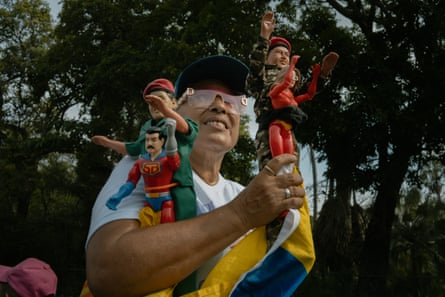
The spin-doctored adoration was such that factories churned out plastic action figures exalting Nicolás Maduro as an “indestructible” and “iron-fisted” caped crusader nicknamed “Super Moustache”.
In a coastal town near Caracas, authorities even branded dustbins, garbage trucks and overpasses with sinister black silhouettes of the autocrat’s stache.
Five months after US special forces toppled Maduro, his heavily curated cult of personality is collapsing, as the deposed president is being airbrushed out of Venezuelan history by former allies who seem desperate to move on.
Giant images of Maduro and his also incarcerated wife, Cilia Flores, still adorn the capital’s main arteries, some stamped with the hashtag #WeWantThemBackNow. A count-up clock has been erected in the historic centre, logging the number of days since the couple’s kidnapping.
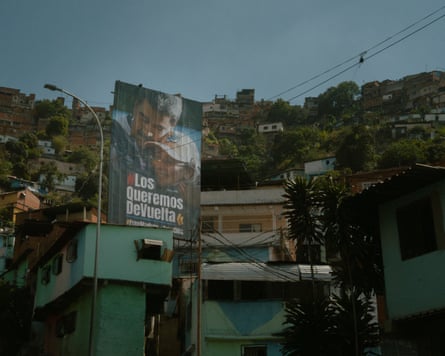
In the streets around Miraflores, the presidential palace that the autocrat once occupied, pro-regime graffiti artists have scrawled declarations of support on to newspaper stands. “Que viva Maduro, carajo!” [Long live Maduro, damn it!] reads one. Another declares: “We love Maduro.”
But such affection seems in increasingly short supply. Across the country, billboards and paintings of Venezuela’s ousted leader are quietly being dismantled or erased, or simply left quietly to rot or be consumed by the undergrowth.
In one sprawling housing estate in downtown Caracas – an area long considered a pro-regime stomping ground – white paint has been used to cover murals paying tribute to a politician most remembered for leading Venezuela into dictatorship and one of the worst peacetime economic collapses in history.
“I was stunned: I was like: ‘What?!’” said one local, describing the moment she realised an order had gone out to whitewash Maduro murals outside her local bank and pharmacy. “They’ve painted over all of them.”
On the highway to Guatire, a city east of Caracas, Maduro’s name had faded almost to the point of invisibility on a hoarding from the 2024 election which he is widely believed to have stolen.
Farther east in a town called Caucagua, a dissenter appeared to have smeared cement over a portrait of Maduro in a public playground, obscuring parts of the dictator’s face.
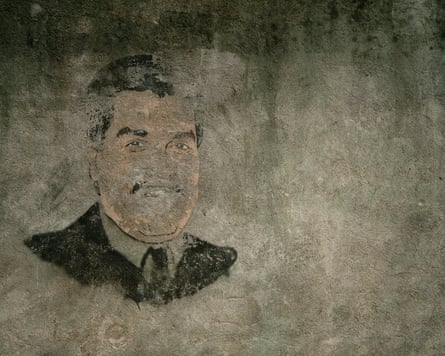
A stencil graffiti artist had sprayed an image of Maduro on to a nearby wall alongside one of his quotes from a recent court hearing in New York. “I’m a decent man and I’m still the president of my country,” it said, unconvincingly.
The disappearance of pro-Maduro propaganda is mirrored in the public statements of those who claimed power after his abduction on 3 January this year.
An analysis by Venezuelan news outlet TalCual found that the interim leader, Delcy Rodríguez – Maduro’s former vice-president and ally – mentioned his name 86 times in the immediate aftermath of the US raid. By March, the number of monthly mentions had fallen to just seven – a drop of more than 90%. “What is left of a leader when their name is no longer spoken?” TalCual wondered.
Phil Gunson, a Caracas-based political commentator, believed those figures accurately reflected the extent of Maduro’s defenestration.
“It’s pretty sad actually when you’ve styled yourself as this great revolutionary leader and the US kidnaps you and [a few] months later nobody can even remember your name,” Gunson said, adding sarcastically: “I mean, Maduro? Yeah, it rings a bell.”
Diplomats say Venezuelan officials now rarely allude to their former boss.
Gunson believed Maduro’s disappearance from official discourse reflected how he had alienated not only regime opponents, but his own movement too, during a disastrous stint in power when the economy shrank by 70% and millions of people fled abroad. “Maduro just took them – from 2013 onwards – [into] a complete cul-de-sac … So my sense is that the majority of people on the Chavista side wanted to see the back of Maduro,” he said.
Compounding public fury over the economic collapse was widespread annoyance at the dictator’s frivolous on-screen antics – particularly his constant displays of dancing and crooning on state TV. “Maduro was so tone-deaf. Maduro’s singing and dancing stuff … was really irritating to a lot of people. I think even on the Chavista side [people thought] … ‘Get rid of this guy!’” Gunson said.
Donald Trump is also said to have been incensed by Maduro’s dance moves.
Flickers of support for Maduro can still be found on Venezuela’s streets. At a recent pro-regime rally outside the botanical gardens in Caracas, one female demonstrator clutched a Superman-style action figurine of Maduro and a Wonder Woman-esque model of a bespectacled Flores, although she refused to give her name or explain her fondness for the former first couple.
Another marcher, Wendell Gouveia, wore a red T-shirt featuring a pop art-style picture of Maduro’s face. “Nobody paid me or pressured me into coming here,” Gouveia said, accusing the “bumbling imbecile” Trump of committing a flagrant injustice by abducting his president.
But apart from those dolls and Gouveia’s jersey, there was scant sign of Maduro’s name or face. Most of the thousands of protesters came wearing white, rather than the red traditionally associated with the Chavista movement.
On the motorway linking Caracas to the international airport, authorities had painted a bright yellow-and-blue mural on to the roadside demanding the ex-president’s release: “Free Maduro and Cilia.” In the weeks since the fresco was created, a saboteur had splashed it with black paint.