 2 months ago
112
2 months ago
112
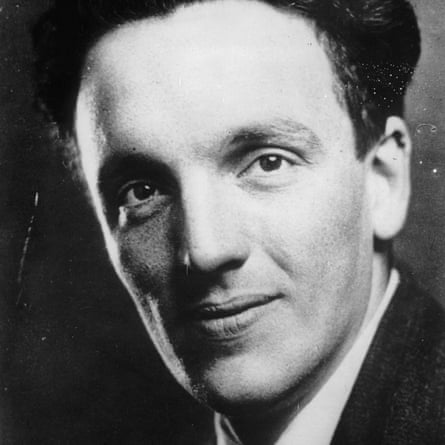
The new Peaky Blinders film, The Immortal Man, offers us a character, John Beckett, who is a British Nazi. One of the two founders of Britain’s first Nazi party in 1937, alongside William Joyce and John Angus Macnab, was indeed a man named John Beckett. He had been director of publications for Oswald Mosley’s British Union of Fascists, but that year he fell out with Mosley. I’m Beckett’s biographer. I’m also his son.
So I can tell you authoritatively that he did not bear the smallest resemblance to the Peaky Blinders character. The film Beckett is a villain out of central casting who enjoys killing people, and who says in November 1940 (the year the film is set): “I need to know that you are willing to take part in an act of treason that will decide this war for Germany.”
The real John Beckett would never have said that, and had neither the will nor the skill to invent a complicated scheme to destroy the British economy, as the Peaky Blinders character does. In any case, by November 1940, he was safely locked up in Brixton prison under a wartime regulation that suspended habeas corpus.
Does it matter? In itself, I suppose it doesn’t matter that much. But it’s part of a trend for popular films to create populist myths about the second world war – myths that will do us real harm as we confront the new face of fascism in 2026.
The 2017 film Darkest Hour was rightly mocked for a ludicrous scene in which, in 1940, Winston Churchill goes on a London tube train. Here he meets the authentic voice of the British working man, who bravely tells him: we can take it, Mr Churchill sir, bulldog spirit, all that. If Churchill had had some sort of brainstorm and gone into the underground, the Mass Observation data shows that he would have heard a rather less heroic message: resentment at what was felt to be poor government organisation, the disruption of normal life, and a certain amount of defeatism.
Much more seriously, the film portrays Churchill as standing alone in 1940 against seeking peace with Hitler, sustained only by King George VI. The king had nothing to do with it. Churchill’s crucial support came from the leadership of the Labour party: Clement Attlee and his deputy, Arthur Greenwood.
The film Nuremberg (2025) offers us a moment full of dramatic irony. Julius Streicher, editor of the rabidly antisemitic Der Stürmer, breaks down on the morning of his execution, screams and cries, and is calmed in his last moments by a British soldier with fluent German who, as we know but Streicher does not, is a Jew with relatives killed in the Holocaust.
So we have the affecting image of a Jew easing the Jew-baiter’s final journey to the scaffold. The trouble is, it’s rubbish. The soldier never existed. Streicher never broke down. He walked to the scaffold, shouted “Heil Hitler”, attacked Jews, and was dropped into eternity.
The King’s Speech (2010), about the stammering George VI’s speech therapist, offers a simplistic view of the abdication crisis, with the goodies in white hats who want King Edward VIII to abdicate, and the baddies in black hats who want him to stay.
Awkwardly, Churchill was among those who wanted the king to stay. Four days before the king abdicated, Churchill tried to tell the House of Commons that abdication would irrevocably damage the British monarchy at a time when it needed its strength most. He was shouted down.
The film-makers’ solution is bold, and stunning in its simplicity. They introduce Churchill only in a group congratulating George VI, in such a way as to make it look as though he was among those who wanted the king to abdicate.
John Beckett, too, campaigned for Edward VIII, as Mosley’s chief propagandist before they fell out. He invented the slogan “Stand by the king”. My father was many dreadful things: a fascist, a racist, an antisemite. But he was not the one-dimensional villain, undone by unlikely heroes, portrayed in Peaky Blinders. Perhaps the writers thought they were inventing a character, not portraying one – if that is the case, why give him my father’s name?
The makers of these films would reply that they are making drama, not history. But in all of these four cases, the truth is at least as dramatic as the myth the film creates. It’s just as dramatic for Churchill to be sustained by Attlee as for him to be sustained by the king. But perhaps it is less in tune with what the film-makers perceive to be the populist spirit of our times.
And that is why it matters. We live in a post-truth world. For Donald Trump, as for more and more far-right leaders, truth is whatever it suits him to say it is. Now, more than ever, we should look unflinchingly at our history. We should not create heroic myths. That’s what Nazis do.
-
Francis Beckett is a journalist, author and playwright