3 hours ago
6
3 hours ago
6
The trope of the Angry Young Man was not born in a kitchen, but Anthony Bourdain’s particular myth-making created what might be the prototype for fin de (20th) siècle masculinity. As the director of Tony, the new biopic of Bourdain focusing on his first job, has said, the film is about “a magical world where nothing can go wrong and a young man who’s angry about it”.
Bourdain arrived in that job, as a dishwasher in a restaurant in Provincetown, Massachusetts, aged 19. He was hellbent on a life of formless, self-sabotaging rebellion, and found his tribe. But when he published his book Kitchen Confidential in 2000, a quarter of a century later, he set the ethos of that kitchen tribe in stone, and attracted an ever-replenishing pool of chefs who, if they weren’t already just like him, were prepared to die trying.
However, that anger, like everything about Bourdain, wasn’t real – it was performative, playful. He compared himself once to the chef Eric Ripert, saying they both had a “live and let live energy”, but Ripert “believes in karma … I believe in vendetta”. That fabled anger never sounded quite real.
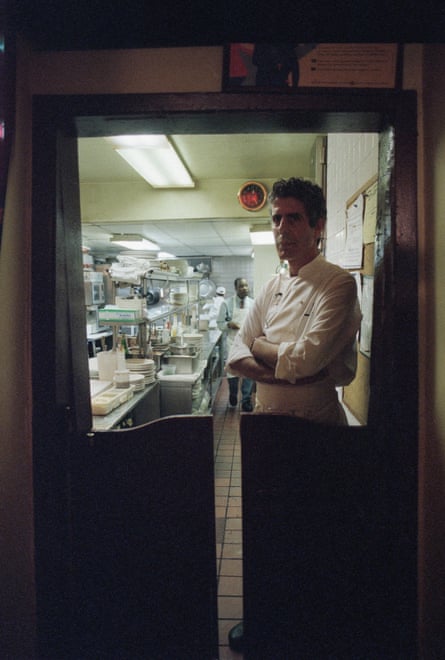
Kitchen Confidential starts with Bourdain travelling through France as a child with his brother and his moneyed American parents of European inclinations and heritage. He is a little prick to his family, for no reason, and he’s also a git to the French kids, before returning to the US to be a jerk to flatmates and girlfriends in his private liberal arts university (Vassar) before dropping out. He’s still in his teens in 1975, when he takes that lowly job in Provincetown. There, he’s a minnow among absolute sharks of delinquency – a chef might turn out an impromptu service for a 100-strong post-wedding party, then bang the bride against the bins afterwards. The staff scored drugs you’ve never heard of, and drugs you’d never have needed if you hadn’t taken all those other drugs.
In that kitchen, Bourdain finds his spiritual home, “a subculture whose centuries-old militaristic hierarchy and ethos of ‘rum, buggery and the lash’ make for a mix of unwavering order and nerve-shattering chaos,” he wrote in Kitchen Confidential. That book, remembers the journalist, cookery writer and cook Diana Henry, 63, described “a world we didn’t have an in on, and suddenly we did”. (Henry did, in my view, the best late-era interview with Bourdain, two years before his death.)
Bourdain described his cheffly mission: “Your body is not a temple, it’s an amusement park. Enjoy the ride.” In his writing, as in his cooking, he prioritised pace and crunch over elegance and fuss. Relationships in this brigade system were tightly bonded and savagely caustic. “As an art form, cook talk is, like haiku or kabuki, defined by established rules,” he wrote. “All comments must, out of historical necessity, concern involuntary rectal penetration, penis size, physical flaws or annoying mannerisms or defects.” Between the drugs, the shagging, the late nights, the contradictory, hurtling imperatives of discipline and self-indulgence, the contempt for self-care and the penis jokes, this was a definitionally masculine ideal, and not even for so childish a reason as that you’d need a dick in order to dip it in someone’s Vichyssoise. There’s just no female model for being beautiful, high and still smashing it at work: the women in this space (just off the top of my head, Nancy Spungen, Amy Winehouse) end up dead.
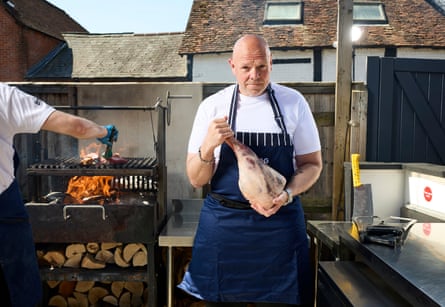
In many ways, Bourdain was just saying what he saw: this was the reality of kitchens across decades and continents. Tom Kerridge, 53, describes being drawn in by exactly the same atmosphere: “Every chef will tell you the same thing – they don’t come into kitchens because they love food. Chefs love the energy of being chefs. It becomes your way of life, as opposed to what you do – it’s what you are.” Kitchens might have their hierarchies imported from the French army, their insubordination penalties only a fraction less violent, yet at the same time, Kerridge continues, “they’re building sites, they’re construction zones, they’re full of people using sharp things and burning themselves, who are all really tired”.
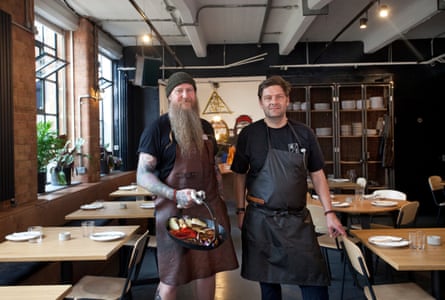
Andrew Clarke, 48-year-old co-owner and exec chef at Acme Fire Cult in east London, and the founder of Glandstonbury (yes, it’s an offal festival), said of his first colleagues – nowhere fancy, a pizza place in Bluewater, in the late 90s: “They were these pirates. None of them were proper chefs. They needed a job without a CV, without any qualifications – some of them had been in prison, and the kitchen was very accepting of that.” The word “pirate” is used constantly, by everyone, and the ex-con thing is real: in 2009 the Clink charity was established, opening restaurants in High Down, Brixton and a couple of other prisons, teaching prisoners skills for when they got out. And there’s a reason they were trained up for professional kitchens, not ice-cream parlours.
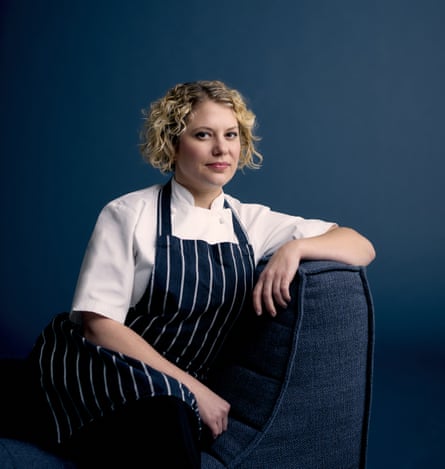
Clarke remembers arriving “in a kitchen that was very French, very disciplined, very trained. Bourdain’s book was just out, and I just started reading little passages, and I thought, ‘That’s me. That’s the person I am, that’s where I’ve been, that’s what I’ve done.’” Sally Abé – 38, former head chef at the Pem in the Conrad, St James’s, London, and, lately, her own bistro, Teal – had an all-female senior team at the Pem, but did not enter the business in 2007 wanting to throw over its hyper-masculine conventions. “To be honest, I’m a very stubborn, determined person,” she says. “When I was 21, I thought, ‘I can be one of the boys,’ and I got swept up in it. It was really fun.”
Yet at the same time, Bourdain’s writing was so vivid, his character so magnetic, his joie de vivre so complicatedly credible and so contagious, that he built the world in the act of describing it.
As much as it pains me to pour cold water over it, Bourdain’s myth – the bit that was neither rooted in reality, nor prefigurable by force of will – was that the quintessential chef’s life could just proceed without consequence. “Bourdain romanticised that sort of life,” Henry says, “taking coke, drinking too much.” He ended up in rehab in the early 90s, but remained a heavy smoker and drinker. In kitchens the world over, says Clarke: “All roads led to the bar: a good service, you go to the bar, a bad service, you go to the bar. I saw chefs being drunk in service, and quite often that was me. I’d have a skinful at lunch and then do a dinner.” Kerridge has talked in the past about his jaw-dropping alcohol consumption, before he went teetotal in 2013.
In 2015, Clarke suffered a terrible depressive episode. When he posted about it on Instagram, a huge number of people in the industry shared their own experiences with him. He has since set up a mental health charity for people working in the hospitality industry called Pilot Light. “While we wanted to raise awareness of mental health in the business, it inevitably led to people talking about bullying, sexism and racism in the industry. I’m a chef – I wanted to keep it very clean and simple. For me it was about mental health. But it was Pandora’s box.”
It’s worth making a distinction between the ludic, juvenile macho vibe Bourdain immortalised and a more modern toxic masculinity, designed to undermine, control and exclude women (having come of age in the 90s, I could spend forever insisting on that distinction). However, Bourdain himself, a subtle and self-critical person, could see how the first provided cover for the second. As he told an audience at his alma mater, the Culinary Institute of America, in 2017: “If there’s a harasser in the kitchen who’s a jerk, chances are he’s got a copy of my book on his station. And I’m going to have to live with that.”
There were also a lot of real bullies operating under the cover of play-bullying, and it’s interesting, looking back, how widely this was accepted in the industry. It was an open secret when Noma – the experimental Danish restaurant – was huge in the 2000s that its founder, René Redzepi, terrorised his staff. When the New York Times published evidence in March that Redzepi had “punched employees in the face, jabbed them with kitchen implements and slammed them against walls” leading to “lasting trauma from layers of psychological abuse, including intimidation, body shaming and public ridicule”, the collective sound of people feigning horror at a thing that we’d all known for 20 years was really something.
That’s not just kitchens, of course. “Not only does it look like an awful way to treat people, it’s become unacceptable,” Henry says. “You can’t bully anybody anywhere.” She recalls her experience working as a TV producer on food programmes. “Even the way I behaved in television, making researchers stay late because they hadn’t done enough, I wouldn’t get away with that now. We don’t like it any more.”
Abé has no problem differentiating between mischief, intensity, ego and harassment. “Kitchens are always going to be high-pressure places – once you’re in the service, you’re in the service. If the food’s not ready, you’re an idiot. But I’ve taken all those environments I worked in and turned them on their head. My kitchen’s nothing like that now.”
Clarke is done with the macho bullying (“It’s deeply uncool,” he says), and when he started Acme in 2022, he did a thing that would doubtless have had Bourdain, back in the day, exploding in 2,000 colourful words. “We have very physical, long days; none of us look after ourselves like athletes and perhaps we should. We were doing yoga classes in the space, checking in, talking to each other. Doing everything a little more holistically.” It’s not as anti-Bourdain as it sounds, Clarke says: “He got into jiu-jitsu in his 50s. He was fully at the point of: ‘I’m going to look after myself.’”
Bourdain never understood his own propensity for self-sabotage, as well as other-people-sabotage. It’s laced through his writing: there he always is, making trouble for no good reason. And he said as much to Henry when she interviewed him. “What is it that gave him the pain that he carried around with him?” she asks. “His childhood sounded perfectly OK. He was just always a bit of a wreck until he got to be a chef. It’s strict – you can’t not deliver. You’ve got to be in, you’ve got to see your crew, you’ve got to do your service. There are completely set rules and you can’t disobey them.” Kitchens were a haven for people who needed rules as much as they hated them, and could only reconcile those warring urges in a cacophony of appetites.
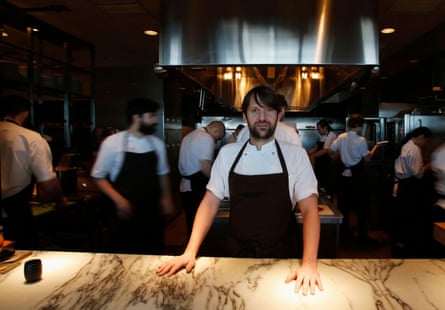
Perhaps inevitably, through some combination of a little foresight and a changing world, the pirate spirit that defined kitchens for so long is being replaced by a new intellectualism. “Chefs nowadays are like bloody poets,” Henry says. “Stevie Parle, Merlin Labron-Johnson – all these people have got degrees. Once they would have been doing a master’s and a PhD; instead they’re focusing on growth and animals and flavour combinations and technical stuff.”
It’s not a sanitised world. It surely still has the plenty of what Bourdain wrote were the fundamentals of “good food and good eating ... blood and organs and cruelty and decay”. An intellectual kitchen just doesn’t invite chaos, or torment, or madcappery, but you wonder what will become of all the people who were mainly in it for those things.
Tony, the biopic of Anthony Bourdain, is in cinemas from Friday